PUSHKIN - MOST FAVORITE RUSSIAN CLASSIC
World - writer - anniversary
06/05/2026
10:06
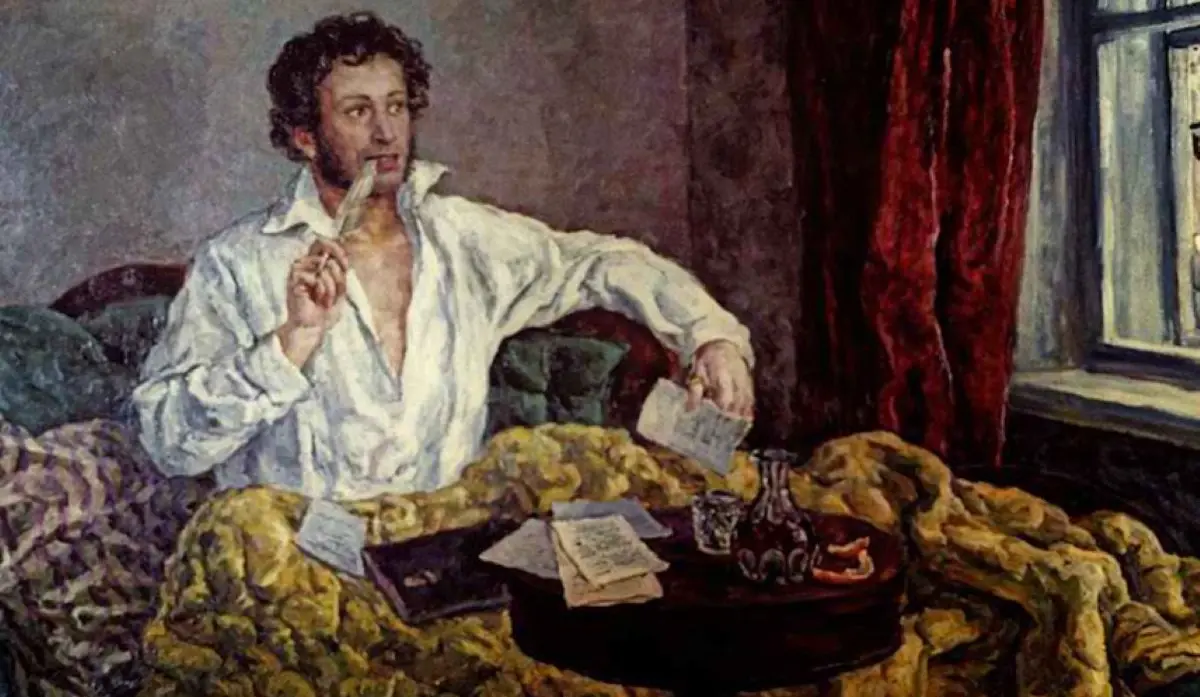
BIJELJINA, JUNE 5 /SRNA/ - One of the greatest Russian and world literary classics Alexander Sergeyevich Pushkin /1799-1837/ was born on June 6, 1779.
Pushkin was the originator of realism in Russian prose, and one of the greatest lyricists, the author of some of the most significant works of Russian literature, including "Eugene Onegin", "Boris Godunov", "The Queen of Spades" and "The Captain's Daughter".
While the debate continues in the world to this day about which Russian writer belongs to the top of world literature - Lev /Leo/ Nikolayevich Tolstoy or Fyodor Mikhailovich Dostoyevsky, there is no dilemma in Russia itself.
Every poll about the greatest literary figure has one winner - Pushkin, followed by all the others.
Pushkin was one of the first in Russia to start writing in the vernacular and distanced himself from romantic literature, popular in Western Europe. He created a style that mixed satire, romance and drama.
He was born into an educated, aristocratic family. His maternal great-grandfather was a black Ethiopian - Abram Petrovich Gannibal, who was bought in Constantinople by the Serbian Count Sava Vladislavić Raguzinski.
Count Sava "gifted" Pushkin's great-grandfather to the Russian emperor upon his return to Russia, and he then adopted him as his godson, Peter the Great.
In his early childhood, Pushkin was looked after by nannies and French language teachers.
Pushkin quickly drifted into liberal political waters, and because of his revolutionary poems, he was sent into exile in southern Russia from 1820 to 1823.
After his letter was discovered, in which he expressed a positive attitude towards atheism, Pushkin was exiled for the second time, this time to northern Russia, to his mother's country estate - Mikhailovskoe.
Protests were held in St. Petersburg in December 1825, and Pushkin's poems were found with many of the participants, which again threatened his life.
In 1829, Pushkin met the fatal Natalia Nikolayevna Goncharova, whom he married in 1831.
Two years later, he was declared a camerjunker /a court rank that was usually awarded to young aristocrats/. However, he took offense because he believed that the rank was given to him so that his wife could go to court balls.
Pushkin soon fell into a bad financial situation, largely due to his wife's spending. He managed to get a loan, thanks to which he published his journal in 1836.
In 1837, Pushkin challenged Georges-Charles de Heeckeren d'Anthès to a duel due to the suspicion that he was courting his wife.
The duel took place on February 8, 1837.
Dueling was a common occurrence in Russia at that time and an acceptable way among the Russian aristocracy, although it had been illegal for years. One participant would shoot first, then the other, if he is able.
D'Antes fired the first shot. The shot hit Pushkin in the stomach. The writer grabbed the wound and fell into the snow, then raised himself to his knees with his hands, pointed the gun at the opponent and tried to fire, but the gun was wet.
Pushkin asked to exchange the gun, which he was allowed to do. He fired, but the bullet only grazed D'Antes.
The doctor tried to repair the wound. However, Alexander Sergeyevich Pushkin died two days later, on February 10, 1837, or January 29 according to the old calendar.
Pushkin was a liberal, so the Russian government, fearing riots in the streets, ordered him to be buried without ceremony, in secret, and he was transported to his eternal resting place in a cart loaded with hay.
Pushkin's most famous works are the novels in verse "Evgeny Onegin", "Count Nulin" and "The Little House in Kolomna", the dramas "Boris Godunov" and "Rusalka", the prose works "The Queen of Spades", "The Captain's Daughter", "Egyptian Nights" and "The Tales of the Late Ivan Petrovich Belkin", and the small tragedies in verse "Feast during the Plague" and "The Covetous Knight".
He also wrote the stories "The Stone Guest" and "Mozart and Salieri", the poems "Gypsies", "Poltava", "Bronze Horseman", "Gavriliad", "Ruslan and Lyudmila" and "The Caucasian Prisoner", as well as fairy tales in verse "The Tale of Tsar Saltan" and "The Tale of the Fisherman and the Fish".


FORBES: TAYLOR SWIFT THE RICHEST MUSICIAN IN HISTORY
PUSHKIN - MOST FAVORITE RUSSIAN CLASSIC

BOSNIAKS AND EU DID NOT UNDERSTAND MESSAGES ABOUT NEED TO STOP COLONIAL ADMINISTRATION IN BiH

PAVIĆ: CRASH IN PIC EXPECTED, AMERICA DOES NOT WANT COLONIAL ADMINISTRATION IN BiH