VUKELIĆ: UNPUNISHED CRIME IN DOBROVOLJAČKA PROOF OF DOUBLE STANDARDS IN BiH
BiH - war - anniversary
05/02/2026
13:59
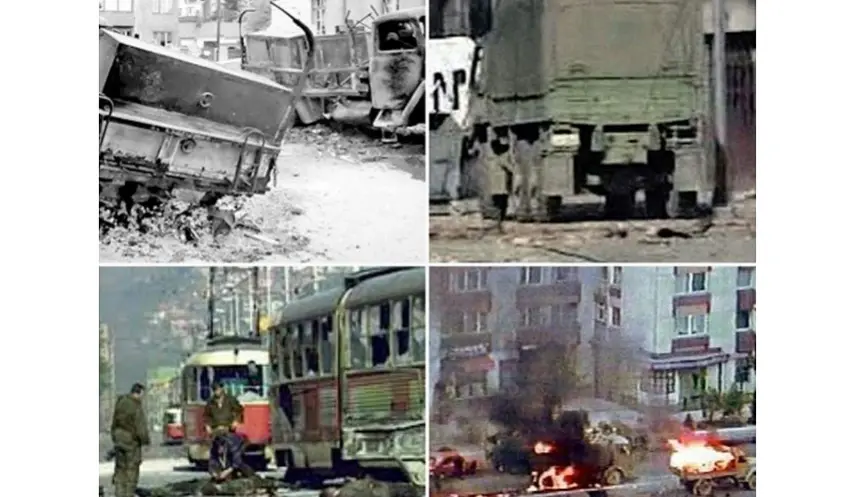
BELGRADE, MAY 2 /SRNA/ - The unpunished crime in Dobrovoljačka Street in Sarajevo demonstrates a policy of double standards in BiH and across the territory of the former Yugoslavia, because only Serbs were punished for war crimes, while crimes committed against the Serb people have largely remained without a judicial epilogue, said Nikola Vukelić, the state secretary in Serbia's Ministry of Labor, Employment, Veteran and Social Affairs.
Vukelić emphasized that Serbs mark tragedies and suffering resulting from crimes committed against Serbs almost daily.
He pointed out that, on the other hand, all Serb military and political leaders ended up before the International Criminal Tribunal for the former Yugoslavia, and many Serbs are still being prosecuted by courts in BiH and Croatia.
“Our political and military leaders have been placed in the worst possible conditions. Radovan Karadžić is imprisoned on an English island in terrible conditions, General Ratko Mladić is practically at the end of his strength, while Milan Martić is imprisoned in Estonia, where he is also seriously ill and living in catastrophic conditions,” said Vukelić.
According to his assessment, all of this represents a continuity of injustice committed against the Serb people from the 1990s to the present day.
He emphasized that the injustice done to Serbs is the result of double standards that have led to what he described as an incredible number of legal absurdities and paradoxes.
Vukelić assessed that the failure to punish those responsible for the crime in Dobrovoljačka Street, which took place in full public view, is difficult to explain through either common sense or the law.
He stressed that the double standards practiced not only in the judiciary and in determining responsibility for war crimes, but at all levels, are best seen in the issues of Republika Srpska and Kosovo and Metohija.
“Serbs in BiH were a constituent people and are not being granted the right to self-determination, while Albanians, who were a national minority on the territory of Serbia, were granted independence after the bombing campaign and unprecedented pressure on Serbia by the then U.S. administration,” pointed out Vukelić.
He added that some cautious hope comes from what he sees as a changing negative attitude toward Serbs. “True, this is not happening as quickly as we would like, but certain changes are evident,” Vukelić said.
According to data from the Republic Center for Research of War, War Crimes and the Search for Missing Persons, at least 28 members of the JNA were killed on May 2 and 3, 1992.