OŽEGOVIĆ: ZAVNOBiH DECISIONS RENDERED MEANINGLESS BY BREAKUP OF YUGOSLAVIA
BiH - holidays
11/25/2026
10:06

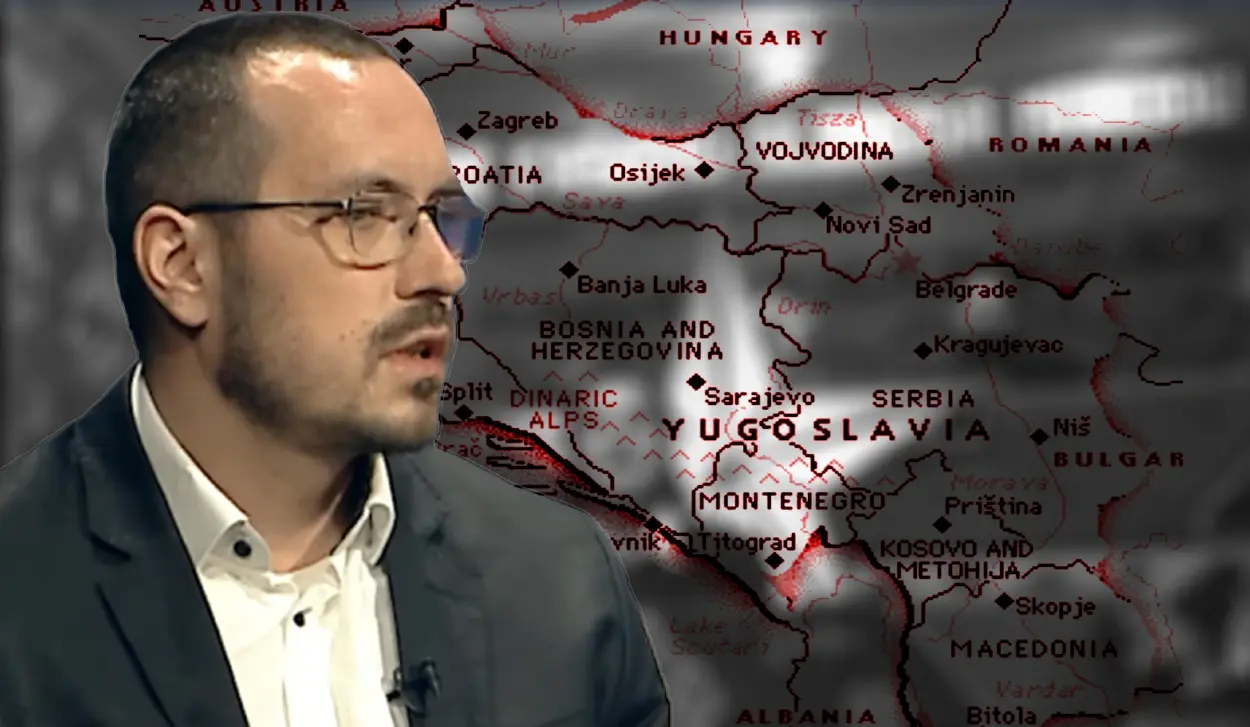
BANJA LUKA, NOVEMBER 25 /SRNA/ - Marking November 25 as the so-called Statehood Day of BiH makes no sense, because the ZAVNOBiH decisions were inseparably tied to the existence of Yugoslavia, which fell apart, and its principles have since been rendered meaningless, historian Nikola Ožegović told SRNA.
Ožegović said that November 25, 1943, was marked in the former Yugoslavia as a holiday of the Socialist Republic of BiH because the first session of ZAVNOBiH in Mrkonjić Grad decided that BiH would be a separate federal unit within the future Yugoslav state.
He explained that until the session itself it was uncertain what status BiH would have in the future state, namely whether it would be an autonomous region or a federal unit, like the other members of the Yugoslav federation.
"The decision that BiH would receive the status of a separate unit within the future Yugoslav state was made in a narrow circle of people around Josip Broz Tito, and the first ZAVNOBiH session was a prelude to the second AVNOJ session in Jajce," Ožegović said.
He noted that the Communist Party of Yugoslavia sought to resolve the national question by federalizing the state, starting from the view that the "Kingdom of Yugoslavia was marked by Serb hegemony".
In his words, the communists saw the first Yugoslavia as a state in which the Serb bourgeoisie dominated the other peoples, which is why they advocated its federalization.
Ožegović said that in its first years the Communist Party advocated the destruction of Yugoslavia, and that in 1932 it backed the Ustasha "Velebit Uprising" in Lika, in an effort to bring down the state of the time.
He stressed that Serbs made up 63 percent of the delegates at the first ZAVNOBiH session, but that their numerical majority did not mean the Serb national question had been resolved, or that the decision on the status of BiH expressed the democratically stated will of the Serb people.
"The Serb representatives were a majority, but they were not resolving the Serb national question. They believed Yugoslavia should be organized according to the principles of the Communist Party," Ožegović said.
Speaking about the communist leadership's attitude to the Serb national question, he recalled Moša Pijade's proposal to create a Serb autonomy in Croatia, which Milovan Đilas and Aleksandar Ranković opposed.
According to Ožegović's interpretation, Đilas and Ranković believed that establishing such an autonomy would encourage Serb nationalism in Croatia, even though Serbs had previously been exposed to Ustasha terror and genocide in the Independent State of Croatia /NDH/.
"With the end of Yugoslavia, the old holidays, AVNOJ as well as ZAVNOBiH, were rendered meaningless, because all the principles set out at that time lost their original framework," Ožegović said.
He said that the Muslim-Croat part of BiH voted at the 1992 referendum to leave Yugoslavia, adding that the referendum was illegal.
Ožegović reminded that in July 1993 the National Assembly of Republika Srpska annulled the ZAVNOBiH decisions, thereby affirming the principle of self-determination of the Serb people.
He said Republika Srpska was founded on January 9, 1992, and that the aspiration of the Serb people was to remain in a common state with Serbia and Montenegro.
Ožegović assessed that the Western powers supported BiH's separation from Yugoslavia, while Russia at that time followed the West's policy and recognized BiH and Croatia.
"Serbs wanted to stay within Yugoslavia, together with Serbia and Montenegro, but the Western powers did not allow it. Today we have Republika Srpska within BiH, but a completely different BiH, the Dayton one, not the one from the time of ZAVNOBiH," Ožegović said.
He noted that the FBiH today accuses Republika Srpska of "renouncing anti-fascism" through its supposed rejection of ZAVNOBiH, which is not true.
"On the other hand, you will never hear in their media or read in their 'historija' and 'povijest' textbooks that in 1941, 95 percent of the partisans from BiH were Serbs, or that Serbs made up 78 percent of the partisans killed during the war on BiH soil. Where the uprising was in 1941, that is where Republika Srpska is today," Ožegović stressed.
The former ZAVNOBiH Day, November 25, is marked as the so-called Statehood Day in the part of the FBiH with a mostly Bosniak population, while Croats do not observe it as a holiday.
In the FBiH, the day is celebrated as the alleged Statehood Day of BiH, while Republika Srpska does not regard it as a holiday, because it is not the result of an agreement among all three constituent peoples.