LINTA: ONLY SIX PEOPLE CONVICTED FOR MASS CRIMES AGAINST SERBS IN THE NERETVA VALLEY
BiH - war Crimes - remembrance
06/07/2026
16:06
BELGRADE, JUNE 7 /SRNA/ – Today 34 years ago, the Croatian criminal operation Čagalj began, which expelled more than 40,000 Serbs from Mostar, Čapljina, Stolac, and other places in the Neretva Valley, killing more than 600 some of whom went missing, looting and burning down 55 Serb-populated villages.
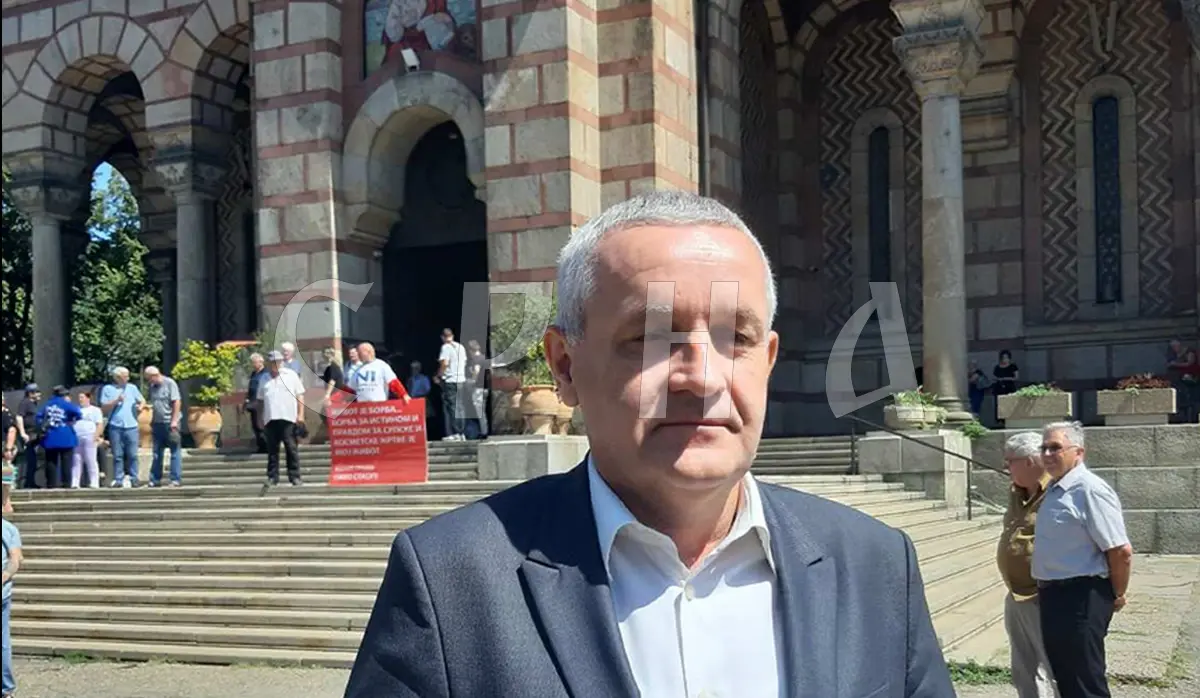
Miodrag Linta, the chair of the Association of Serbs from the Region, said the operation was carried out by units of the Croatian Army, the Croatian Defence Council /HVO/, the Croatian Defence Forces /HOS/, and a Muslim volunteer unit, under the command of Janko Bobetko. The objective was the ethnic cleansing of the Serb population.
Between June 7 to June 26, 1992, the Žitomislić Monastery, the church and memorial ossuary in Prebilovci, where the remains of the Prebilovci martyrs of 1941 rested, the Cathedral Church of the Holy Trinity, all Orthodox churches in the Neretva Valley, and other cultural and historical monuments of the Serb people were destroyed.
Linta stated that there were at least ten prison camps and detention facilities for Serbs in the Mostar area, where detainees were subjected to severe abuse and killings, while others were imprisoned and tortured individually or in groups in a number of private facilities.
The most notorious detention sites included the former military clinic, the HOS headquarters, the Ćelovina Prison in Mostar, the Dretelj Prison Camp, a prison camp in Ljubuški, and the Lora Prison Camp in Split.
Linta recalled that major prisoner exchanges between the warring sides recorded at least 843 detained Serbs from Mostar and other locations in the Neretva Valley.
As he noted, only six HOS members have been convicted before the Court of BiH for crimes committed at the Dretelj prison camp near Čapljina and the military clinic in Mostar.
According to Linta, this is one of many indications that the BiH judiciary o is not impartial or professional and that Serb victims and their families cannot expect justice despite numerous evidence of crimes.
“It is our duty to remember and pay tribute to the Serbs who suffered during criminal Operation Čagalj. One important way of preserving the culture of remembrance of our people's suffering is for Serbia to establish a state institution, i.e. a memorial centre dedicated to Serb victims on the territory of the former Yugoslavia,” Linta concluded.