DODIK: SERB PEOPLE EXPRESSED THEIR POLITICAL WILL IN NOVEMBER 1991 AND HAVE NOT RENOUNCED IT; REPUBLIKA SRPSKA IS CROWNING ACHIEVEMENT OF THAT WILL
BiH – Serbs – plebiscit
11/08/2026
16:50

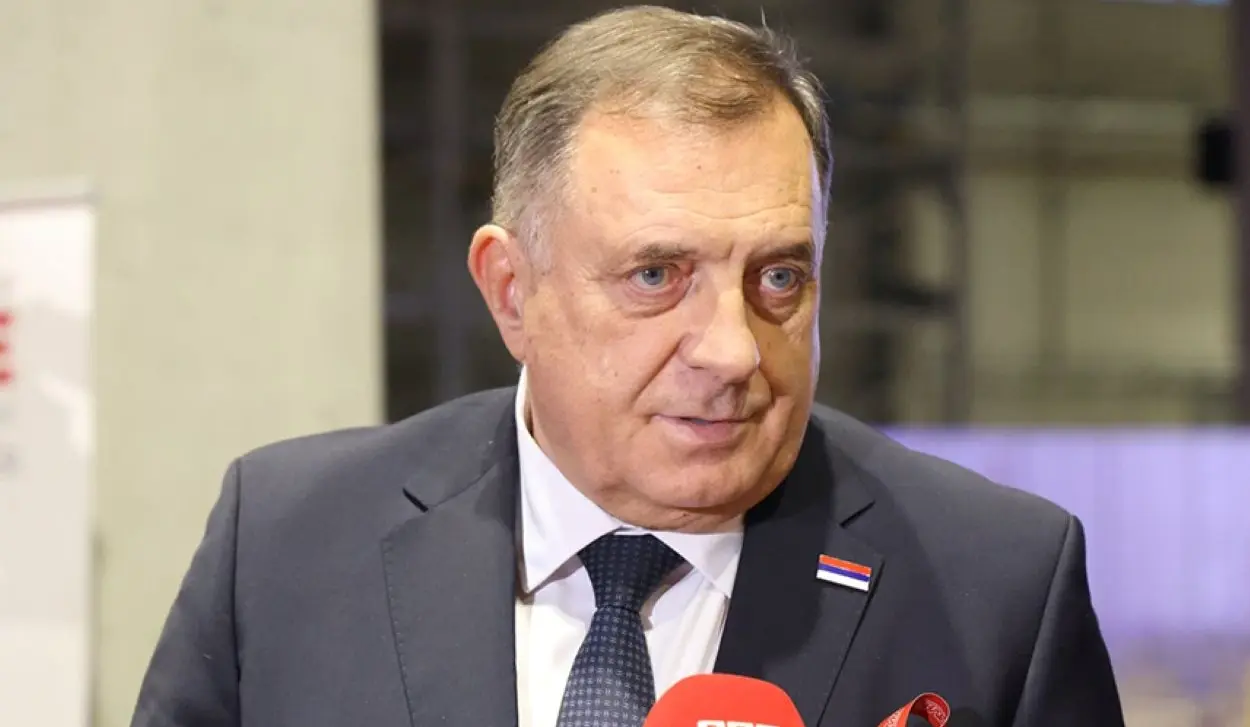
BANJA LUKA, NOVEMBER 8 /SRNA/ - President Milorad Dodik said that the plebiscite of the Serb people in BiH, held on November 9 and 10, 1991, was one of the defining moments in modern Serbian history, but, more importantly, it was the moment when Republika Srpska was conceived with a pen and a ballot paper.
Dodik stressed that the plebiscite was not an event that simply passed or a historical moment, but a lasting obligation for every government in Republika Srpska to respect the will of nearly 1.5 million voters at the time, who used their ballots to call for freedom, dignity, and the right to remain and endure.
"By preserving the will expressed at the time, which remains unchanged to this day, we are preserving everything our ancestors fought for over centuries so that we and generations to come would have a place to build our present and future," Dodik told the Media System of Republika Srpska – SRNA on the occasion of the 35th anniversary of the plebiscite of the Serb people in BiH on remaining in the common state of Yugoslavia.
Dodik said that the significance of the plebiscite did not fade with the passage of time, but, on the contrary, continued to grow, because the Serb people had expressed their will at the time and would not renounce it today, tomorrow or even hundreds of years from now.
"That is why the 1991 plebiscite is not merely a reminder of a particular time and a political decision, but an eternal reminder that no people can be permanently excluded from decisions about their own future. The Serb people expressed their political will in November 1991 and will never renounce it," Dodik stressed.
He said that the plebiscite was not a prelude to war, as some had persistently tried to portray it, and continue to do so, but rather a final, desperate attempt to preserve peace and respect the constituent status of all peoples through institutional means.
Recalling that Yugoslavia was falling apart under the pressure of secessionist movements in 1991, Dodik stressed that the outvoting of legitimate Serb representatives in the Assembly of the then Socialist Republic of BiH in Sarajevo made it clear that a scenario was being prepared for the forcible separation of the republic from its parent state, with the aim of creating a unitary, Muslim BiH based on Alija Izetbegović's Islamic Declaration.
For the Serb people, he said, this was a turning point that forced them to choose between becoming a national minority in a new entity, a Muslim BiH, without the right to have a say, or exercising their sovereign, constitutionally and internationally recognised right to self-determination.
SERB PEOPLE'S POLITICAL REPRESENTATIVES IN 1991 PROTECTED THEIR PEOPLE FROM OPPRESSION AND POLITICAL DOMINATION
Dodik reminded that at the first session of the Assembly of the Serb People in BiH, established in Sarajevo on October 24, 1991, in which he himself also took part, the Declaration of the Serb People to Remain in the Common State of the SFRY and the decision to organise a plebiscite were adopted.
"At a time when Yugoslavia was breaking apart, and views on the future of BiH were diametrically opposed, the political representatives of the Serb people had no choice but to make decisions that would protect their people from oppression and enable them to decide their own future."
"The only institutional, dignified and democratic solution was to organise a plebiscite. Of the 1,350,000 voters who went to the polls to vote on remaining in Yugoslavia, 98 per cent voted 'YES'. This was a clear and unequivocal message from the Serb people that they wanted to decide their own fate independently and freely," stressed Dodik, who was a member of the Assembly of the Serb People in BiH at the time, saying that he was particularly proud of this, as he had taken part in making decisions of crucial historical importance for the Serb people.
He stressed that Serbs had not voted against anyone, nor had they voted for war or secession, but for their own home, for the right to remain in the country where they were born and for which their ancestors had shed blood and brought freedom in two world wars.
Dodik told SRNA that the plebiscite was a collective response to the threat of political domination by the majority and an attempt by Muslims to completely strip Serbs of their rights in a unitary BiH envisioned by Muslims led by Izetbegović, who had clearly stated that he would "sacrifice peace for a sovereign Bosnia, but would not sacrifice a sovereign Bosnia for peace."
"This very statement captures the political significance of the plebiscite, because Izetbegović clearly indicated what awaited Serbs in such a sovereign BiH – that they would be puppets of the Muslims rather than political actors with a say in decisions about their own future," Dodik explained.
PLEBISCITE WAS A STRONG AFFIRMATION OF THE SERBS' RIGHT TO SURVIVE
He said that the plebiscite took place as Yugoslavia was falling apart under pressure from other peoples' separatist aspirations, while Serbs were confronting the traumatic experience of the recent past and fearing a revival of policies that had led to mass suffering and ethnic cleansing.
President Dodik stressed that this was not simply a matter of marking a ballot, but a political decision, a state of mind and a powerful affirmation of the Serbs' right to exist and remain in lands shaped over centuries by Serb spirituality, culture and tradition.
"That was the only possible democratic response to the existential threat to the survival of the Serb people west of the Drina, but also an unwavering declaration that we would remain on our ancestral land, on our family estates, where we could be masters of our own destiny.
When a people overwhelmingly support the policies of their political representatives, they send a clear message that they trust them.
And it turned out that the decision to express the will of the Serb people through a plebiscite was the right one, because on January 9, 1992, we got our own home – the Republic of the Serb People of BiH, where we have a say, where we are respected, where we make decisions, and where we have the right to our own identity and continuity," Dodik stressed.
President Dodik pointed out that political Sarajevo, as expected, had rushed to declare the plebiscite "unconstitutional" as quickly as possible. However, the democratic legitimacy of a people, expressed through the votes of one and a half million voters, could not be annulled by a decree from Sarajevo. It was precisely this plebiscite that created a legal and moral obligation for Serb MPs to proclaim the Republic of the Serb People in BiH several months later, on January 9, 1992.
"A people that knows and values its democratic foundations has the strength to overcome the challenges of the future. Preserving the memory of this act is not a matter of nostalgia or recalling historical events, but a lesson in responsibility towards one's own people and oneself. Fulfilling the will of those who overwhelmingly voted 'YES' for freedom, survival, constituent status and security means safeguarding the institutions of Republika Srpska and working towards the strengthening and progress of Republika Srpska," Dodik said.
THE WILL EXPRESSED THROUGH PLEBISCITE IS FUNDAMENTAL SOURCE OF LEGITIMACY THAT PROTECTS REPUBLIKA SRPSKA
Therefore, Dodik said, the November 1991 plebiscite must not and cannot be viewed solely as a historical act, as it is, above all, the fundamental source of legitimacy that protects Republika Srpska from attempts to impose unitarism and undermine the Dayton structure of BiH.
"Republika Srpska was established through the democratic will of its people and the sound judgment and courage of the MPs at the time, who made historic decisions during an extremely difficult period for the Serb people, not through the will of political Sarajevo or the High Representatives. This is where the greatest significance of the November 1991 plebiscite lies, and the people's choice was given its final seal on January 9, 1992, in peacetime, before Alija sacrificed peace for the sake of a Muslim BiH and a civil war marked by suffering and enormous losses of both human lives and Serb territory," Dodik said.
THE DAYTON AGREEMENT AFFIRMED THE WILL EXPRESSED BY SERBS IN SRPSKA
However, he stressed that the establishment of Republika Srpska in January 1992, followed by its affirmation through the 1995 Dayton Peace Agreement, laid the foundations for BiH's present-day constitutional order.
"Dayton did not merely bring the war to an end; it also established the political and constitutional framework of BiH, consisting of two entities and three equal constituent peoples. Republika Srpska is therefore not merely an administrative unit, but a place of political representation, decision-making and preservation of institutional continuity," Dodik stressed.
Although political Sarajevo and part of the international community persistently seek to redefine BiH's Dayton-based constitutional order with the aim of centralising the country, or turning it into a unitary state, he said, the Dayton Agreement remains a firm point of reference for Republika Srpska's political leadership in its ongoing struggle for the institutional survival of the Serb people and Republika Srpska.
He pointed out that any attempt to interpret the Dayton Agreement selectively, to speak of its spirit rather than its letter, to gradually diminish Republika Srpska's powers and bypass the political will of the Serb people, inevitably leads to mistrust and further alienates Republika Srpska and its people from BiH.
"The Serb people expressed their political will in 1991, and the culmination of that will came on January 9, 1992, when Republika Srpska was established and subsequently incorporated into the Dayton Agreement, which defined its constitutional framework.
Therefore, the main responsibility of all political representatives today is to demonstrate that Republika Srpska means freedom, security, development and a dignified life for every one of its residents, because the sovereignty of a people's political will is demonstrated not only through words and historical dates, but also through the ability to preserve institutions, dignity and a secure future for both present and future generations," Dodik concluded.
Tags

DODIK: SERB PEOPLE EXPRESSED THEIR POLITICAL WILL IN NOVEMBER 1991 AND HAVE NOT RENOUNCED IT; REPUBLIKA SRPSKA IS CROWNING ACHIEVEMENT OF THAT WILL

MANY HEROIC DEEDS FROM DEFENSIVE-PATRIOTIC WAR REMAIN UNTOLD

EU TO JOIN TALKS IN ABU DHABI
CRETE BRACES FOR A MIGRATION CRISIS