CVIJANOVIĆ: BEĆIROVIĆ AND KOMŠIĆ AVOID DISCUSSION ON MUSLIM BROTHERHOOD AND IRGC
BiH - security - Cvijanović
04/30/2026
21:01
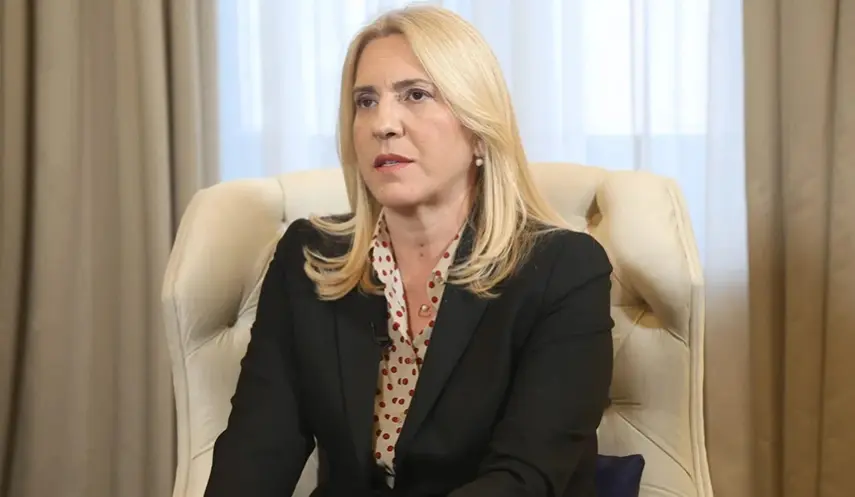
BANJA LUKA, APRIL 30, 2026 /SRNA/ – The Serb member of the BiH Presidency Željka Cvijanović stated that Presidency members Denis Bećirović and Željko Komšić did not support the proposal to designate the Muslim Brotherhood and the Iranian Revolutionary Guard Corps /IRGC/ as terrorist organizations, claiming they are avoiding the topic, while her intention was for BiH to demonstrate that it distances itself from such influence.
"You want to do something positive, but there is no willingness to open a discussion that could be linked to the war and post-war period, various attacks in the world, and reports stating that BiH had the highest number of foreign fighters", Cvijanović said.
She stated that these are alarming issues and that participation by BiH in global activities related to countering such threats would demonstrate a clear political stance.
Cvijanović also referred to a 2025 CIA report mentioning the presence of IRGC cells within BiH, specifically in the Federation of BiH, saying that such information should be taken seriously in order to protect the country.
"My intention was to say that we distance ourselves from such influence and that I want competent institutions to follow this up and show that we want to remain uninvolved. However, they did not want to support it. Many other important issues remain unresolved while artificial and politicized topics are being imposed", Cvijanović said for ATV.
Cvijanović stated that Bećirović misrepresented the issue during the Presidency session yesterday, claiming it would damage BiH's image.
She argued that globally these organizations are considered a security threat and that BiH would improve its credibility by showing willingness to counter such risks.
She also said it is incorrect to claim the initiative was directed against Bosniaks, stressing that it concerns the security of all citizens of BiH and the identification of security threats.
Cvijanović noted that certain individuals mentioned in international reports had connections to BiH during or after the war, including through training camps, documentation or personal ties, and that these issues are well documented.
She reminded that she had already attempted to place the item on the agenda several weeks earlier but that it was not accepted.
According to her, the Presidency cannot impose sanctions or designate organizations as terrorist groups, but it can draw attention to relevant security agencies and prosecutors.
Cvijanović said her initiative was aimed at showing readiness to make recommendations to institutions.
Cvijanović emphasized the importance of Republika Srpska having the police that its citizens trust.
She stressed that she has confidence in the assessments of the Srpska Ministry of Interior, as well as that she supports it, while noting that full cooperation is not possible if information is not shared by all parties.