CRNKOVIĆ: AFTER GENEVA, WE NEED TO ANALYZE AND SEE WHAT THE NEW OPPORTUNITIES ARE
BiH - Croatia - Trgovska Gora
05/16/2026
12:40
NOVI GRAD, MAY 16 /SRNA/ - The Croatian side fled from giving concrete answers during the confrontation with the BiH delegation in Geneva regarding the construction of the radioactive waste disposal site at Trgovska Gora, which has provided guidelines on how to proceed, stated Mario Crnković, a member of the BiH delegation, to SRNA.
As important as it is what the members of the Croatian delegation failed to defend, Crnković emphasized that what they actually said is equally significant. For instance, he highlighted their comment that they obtained data regarding BiH through informal means to use in their study.
"Googling data about the Una River while ignoring institutions and protected areas is something that is ugly to hear, let alone do. Reportedly, now that Geneva has happened, they are announcing consultations with BiH. The question arises: after 26 years of ignorance, after doing everything they did and finishing the study, now they want to consult?" Crnković said.
He noted that Trgovska Gora was selected 26 years ago through a political decision, and only now are official consultations being proposed.
"In my opinion, this is an echo of their defeat in Geneva. What is essentially important here is an attempt to whitewash a process that was everything but what it should have been," Crnković says.
Crnković, who is the president of the "Green Team" Association from Novi Grad, believes that an analysis must be conducted as early as Monday to define new opportunities.
"In any case, whatever the conclusion may be, it is necessary to move in multiple directions simultaneously. First, to build upon what happened in Geneva, and second, to support and affirm the interested members of the academic community to continue working on the Trgovska Gora case," Crnković assessed.
He added that it is necessary to expand the circle of currently involved professors and scientists so they can contribute in accordance with their expertise and capabilities.
"From our perspective, the confrontation in Geneva went excellently. Although several members of our delegation noted that Croatia was unprepared—which is true—I am of the opinion that they actually got off easy considering how it could have gone," Crnković said.
He added that the Croatian delegation skillfully managed to evade quite a few concrete answers.
"In the context of the debate, we can look at whether skillfully avoiding certain answers is a partial success or not, but it has definitely given us guidelines on what we specifically need to address," Crnković explained.
Crnković stated that it is crucial to continue in the direction of addressing violations of other conventions, but also to more aggressively raise the issue of silence within certain international bodies.
He explained that this can easily be done simultaneously, but it is also important to take a clear stance when it comes to lobbying and advocacy at the international level.
"We must act on all fronts, because achieving justice nowadays requires far more than just law and expertise. In Geneva, we showed that we can do a very good job," Crnković emphasized.
He pointed out that the appearance in Geneva should in no way be viewed solely through those who were present there, as many others were involved in the entire process, from institutions onwards. Therefore, it represents a joint success, not just that of the expert team or the delegation that had the opportunity to defend these interests.
"We have reason to be satisfied that we took the initiative and that things have taken a turn for the better, but a lot of work lies ahead for all of us, from citizens to institutions," Crnković concluded.
The delegations of BiH and Croatia confronted each other on Thursday, May 14, before the Implementation Committee of the Espoo Convention in Geneva, marking the first time since the Trgovska Gora issue emerged.
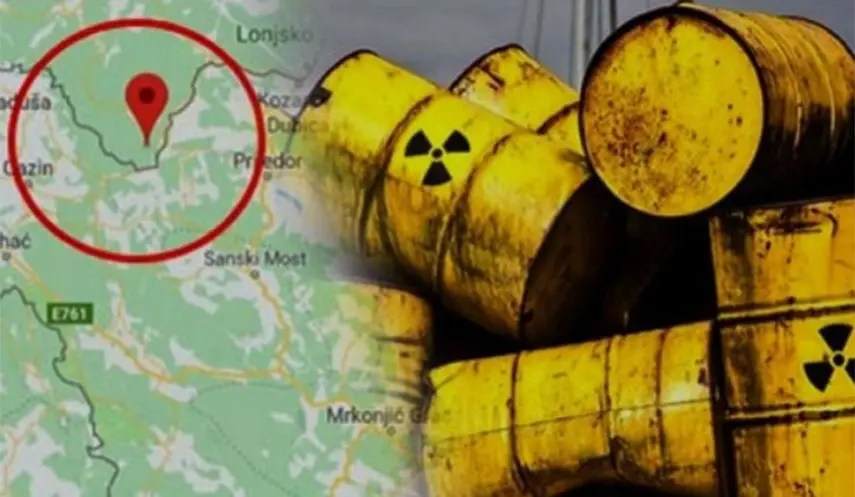
Croatia plans to store radioactive waste from the "Krško" Nuclear Power Plant, as well as existing institutional waste, at the Trgovska Gora location in the municipality of Dvor, right on the border with BiH.