TRILATERAL MEETING - HISTORIC EVENT AND PEACE SUMMIT
China - Wang Yi
11/20/2026
10:42

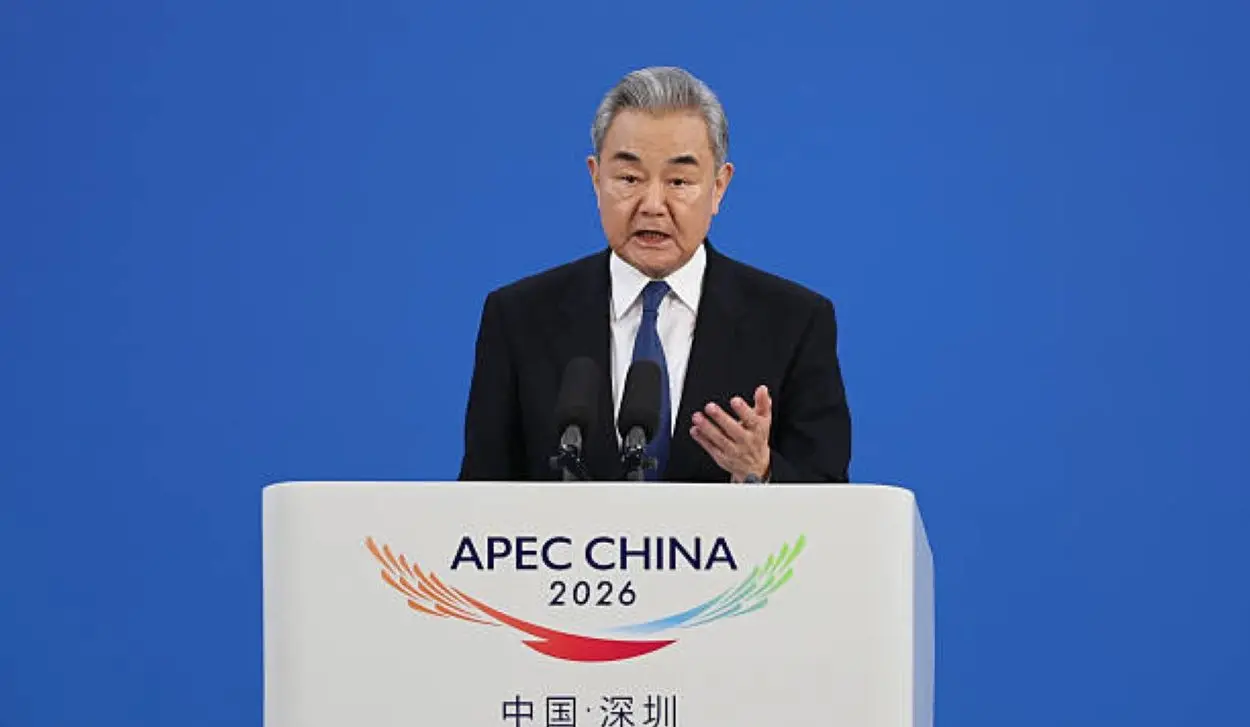
SHENZHEN, NOVEMBER 20 /SRNA/ – Foreign Minister Wang Yi stressed that the trilateral meeting of the leaders of China, the United States and Russia is a historic event and a peace summit at which the three sides expressed their readiness to prevent conflicts and confrontation, preserve the foundations of peaceful coexistence, and promote the establishment of relations among major powers characterized by peaceful coexistence, overall stability and balanced development.
Wang Yi, who is also a member of the Political Bureau of the Central Committee of the Communist Party of China, presented the results of the 33rd informal meeting of Asia-Pacific Economic Cooperation /APEC/ leaders and related activities to Chinese and foreign journalists in Shenzhen yesterday.
He emphasized that 2026 is China's "APEC Year".
Over the past year, China fully fulfilled its responsibilities as host country and successfully organised 321 APEC meetings and events, with the participation of more than 10,000 representatives from various economies, setting a record in the organisation's history, the China Media Group reported.
A total of 75 significant outcomes were achieved during the year, with openness, innovation and cooperation as the key principles of all activities. These included the Suzhou Declaration, adopted at the meeting of ministers of trade; the Chengdu Declaration, adopted at the meeting of ministers of digital affairs and artificial intelligence; the Nanjing Declaration, adopted at the meeting of ministers of labour and human resources; and the Shenzhen Initiative, announced at the APEC CEO Summit. These outcomes laid the foundation for further deepening regional cooperation.
The Informal Meeting of APEC Leaders was one of the most important achievements of China's "APEC Year". Under the chairmanship of Chinese President Xi Jinping and with the support of leaders from all member states, the APEC Leaders' Shenzhen Outlook was adopted, defining the direction and concrete pathways for building an Asia-Pacific community. This marked another significant step forward in APEC cooperation.
According to Wang Yi, the Shenzhen Outlook made progress in six key areas.
First, it established the direction of regional cooperation, advocating the development of an Asia-Pacific community based on peace and stability, openness and connectivity, innovation, and inclusive development.
Second, it established "four pillars and eight key areas" of this community: trade and the economy, connectivity, innovation, and development, alongside eight priority areas – the Free Trade Area of the Asia-Pacific, infrastructure connectivity, regulatory cooperation, people-to-people exchanges, the digital economy, emerging technologies, capacity-building, and sustainable growth.
Third, it provided fresh momentum for establishing a Free Trade Area of the Asia-Pacific. The adoption of the APEC Cooperation Framework on Trade Digitalization will improve trade facilitation and regional economic integration.
Fourth, it advanced the Asia-Pacific Connectivity Blueprint by deepening cooperation in infrastructure, supply chains, regulatory policies, and the movement of people.
Fifth, it encouraged the application of artificial intelligence and other emerging technologies in employment, public services, and digital infrastructure, with the aim of creating new drivers of economic growth.
Sixth, it established new platforms for practical cooperation, including the creation of a Research Centre for the Asia-Pacific Community and an initiative to establish an Alliance for Cooperation among Bay Area Economies, while strengthening cooperation in digital technologies, clean energy, and the development of small and medium-sized enterprises.
During the meeting, Chinese President Xi Jinping also announced a series of voluntary Chinese initiatives to support regional cooperation, covering transportation, public health, energy, food security, human resources, and anti-corruption efforts. These initiatives will further help ensure that the benefits of cooperation are accessible to all parties.
In addition, President Xi Jinping met with US President Donald Trump and Russian President Vladimir Putin, chairing a trilateral meeting of the leaders of China, the United States and Russia.
Wang Yi stated that this was the first face-to-face meeting of the leaders of the three countries in history, during which they exchanged views on global peace and security, as well as the strategic stability of relations among major powers. The meeting resulted in a series of common positions and the adoption of a Peace Declaration.
China will continue communication and coordination with Russia and the United States to implement the agreements reached.
Speaking about the significance of building an Asia-Pacific community, Wang Yi recalled that in 2020, APEC adopted the Putrajaya Vision, which set the goal of building an Asia-Pacific community by 2040.
The Shenzhen meeting further developed that vision, defining a cooperation framework and a roadmap for its implementation, thereby moving the construction of the community from general objectives to concrete action.
He stressed that, despite the challenges globalization is facing, open cooperation remains the right choice for the development of the Asia-Pacific region. All parties should overcome their differences and uphold the original objectives of cooperation within APEC.
Finally, Wang Yi emphasized that building an Asia-Pacific community is in line with China's initiative to build a community with a shared future for humanity.
China, he said, will use the new starting point in Shenzhen to continue promoting openness, cooperation and common development in the Asia-Pacific region, contributing to the well-being of the people of China and the entire region, as well as to global peace and development.