"ONCE UPON A TIME IN THE MIDDLE EAST" - A NEW FRAMEWORK FOR ANTI-WAR FILMS
China - culture
08/14/2026
10:53
BEIJING, AUGUST 14 /SRNA/ - From "Schindler's List" to "All Quiet on the Western Front", anti-war films have always found their audience, but this summer, a Chinese film brings a different perspective – not from the battlefield, but from the kitchen.
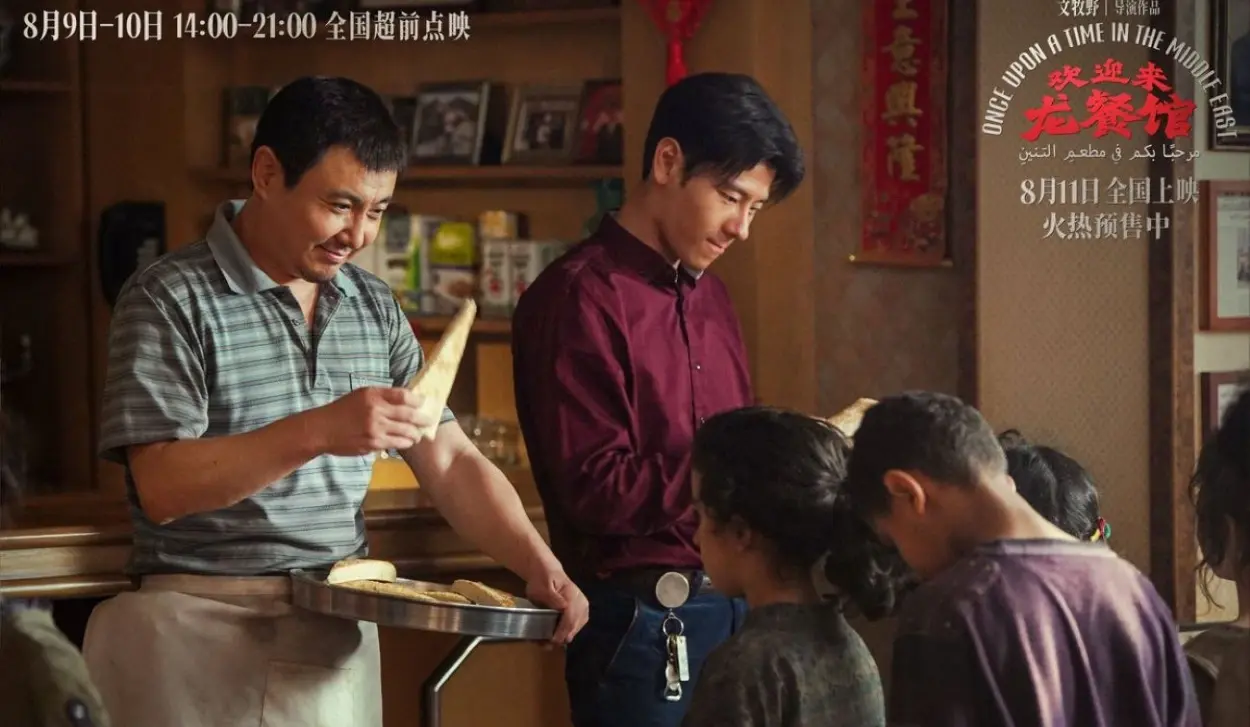
"Once Upon a Time in the Middle East" follows Xu Fu, a Chinese chef who finds himself in the middle of a desperate struggle to save lives during a war conflict in the Middle East.
His survival instinct does not involve fighting. Instead, he tries to feed people and preserve a semblance of a normal life while everything around him falls apart.
"Viewers described the film as one of the most emotionally powerful Chinese films in recent years. Some experts called it the first Chinese realistic anti-war film. Even before international distribution, the film is attracting attention abroad. Viewers point out that it challenges stereotypical storytelling patterns and brings a perspective rarely seen in this genre," reports China Media Group.
One scene perhaps best summarizes this – a line about "peace and good food". "Bon appetit", or "enjoy your meal", is an expression that in the Chinese language carries an everyday wish for a good and peaceful life. In the film, it becomes a silent act of defiance.
Traditional Chinese chopsticks, square at one end and round at the other, are sometimes associated with the ancient Chinese concept of a square Earth under a round sky. Sharing food for the Chinese is much more than an everyday habit – it is an act of care, connection, and showing closeness. In the midst of war, this simple act takes on a completely new meaning.
"This film absolutely deserves an Oscar for Best Picture," wrote one viewer. "Others pointed out that the film does not have to compete with anyone - it simply tells its own story," the same source states.
In the film "Once Upon a Time in the Middle East", the heroes are not soldiers. They are ordinary people trying to preserve their humanity. American soldiers also appear, but not as saviors, rather as people trapped in the same quagmire of war.
As some viewers from abroad pointed out, the film is "undoubtedly one of the most direct and unvarnished critiques of Hollywood".
The film does not lecture and does not tell you what to think. It simply shows a chef, a restaurant, a war, and small acts of kindness that survive despite everything.
What the film leaves behind is a simple message - an "accessible good meal" should be the normality for people all over the world.