BISHKEK SUMMIT: 25 YEARS OF THE "SHANGHAI SPIRIT" AND TRUE MULTILATERALISM
China - SCO
09/02/2026
09:47

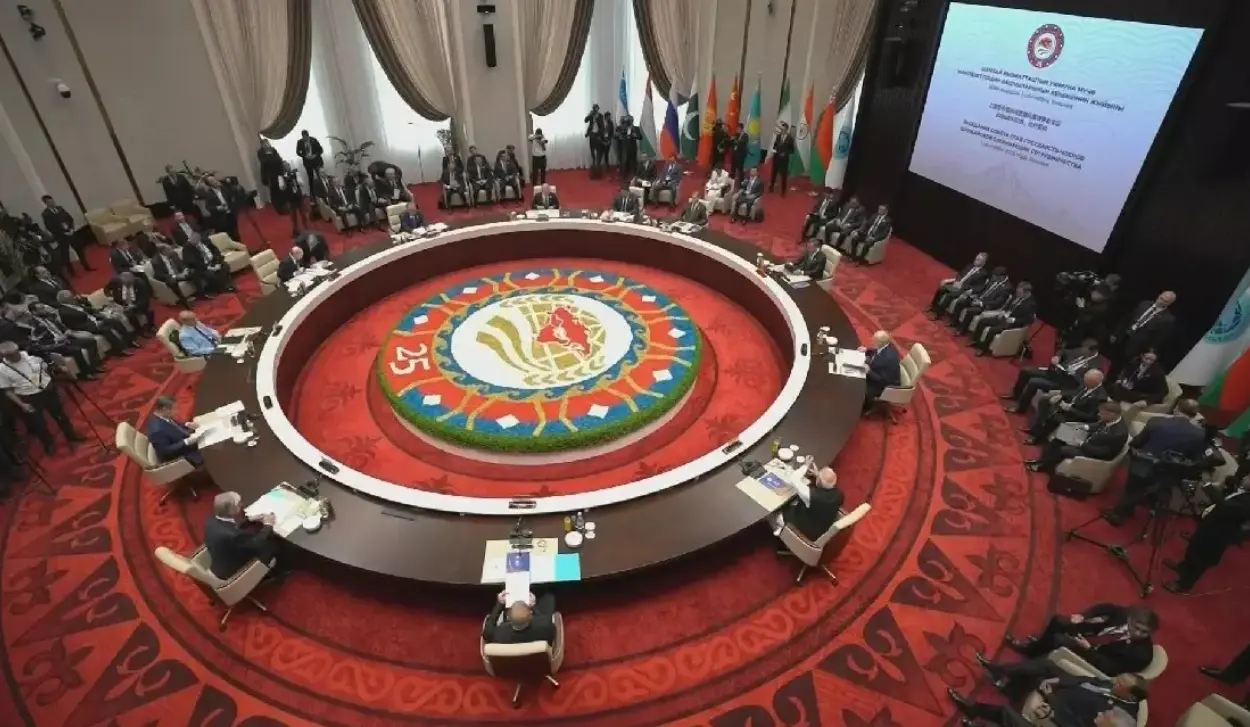
BEIJING, SEPTEMBER 2 /SRNA/ - Aleksandar Mitić, a senior research fellow at the Institute of International Politics and Economics, said that the Shanghai Cooperation Organisation /SCO/ demonstrates that, following the major conflicts caused by the expansion of Western alliances, a different approach to security multilateralism is both possible and achievable, and that the Bishkek Summit shows that security is inseparable from the issue of connectivity.
“While the expansion of Western alliances, such as NATO’s eastward expansion in Europe or US alliance structures in the Asia-Pacific, has led to dramatic global militarisation, major conflicts, tensions and uncertainty, the SCO model, which is marking its 25th anniversary with the Bishkek Summit, shows that a different approach to security multilateralism, one focused on consultation, mutual benefit and sovereign equality, is not only possible, but achievable,” Mitić said.
He said that a quarter of a century ago, at the height of US unilateralism and the Western “rules-based order,” few could have predicted that a regional format spanning Eurasia, with members having different political systems, security cultures and strategic priorities, would take root, let alone become a highly important actor and an organisation with cooperation in more than 50 areas.
There is no doubt, he added, that the People’s Republic of China played a very important role in transforming the “Shanghai Spirit” into concrete regional cooperation, genuinely multilateral and focused on connectivity and mutual respect, rather than on building artificial geopolitical and security barriers.
As he noted, this is also reflected in the theme of this year’s Summit, “25 Years of the SCO: Together Towards Sustainable Peace, Development and Prosperity,” which highlights the fundamental principle that security is unsustainable and inseparable from the issue of connectivity - infrastructure, energy, digital, trade, cultural and people-to-people connectivity.
“Bishkek, Kyrgyzstan and Central Asia as a whole will therefore, during the Summit, become a platform for inclusive regional diplomacy that must continue to turn the region into a bridge rather than a space for geopolitical competition and the promotion of the strategic interests of third powers from outside the continent,” Mitić said.
He stressed that this is precisely one of the key characteristics of the “Shanghai Spirit” - freedom to choose one’s development path and the right to make a civilisational choice, rather than uniformity imposed through supposedly “universal,” but essentially Western liberal values, the China Media Group reported.
He emphasised that Chinese President Xi Jinping’s global initiatives have also contributed to this spirit, as they have advocated precisely such an approach, which is why they have received strong support across Eurasia and globally.
“It was therefore entirely logical that it was at last year’s SCO Summit in Tianjin that President Xi Jinping presented the Global Governance Initiative, which the Republic of Serbia was among the first countries in the world to publicly support,” Mitić said.
He said it was to be expected that the results of the work of the SCO Centre for Countering Security Challenges and Threats and the SCO Anti-Drug Centre, established at that Summit, would be presented in Bishkek.
“The scourges of terrorism, separatism and extremism remain a key focus of security cooperation among SCO members, which over the past 25 years has prevented more than 1,400 terrorist and extremist incidents,” Mitić noted.
He added that at the Tianjin Summit, President Xi presented a whole range of concrete proposals aimed at strengthening connectivity and coordination among SCO members across all economic, political and security spheres, including the green and digital economies and artificial intelligence, which have since resulted in 160 projects.
“The role of China in promoting trade within the SCO is best illustrated by official data showing that in 2001, when the organisation was founded, Beijing’s trade with the other SCO members amounted to $12.1 billion, and that in 2025 it reached $523 billion,” Mitić said.
He said the Summit and President Xi’s visit to Bishkek are expected to provide additional momentum to the construction of the China-Kyrgyzstan-Uzbekistan railway.
Mitić said that Central Asia as a region, and its connectivity, are becoming increasingly important to Serbia as well, as demonstrated by Serbian President Aleksandar Vučić’s important bilateral visits to Kazakhstan, Uzbekistan and China over the past year.
“Although Serbia is not part of the SCO structures, there is a clear trend towards growing political and economic cooperation and the establishment of strategic partnerships between Belgrade and the members of the world’s largest regional organisation,” Mitić concluded.