ZEMUN RECEPTION CAMP EXHIBIT DOCUMENTS KOZARA VICTIMS
Republika Srpska - Serbia - Tuleković
12/08/2025
15:05

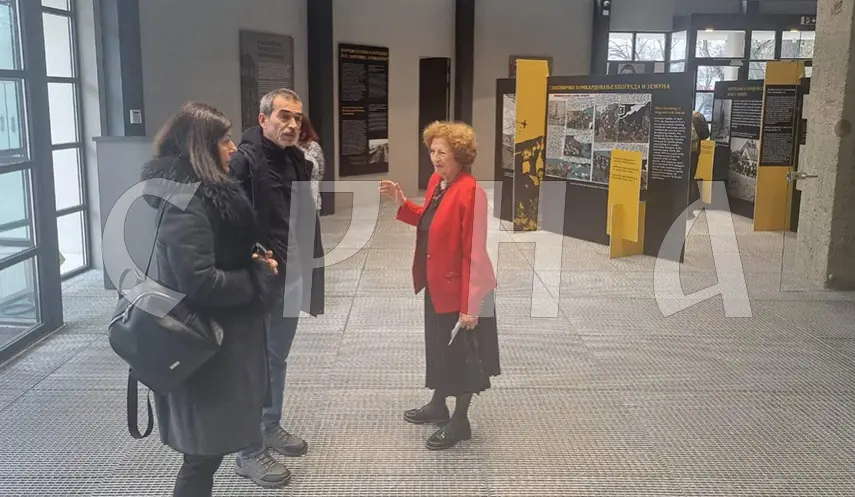
KOZARSKA DUBICA/ZEMUN, DECEMBER 8 /SRNA/ – The exhibition "Zemun Reception Camp 1941–1944" by Milan Koljanin and Asja Drača Muntean was opened today at the "Staro sajmište" Memorial Center in Zemun. The exhibit also documents the suffering of a large number of people from Kozara who were transported by the "train of horror" to the camp following the Kozara offensive in the summer of 1942.
The opening of the exhibition, held in the Central Tower, was attended today by the Director of the Public Institution "Donja Gradina Memorial Area," Tanja Tuleković, together with the institution’s curators Dejan Motl and Mirko Dimić.
In a statement to SRNA, Tuleković said that the "Old Fairground" Memorial Center and the "Donja Gradina Memorial Area" have previously cooperated in documenting historical facts through academic conferences, and now also through this exhibition, "Zemun Reception Camp 1941–1944."
"For this exhibition we provided certain materials, which further highlights the importance of cooperation between our institutions. The Zemun Reception Camp was a place of suffering for many Kozara residents who were transported there by the so-called `train of horror` after the Kozara offensive in the summer of 1942," Tuleković said.
She reminded that in April 1942, German forces in Serbia and the Ustashas reached an agreement to transfer able-bodied men from the Jasenovac and Stara Gradiška camps to the Zemun reception camp in order to send them on to labor camps in Norway.
"In the summer of 1942, a massive number of Serbian detainees arrived after the offensive on Kozara. Inhumane conditions—such as malnutrition, physical and psychological exhaustion, and diseases caused by poor hygiene and inadequate nutrition—resulted in extremely high mortality rates. It was yet another in the chain of death camps for Serbs, Jews, and Roma," Tuleković noted.
She added that the suffering of Kozara residents in Zemun is further documented in publications of the Donja Gradina Memorial Area, such as The Book of Remembrance, The Book from the Silence: The Ustasha Crime of Genocide in the Village of Međeđa 1941–1945, Draksenić 1941–1945, Sreflije 1941–1945, Pucari 1941–1945, as well as the photo collections from the institutions.
Tuleković emphasized that cooperation between these two important memorial centers in Republika Srpska and Serbia will continue in the coming year.
The exhibition "Zemun Reception Camp 1941–1944" highlights the second phase of the camp’s existence, during which nearly 32,000 people were detained from 1942 to 1944, more than 10,600 of whom perished.