YOUNG PEOPLE MUST NOT FORGET SARAJEVO SERBS’ EXODUS
Republika Srpska - Istočni Stari Grad - culture of remembrance
03/13/2026
17:10

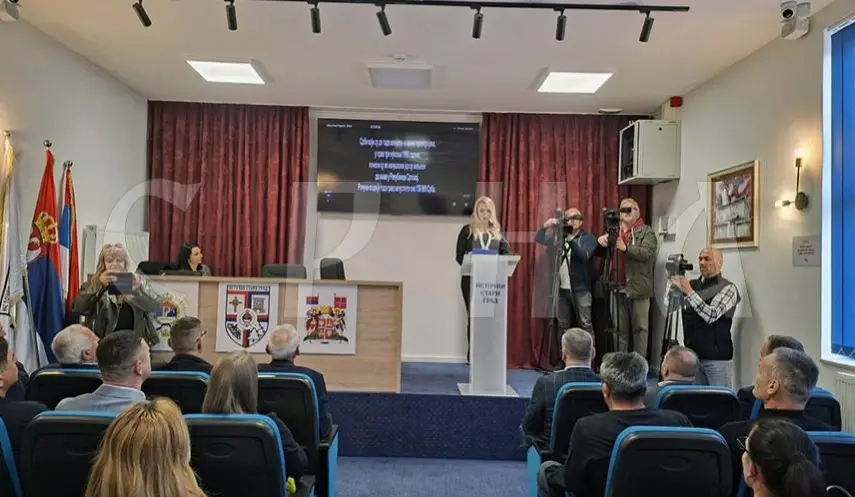
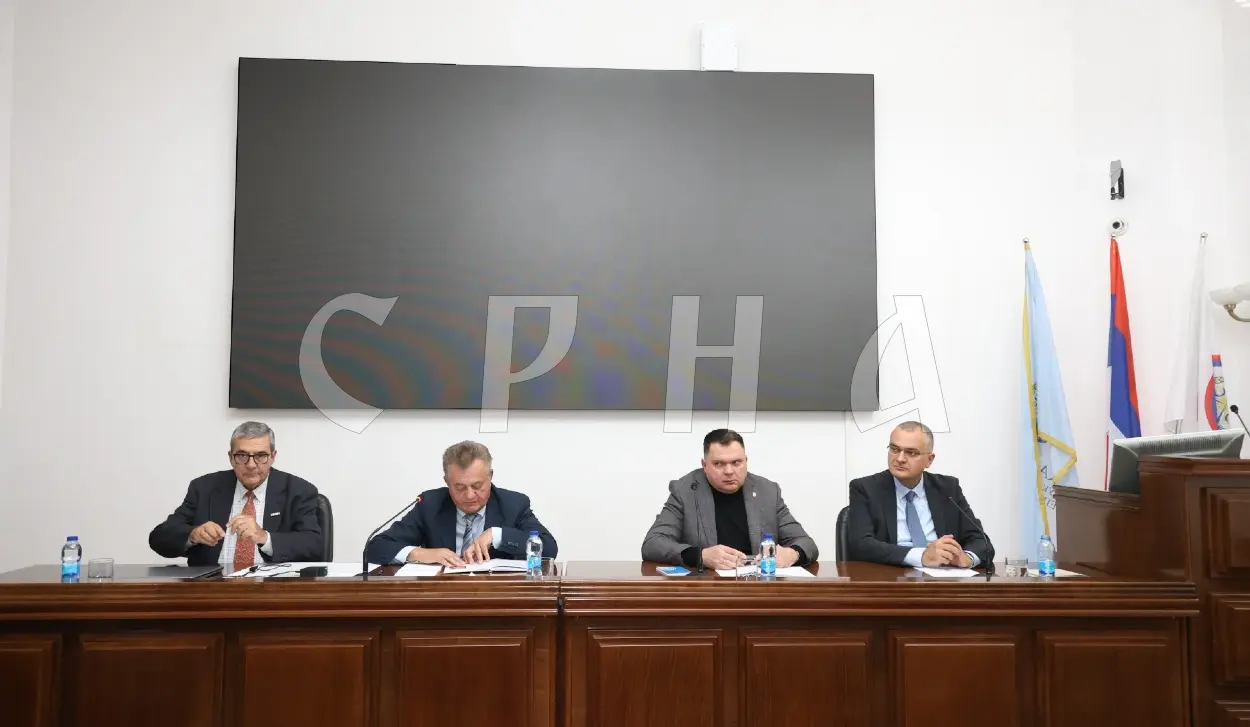
ISTOČNO SARAJEVO, MARCH 13 /SRNA/ – The official gathering marking the 30th anniversary of the exodus of Sarajevo Serbs was held today in Istočni Stari Grad, which sent the message that younger generations must not forget that golgotha, and that those people took part in the defence of Republika Srpska.
Participants of the gathering emphasized that high school pupils should watch the film "Exodus Again", directed by Snježana Lalović, as well as university students so they would know how to preserve Republika Srpska, bearing in mind the sacrifices made by those who created and defended it.
Kosta Plakalović, then head of the municipality at the time, said that something like that must never happen again to any nation in the world.
"It happened - God willing, it will never happen again!" Plakalović said, adding that the film cannot fully portray the scenes of elderly people, youth and the wounded meeting along the way, travelling on sledges and in vehicles, taking their livestock with them.
According to him, Serbs from Hadžići, Ilidža, Ilijaš, Rajlovac, Vogošća and other municipalities left their homes, passed through the territory of Istočno Stari Grad and searched for places where they could settle.
Malko Koroman, then chief of the Public Security Station in Pale, said that after the signing of the Dayton Peace Agreement those Serb-controlled municipalities became part of the Federation of BiH, and Serbs no longer felt safe there, so they began looking for accommodation for their families in the territory of Republika Srpska.
"The leadership of Republika Srpska at the time decided that our people should move to the areas that belonged to Srpska, so Serbs from Hadžići went to Bratunac, while others moved to different regions. At least 100,000 out of 130,000 Serbs at the time did not know where they were going," Koroman recalled.
He said that in that difficult situation it was necessary to secure fuel and vehicles, adding that he encountered Serbs who had lost their ID cards but carried the bones of their sons in bags.
"These are the difficult situations that today’s youth cannot understand," Koroman said, adding that for the Serbs leaving their homes the most important thing was to take the remains of their loved ones, even though they did not know where they were going.
Mayor of Istočno Sarajevo Ljubiša Ćosić, who was a child at the time of the exodus, said that Serbs in Istočno Stari Grad are aware of what this local community and the city of Istočno Sarajevo mean for Republika Srpska, and what Republika Srpska means for the Serb people.
"We who were children at that time do not have much right to speak today; we have an obligation to listen to what these people have to say and to learn from their testimonies the path we should follow in the future," Ćosić emphasized.
He said that this is the path of patriotism toward Republika Srpska, the Serb people, and the effort to build a just society.
According to him, it is a great success to have created a stable city of Istočno Sarajevo with its six municipalities, one of which is Istočno Stari Grad, while marking such dates and nurturing a culture of remembrance is very important.
"We must not betray what these people did for the then Serb Stari Grad and Republika Srpska," Ćosić said.
The mayor of Istočni Stari Grad municipality, Bojo Gašanović, said there are differing opinions on whether Serbs 30 years ago should have left or remained in their centuries-old homes.
"What is important is that we defended every inch of our land during the Defensive-Patriotic War. The Dayton Peace Agreement did its part and established certain borders that did not fit the story of the Sarajevo Serbs," Gašanović said.
He stated that Sarajevo Serbs preserved Republika Srpska by leaving Sarajevo, adding that what is particularly sad is that they took their dead with them, thus proving that they did not want to live in the Federation of BiH, but with the Serb people in Republika Srpska for which they fought.