ŠUVAK: NEWBORN EQUIPMENT ASSISTANCE PROCEDURE TO BE DIGITIZED
Republika Srpska - Ministry of Administration
09/22/2026
09:37
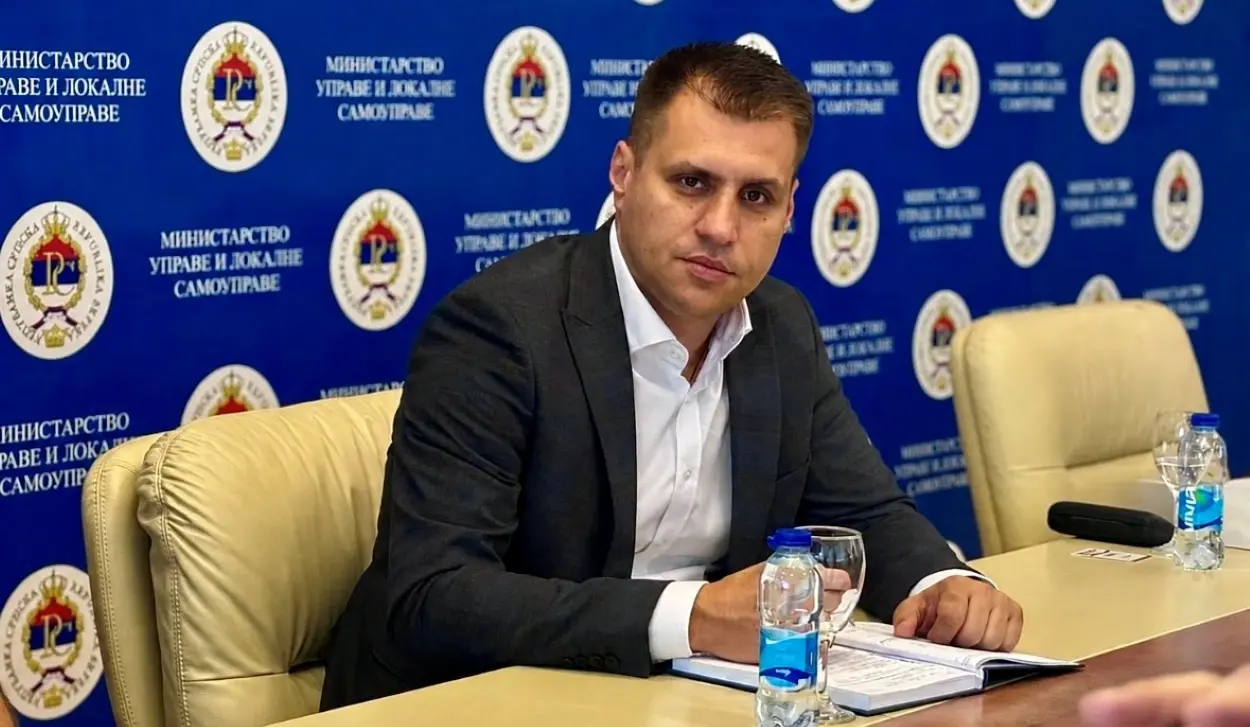
BANJA LUKA, SEPTEMBER 22 /SRNA/ – The digitization of applying procedure for a one-time newborn equipment allowance will be one of the priorities in the coming period, with the aim of largely automating and simplifying the process, Aleksandar Šuvak, Assistant Minister of Administration and Coordinator for Republika Srpska Public Administration Reform, told SRNA.
Šuvak said that digitization is one of Republika Srpska's strategic priorities and an inevitable component of public administration reform, aimed at establishing an administration capable of providing quality and efficient services to citizens and the business community.
"The digitization goal is to establish a user-oriented public administration without waiting at counters, while enabling services to be accessed electronically," Šuvak said.
He stressed that this entails improving procedures, reducing the administrative burden and ensuring that services are available through various communication channels.
ELECTRONIC DATA EXCHANGE REDUCES PAPERWORK
According to him, significant steps have already been taken in Republika Srpska in the digitalization of public administration, with an increasing number of procedures operating on the principle that institutions obtain data directly from official records rather than requiring citizens to provide it themselves.
"This means less paperwork, shorter deadlines and greater efficiency in the administration's work," Šuvak said.
He cited civil registries as one example, an area under the jurisdiction of the Ministry of Administration and Local Self-Government, noting that data digitization has created the prerequisites for electronic data exchange with other institutions.
Data is now exchanged with the Republika Srpska Pension and Disability Insurance Fund /PIO/ from birth, citizenship and marriage registers, making it easier for citizens to exercise their pension and disability insurance rights.
"Data from civil registries is now replacing three documents that were previously mandatory," Šuvak said.
Notaries have been enabled to obtain data from civil registries electronically, meaning citizens no longer have to visit registry offices to obtain certificates and extracts in order to complete notarial procedures. A similar principle is also being applied in the area of child protection.
Šuvak also recalled that since the 2023/2024 school year, as part of electronic enrollment in primary schools, the necessary student data from civil registries has been obtained electronically, meaning parents no longer have to collect birth and certificates of citizenship.
"All these examples mean faster access to rights, lower costs and less paperwork for citizens, more efficient work of institutions, and faster administrative procedures, fewer bureaucratic obstacles and greater legal certainty for economy," Šuvak stressed.
CLEAR STRATEGIC AND LEGAL SOLUTIONS REQUIRED FOR REFORM CONTINUATION
Speaking about public administration reform, he said that the process in Republika Srpska is being carried out through joint activities and coordination of the public administration reform process in BiH, as well as through activities independently undertaken by Republika Srpska, while respecting the constitutional competences of each level of government.
"Good administration must be based on the rule of law, openness and transparency, professionalism, efficiency and accountability, together with responsible management of taxpayers' funds," Šuvak stressed.
He noted that Republika Srpska has implemented numerous reforms in various areas, largely financing them independently, and that the Republika Srpska Government continuously plans further directions for the development of public administration reform in accordance with its competences.
Šuvak said that continuing the reform process requires clear commitments, strategies and plans, while the implementation of defined measures is carried out through laws and by-laws.
"Support for more comprehensive digitalization and public administration reform requires clear commitments and the adoption of the necessary strategic and legal solutions," Šuvak said.
He added that this should also take into account the alignment of reform processes with EU requirements, while respecting the constitutional competences of Republika Srpska.