RELIABLE INFORMATION CRUCIAL TO FINDING MISSING PERSONS
Republika Srpska - Red Cross
09/14/2026
15:36
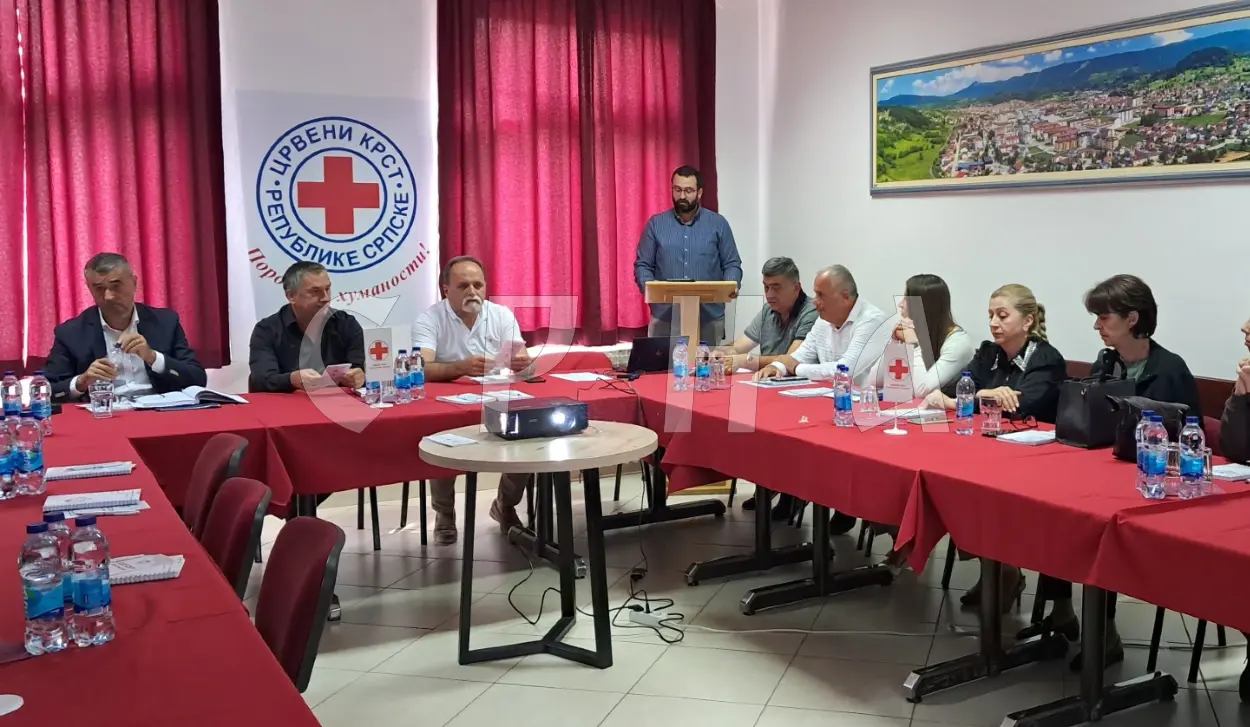
PALE, SEPTEMBER 14 /SRNA/ - The process of searching for missing persons in BiH is unacceptably slow and new approaches are needed to achieve better results, it was said today at a round table in Pale held ahead of September 15 - the Day of the Missing and Fallen.
Acting Secretary of the Nevesinje Red Cross Aljonka Dželetović said that over the past year and a half, the remains of 22 persons of Serb nationality had been found and identified, which shows how much longer the search for the remaining victims could take.
Dželetović, who is also president of the Municipal Organisation of Families of Fallen, Missing and Captured Persons, believes that the academic community and experts should be involved in the process, and that anonymous submission of information should be enabled, along with rewards for those who provide information about possible burial sites.
"Families have been left to fend for themselves," Dželetović said, stressing that over the years families have provided institutions with numerous pieces of information and evidence concerning missing persons.
She stressed that families have the right to learn the fate of their relatives and give them a dignified burial.
The round table, held at the headquarters of the Red Cross of Republika Srpska, was attended by representatives of the organisation of captured and fallen soldiers and missing civilians, local communities and other institutions, as well as the BiH Missing Persons Institute.
Head of the Tracing Service of the Red Cross of Republika Srpska Miloš Purković said that, according to official data, only one out of every 10 field visits turns out to be accurate.
He appealed to everyone with information about burial sites, mass graves and individual graves to report it to the Tracing Service of the Red Cross of Republika Srpska or the BiH Missing Persons Institute.
Head of the Institute’s Department for Tracing, Exhumations and Identifications Miroslav Lučić said that one of the biggest problems in searching for missing persons is the lack of reliable information about locations.
He stressed the need for better information exchange and more intensive cooperation between institutions responsible for searching for missing persons, as well as for harmonising data on the number of missing persons recorded in the registers of the Institute and institutions of Republika Srpska.
"Our goal and task are essentially the same, namely to find missing persons. Any differences should not affect our work and efficiency," Lučić said.
Speaking about criticism of the Institute’s work, Lučić said that the institution itself was not satisfied with the number of identifications either, but that the results corresponded to the conditions in which they work. He also cited insufficient political and financial support as one of the problems.
Lučić added that any reduction in the presence of the International Commission on Missing Persons in BiH could further affect the identification process, particularly when it comes to DNA analyses, which is why the Institute has taken over the collection of blood samples from family members of missing persons.
Republika Srpska is still searching for 1,608 missing persons, including 351 women and 10 children, a total of 975 civilians and 608 Serb soldiers.
In Republika Srpska, September 15 is observed as the Day of the Missing and Fallen in remembrance of all those who went missing or were killed in the wartime conflicts in the territory of Republika Srpska.


SCOTLAND, WALES AND NORTHERN IRELAND CALL FOR INDEPENDENCE REFERENDUM
RELIABLE INFORMATION CRUCIAL TO FINDING MISSING PERSONS
ŠKRBIĆ RECEIVES RECOGNITION IN THE UNITED STATES FOR ACHIEVEMENTS IN SCIENTIFIC RESEARCH

ORBAN: COMMON FOREIGN POLICY MEANS GIVING UP SOVEREIGNTY