RASTUŠA CAVE – ONE OF THE LARGEST BAT HABITATS IN REPUBLIKA SRPSKA
Republika Srpska - Teslić - coverage
06/28/2026
12:48
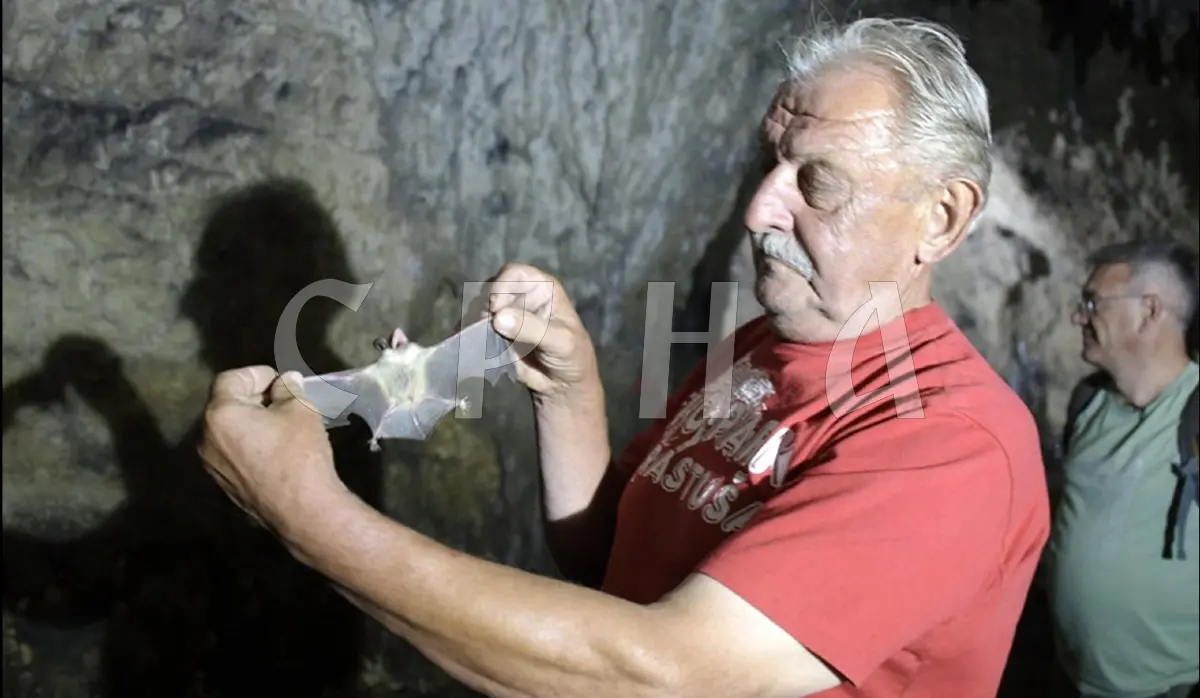
Archaeological artifacts discovered during excavations in Rastuša Cave indicate that it was inhabited by Neanderthals during the Paleolithic and Middle Paleolithic, or Mousterian period, between 150,000 and 30,000 BC. By Ana Bencun
TESLIĆ, JUNE 28 /SRNA/ – Rastuša Cave, located in the village of Rastuša near Teslić, is one of the largest bat habitats in Republika Srpska, ehich offers visitors the opportunity to admire unique cave formations while also exploring a site that served as a Neanderthal habitat tens of thousands of years before Christ.
Rastuša Cave is one of only three caves in Republika Srpska that have been developed for tourism with an improved access road, interior lighting, and a network of walkways extending approximately 370 metres through the cave.
The cave operates on a regular schedule and guided tours are available, allowing visitors to learn more about its history and natural features.
Teslić Tourism Organisation Director Danijel Petrović said Rastuša is of great importance to the municipality asit represents a fully developed tourist attraction that will help draw visitors and stimulate tourism development by making use of the area's rich natural potential.
LEOPARD-SKIN PATTERN – A UNIQUE CAVE WALL FORMATION
The most striking feature for visitors is a wall formation in one of the cave passages resembling a leopard's skin. "Such a pattern exists in only two other caves in Europe, near Paris and Vicenza," Petrović explained.
The silence of the cave, especially in the section where bats nest, is interrupted only by the flutter of their wings and the quiet but distinct sounds they use to communicate.
Few people know that this cave is one of the largest bat habitats in Republika Srpska, and Petrović says it is also the perfect place for visitors to overcome their fear of bats.
"Adults are usually the ones who are afraid to enter, but once they do, they realize there is nothing to fear. A bat sees you simply as an obstacle that it will skilfully avoid," Petrović said.
CAVE FORMATIONS TAKE THOUSANDS OF YEARS TO DEVELOP
Although Rastuša is not among the caves richest in cave formations, its interior scenery is breathtaking.
Boris Radić, an archaeologist at the Republika Srpska Institute protecting cultural-historical and natural heritage of Republika Srpska, explained that cave formations develop over thousands of years.
"They are created through the deposition of minerals from water rich in calcium carbonate that drips from the cave ceiling. Everywhere you look, you can see drops of water waiting to fall or already falling to the floor," Radić said.
Drop by drop, over years and centuries, the water forms stalagmites rising from the cave floor or stalactites hanging from the ceiling.
"The most impressive sight is when a stalactite and stalagmite eventually meet to form a single column, a masterpiece created entirely by nature, without any human intervention," Radić explained.
ARCHAEOLOGICAL DISCOVERIES INDICATE NEANDERTHALS LIVED IN RASTUŠA CAVE
Rastuša Cave is the only confirmed cave site in northern BiH known to have been inhabited by Neanderthals, whose anatomy closely resembled that of modern humans.
Radić said archaeological artifacts uncovered during excavations indicate that the cave was inhabited during the Paleolithic and Middle Paleolithic, or Mousterian period, by Neanderthals who lived between 150,000 and 30,000 BC.
Research at the cave began relatively late, in the 1970s, when cave bear bones were discovered. More extensive excavations started in 2010 and continued over the following two years under the leadership of Professor Preston Miracle of the University of Cambridge.
"Three archaeological trenches were opened. One yielded cave bear bones, while the other two produced around 500 flint artifacts, which are extremely important because they tell us about human development and the way people lived during that period," Radić said.
He explained that flint was then the primary material used to make tools for hunting and for working wood and bone.
"When flint is shaped through percussion, it can produce an edge only a few microns thick. Experimental archaeology has proven that flint can cut virtually anything, even steel," Radić said.
REMAINS OF CAVE BEARS, LIONS DISCOVERED, AS WELL S OF RHINOCEROSES, BEAVERS AND DEER
In addition to cave bear and cave lion bones, archaeologists have also recovered remains of rhinoceroses, as well as beaver and deer bones, which are not typical cave animals.
Radić says this suggests that prehistoric humans brought them into the cave as hunting prey. He adds there is still considerable potential and need for further archaeological work and the plan is to resume excavations at Trench Three as soon as the necessary financial and other conditions are in place..
"It is the deepest trench, reaching a depth of 4.5 metres, but we found there is another metre and a half of unexplored sediment, therefore it is possible that it contains an even older Mousterian layer, perhaps dating back 150,000 years," Radić said.
CAVE SILENTLY PRESERVES REMAINS OF DISTANT PAST, AS WELL AS PRESENT-DAY BELIEFS AND HOPES
The Rastuša Cave silently preserves the remains of a distant past, but also the beliefs and hopes of the present. Roughly halfway through the cave, at a junction of passages near the place where bats have made their nests, there is a narrow opening believed to grant wishes to those who manage to squeeze through it.
This local belief was recounted by resident Blagoje Radić, who said he always shares the story with visitors, while adding that he cannot confirm whether it is actually true.
"On one occasion, a young woman interrupted me, saying that she could testify it was true because she had wished to become pregnant after passing through the opening, and her wish came true," Radić recalled.
Blagoje Radić is not only a local resident but also a devoted enthusiast of the village of Rastuša and the natural treasures of the area. He was one of the driving forces behind the initiative to prepare the cave for visitors in 2006.
"I got the idea to begin this project after dreaming of a giant bat for three consecutive nights. There were people who didn't believe I would succeed and said I was crazy, but I saw something new and valuable here. We cleaned the cave, opened an access route and built a pathway about 370 metres long," Radić said.
Twenty years ago, together with several like-minded people, he founded the Rastuša Ecological and Tourism Association, which continues to clear new trails and encourage people to reconnect with nature.
"Over all these years we have accomplished a great deal, taken part in numerous activities and helped wherever help was needed. We do our best to keep working as long as we are able because this hill, where the cave is located, contains five caves with six entrances. My wish is to prepare one more cave for visitors while I am still alive," Radić concluded.