PLOTAN: SUCCESSFUL LISTING ON LONDON STOCK EXCHANGE OPENS DOOR FOR SRPSKA'S ECONOMIC TURNOVER
Republika Srpska - economy
03/30/2026
10:14
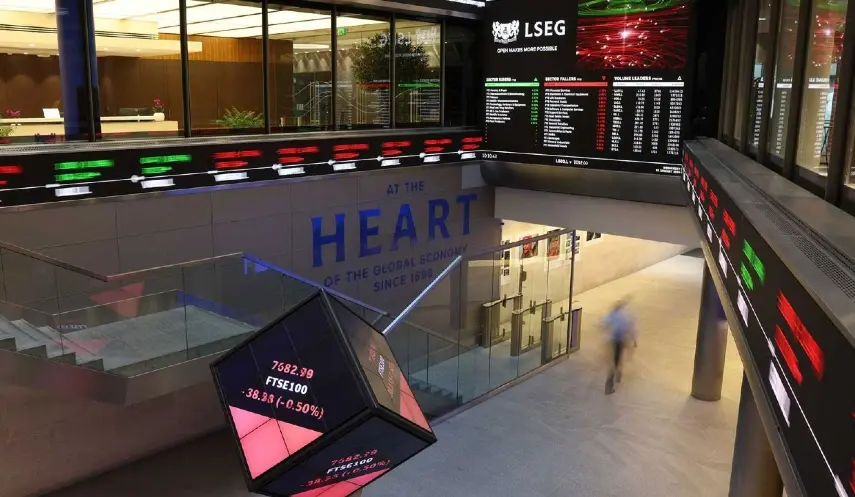
BANJA LUKA, MARCH 30 /SRNA/ - Republika Srpska has just successfully placed bonds on the London Stock Exchange, which is not merely a technical financial operation, but a historic step that puts Srpska on the real international map, Nemanja Plotan, an expert in international and economic policy, assessed for SRNA.
Plotan pointed out that London is not just any stock exchange, but the heart of global capital, and that by selling its bonds on this prestigious market, Republika Srpska has moved out of the financial margins and into the center of attention of serious investors who seek stability, predictability, and a realistic return.
"This achievement is the result of years of concrete policies, fiscal discipline, and a clear vision that Srpska is not a risky area, but a reliable partner," Plotan stated in his column, which SRNA published in its entirety:
However, in today's media space there is a lot of confusion regarding bonds, and many have interpreted this move by the Government of Republika Srpska as a bad political decision or proof that the state cannot meet its financial obligations.
Bonds are simply a debt that a state takes from investors, in return paying them interest. This is not a "loan from a bank" with high interest rates, but a sophisticated and transparent instrument used by all modern economies.
From Germany and Japan to the United States, no serious economy functions without issuing bonds. This allows the state to finance infrastructure, energy, agriculture, and development without choking the economy with excessively high taxes.
POLAND 14TH LARGEST RECIPIENT OF FOREIGN DIRECT INVESTMENT IN WORLD AND HAS ONE OF FASTEST GROWING ECONOMIES IN EUROPE
Poland is a country that, after the fall of communism in 1989, regularly issued sovereign bonds on international markets, including eurobonds listed precisely on the London Stock Exchange.
This was a key part of their strategy to return to global capital markets and build credibility in front of foreign investors. The result was a massive inflow of foreign direct investments /FDI/, which cumulatively exceeded 250 billion dollars by 2020, with an additional 28.6 billion dollars in new investments in 2023 alone. This made Poland the 14th largest recipient of foreign direct investment in the world.
GDP per capita jumped from below the Eastern European average to over 80 percent of the EU average. Today, Poland is one of the fastest-growing economies in Europe, with a strong industrial sector, low unemployment, and full integration into European supply chains.
Studies clearly show that the combination of access to international bond markets and the inflow of FDI was the main engine of that growth.
WHEN LONDON ACCEPTS OUR BONDS, IT MEANS THAT FOREIGN INVESTORS HAVE CONCLUDED THAT SRPSKA IS GOOD PLACE FOR INVESTMENT
Republika Srpska has now taken the same path. Therefore, the successful placement on the London Stock Exchange is not just a financial step, but an open door to the same kind of economic turnaround.
When London accepts our bonds, it means that foreign investors have carefully read our financial statements, assessed the risks, and concluded that Republika Srpska is a good place for investment. The numbers confirm this.
According to official data from the Ministry of Finance of Republika Srpska, the total public debt of Srpska at the end of 2024 stood at 3.42 billion euros, or just 38.9 percent of GDP. This is far below the global average, which has long exceeded 90, and even 100 percent in many countries.
Republika Srpska has legal limits that prevent public debt from exceeding 60 percent of GDP and the budget deficit from going above 3 percent of GDP – clear proof of fiscal responsibility.
On February 6, 2026, S&P Global Ratings affirmed the "B" rating, noting that thanks to improved access to domestic and international capital markets, Srpska is in a better position to refinance its obligations due in 2026.
Projections show that tax-supported debt will gradually decrease, supported by solid economic growth of around 2.8 percent annually in the period 2026–2028.
The interest rate of 6.25 percent may seem high at first glance, but when placed in the real context, the picture is quite different. Republika Srpska holds a "B" rating, which means investors demand a risk premium.
Under such conditions, 6.25 percent is not overly expensive – especially since demand was almost twice the offered amount. This is the price of credibility that all countries with similar risk profiles must pay.
When S&P Global Ratings confirms a "B" rating with a negative outlook, many immediately look for the culprit in Republika Srpska, forgetting the key actor that has contributed the most to this situation – the Office of the High Representative /OHR/.
The World Bank's Political Stability and Absence of Violence/Terrorism Index dropped dramatically precisely during periods of the most aggressive OHR interventions. Although this is not the only factor, the clear negative correlation shows that foreign interventions often produce the opposite effect of what is intended – less stability, less investor confidence, and more difficult access to cheaper capital.
That is why Republika Srpska pays a higher interest rate, not because of fiscal irresponsibility, but because the struggle for sovereignty and the normal functioning of institutions continues within the Dayton framework.
For this very reason, the successful placement of bonds on the London Stock Exchange is not only a financial success, but also a powerful political and economic proof that the Republika Srpska has managed to overcome the negative interventionism of the OHR and has become visible on the global capital market.
Once the first serious funds, banks, and companies arrive, others will surely follow. This creates a chain reaction that brings new factories, new technologies, and new markets for products from Srpska.
In addition, the Republika Srpska has a stable convertible mark pegged to the euro, controlled inflation, and a liquid banking sector. As part of the wider BiH framework, it also enjoys favorable free trade agreements with the EU, EFTA, CEFTA, and Turkey – which can open doors for our products and further attract investments in the future. All this, together with a well-structured budgetary process and strong control over expenditures, makes Srpska attractive for foreign direct investment.
Srpska is today in an excellent position to develop economically faster than ever before. This is the best possible signal to young people, entrepreneurs, and everyone who loves this country – that it is worth staying, investing, and believing in the future of Republika Srpska, because even London has shown that it is worth it.