NUŽDIĆ: REPUBLIKA SRPSKA GUARANTOR OF SERBS' SURVIVAL ON CENTURIES-OLD HOMES
Republika Srpska - Research Centre of War
02/19/2026
12:04
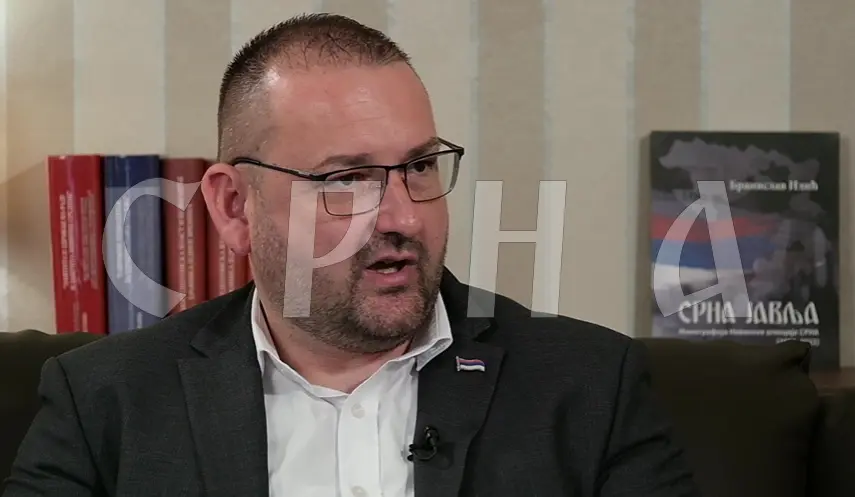
BANJA LUKA, FEBRUARY 19 /SRNA/ – Republika Srpska is a guarantor of survival and a symbol of the Serb people's determination never again to allow themselves to be expelled from their centuries-old homes, said Viktor Nuždić, Acting Director of the Republika Srpska Research Centre of War, War Crimes and Tracing Missing Persons.
He emphasized that it is everyone's obligation to preserve the culture of remembrance of the Sarajevo Serbs exodus, to speak the truth about their suffering, and to insist on justice for all victims, without double standards.
"Only the full truth and equal treatment of all victims can be the foundation of genuine reconciliation," Nuždić told SRNA on the occasion of the upcoming marking of 30 years since the Sarajevo Serbs exodus.
Nuždić pointed out that Sarajevo today is almost without Serbs who for centuries were a constituent part of the city, while are now reduced to a statistical error.
"Particularly offensive are slogans such as `Caco is alive` and attempts to minimize crimes against Serbs referring to them as `little mistakes,`" Nuždić said.
He noted that additional pain is caused by the fact that the Court and Prosecutor's Office of BiH are now located in the premises of the former Viktor Bubanj barracks, where Serbs were tortured and imprisoned during the war, which for many survivors represents a new trauma and a reminder of the most difficult days.
According to him, the exodus of Sarajevo Serbs after the signing of the Dayton Peace Agreement was one of the saddest scenes in recent history of Serbs.
"Convoys of people were leaving their homes, the graves of their ancestors, churches and property, carrying with them the remains of their loved ones, because they saw no security or future in the city where they had lived before," Nuždić stressed.
He said that Republika Srpska became a home to many who had to leave Sarajevo, where they found security, refuge, and the opportunity to rebuild their lives.
Nuždić recalled the tragic events that determined the fate of the Serb people in Sarajevo and led to their mass suffering and eventual departure from their centuries-old homes.
He stated that the killing of the wedding guest in Baščaršija on March 1, 1992, represented the moment when the last illusions that the survival of Serbs in Sarajevo was possible under the new circumstances were shattered.
"At the same time, a referendum was organised in which the will of the Serb people was completely disregarded. After that, a series of tragic events followed that fundamentally changed the image of Sarajevo, but also of the entire BiH," Nuždić recalled.
He added that already in April members of the Yugoslav People's Army /JNA/ were being killed, and that on May 2 and 3 in Dobrovoljačka Street, after a violated agreement, an attack was carried out on a JNA convoy and a crime committed against innocent soldiers.
"These events were an introduction to a period of fear, uncertainty, and systematic persecution of the Serb population in Sarajevo," Nuždić emphasized.
He said that the terror against Sarajevo Serbs was reflected in the killings of Serb intellectuals and prominent figures, such as Dr. Milutin Najdanović and singer-songwriter Slobodan Samardžić, as well as in daily arrests, detentions, and abuse in prison camps such as Silos in Tarčin, Hrasnica, the Central Prison, the Viktor Bubanj barracks, and other sites of suffering.
"Many detainees never left those torture sites, while numerous survivors carried permanent health consequences. `Kazani` remains one of the most harrowing symbols of the suffering of Serbs in Sarajevo,” Nuždić stressed.
He stated that additional bitterness is caused by the fact that these crimes have been relativized and minimized, and that some have attempted to portray them as minor or isolated incidents.