NOTHING WAS HANDED TO SERBS, SRPSKA WAS PAID FOR WITH THOUSANDS OF LIVES, WE MUST PROTECT IT
Republika Srpska - Kalinić - column
11/09/2026
09:56

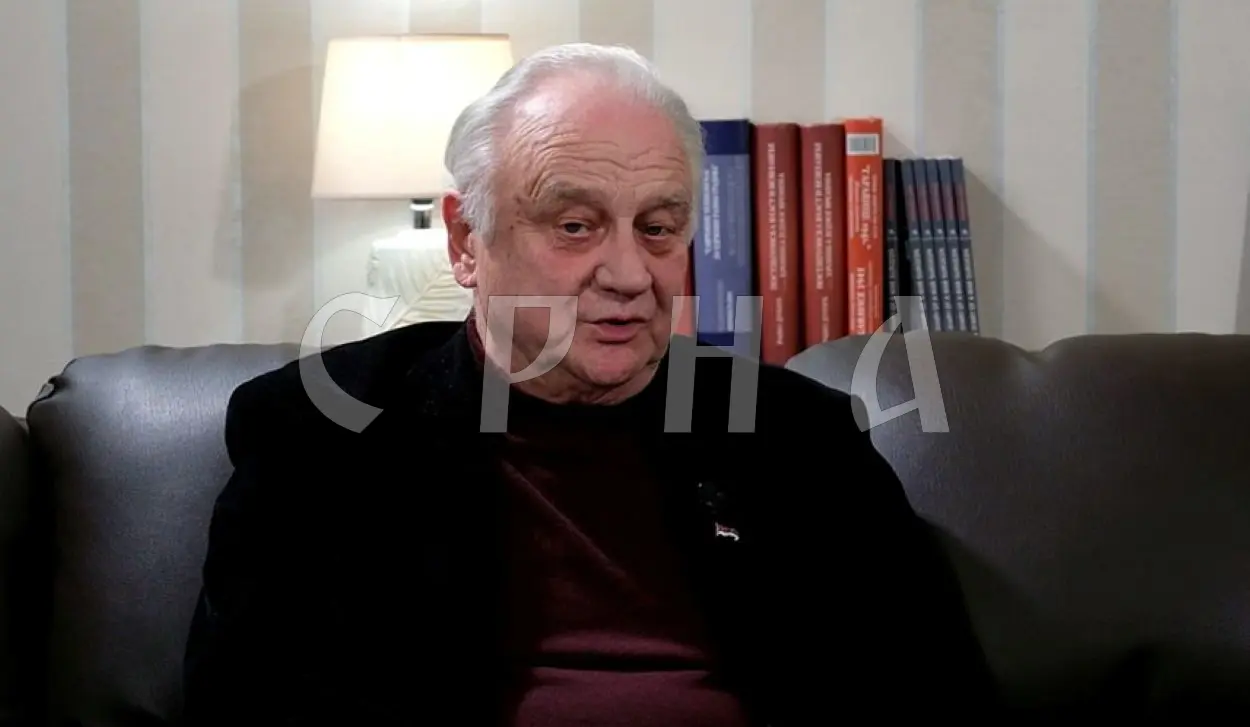
PALE, NOVEMBER 9 /SRNA/ – More than 30 years after the war, the turbulent history of the Serb people is a warning that they must still remain vigilant, united and rallied around the Serb leadership, with a clear vision of what they want and what they can realistically achieve in the equally difficult years ahead, former Republika Srpska National Assembly Speaker Dragan Kalinić told SRNA.
Kalinić noted that nearly 1.4 million citizens had voted in the plebiscite of the Serb people in BiH, held on November 9 and 10, 1991, and 98 percent of them had voted to remain in Yugoslavia, even a truncated one.
He said the plebiscite decision had been incorporated as early as February 1992 into the first Constitution of Republika Srpska, which stated that "the Republic is part of the federal state of Yugoslavia" and that "citizens of the Republic hold citizenship of the Republic and citizenship of Yugoslavia".
"I would venture to say that, in line with this constitutional provision, which was not implemented at the time, the international agreement reached in Dayton gave Republika Srpska special parallel relations with Serbia, which include, among other things, the possibility of dual citizenship," Kalinić wrote in a column for the Republika Srpska Media System - SRNA.
SRNA is publishing in full the column by Kalinić, who took part in the historic events that led to the 1991 plebiscite of the Serb people in BiH:
This year, when most of the media attention has gone to marking 35 years since the founding of the Assembly of the Serb People in BiH, we should not overlook other decisions and events of November and December of that historic year, 1991.
On that historic day, October 24, 1991, the newly founded Assembly decided, on the basis of the constitutional right to self-determination, to call and hold a plebiscite of the Serb people in BiH.
Before that, the deputies had decided that the Serb people would remain in the joint state of Yugoslavia, together with Serbia, Montenegro and others who chose to remain.
All of this was done to fully and permanently protect the rights and interests of the Serb people.
As the following years would show, those interests came under serious threat after the unprincipled Muslim-Croat coalition in the BiH Assembly of the time passed a Declaration of Independence and set about seceding this Yugoslav republic.
The Serb deputies gathered in the Assembly of the Serb People on October 24 concluded that "a conspiracy to reduce the Serbs, as a constituent people in BiH, to a national minority has been going on for a long time".
That had already happened to our people in Croatia, when, under Franjo Tuđman, they were removed from the Croatian Constitution as a constituent people.
So there was a real danger that a tragic history, including genocide, would repeat itself.
The deputies of the first convocation said at the time that the Serb people had a historical and genuine interest in living in one federal state with the rest of the Serb people, as well as with other peoples who wished to do so.
All of this formed the legal and political basis for holding the plebiscite of the Serb people in BiH on November 9 and 10.
Nearly 1.4 million citizens voted in the plebiscite, and 98 percent of them voted to remain, even in an incomplete Yugoslavia.
In February 1992, the plebiscite decision was incorporated into the first Constitution of Republika Srpska, which stated that "the Republic is part of the federal state of Yugoslavia" and that "citizens of the Republic hold citizenship of the Republic and citizenship of Yugoslavia".
I would venture to say that, in line with this constitutional provision, which was not implemented at the time, the international agreement reached in Dayton gave Republika Srpska special parallel relations with Serbia, which include, among other things, the possibility of dual citizenship.
And let us not forget that the Croats have exercised that right from day one. Today's self-appointed guardians in Europe pay no attention to this.
However paradoxical much of this may look from today's historical distance, it is important to know that November and December 1991 were a key period of rapid political and institutional disintegration of Yugoslavia, which also engulfed BiH.
In those and the following months, the Serb leadership at the time and the deputies of the Serb Assembly made many politically and legally grounded decisions aimed at protecting the people in every possible way ahead of the all but certain tragic war that would break out the year after the plebiscite.
In those November and December days of 1991, Serb autonomous regions were established, which would later serve as the foundation for Republika Srpska.
The Croats, protecting themselves, proclaimed the Croatian Community of Herzeg-Bosnia.
The European Community, following the guidelines of the Badinter Commission, invited all former Yugoslav republics to apply for international recognition. The republics were encouraged by the prospect that their administrative borders would be recognized as state borders.
The BiH Presidency of the time did so by outvoting Biljana Plavšić and Nikola Koljević, while the Serb Assembly, fully aware of all this, began preparing at the end of December for the proclamation of Republika Srpska in January.
In such turbulent times, the Serb leadership needed great visionary wisdom to hold on to the guiding historical thread. It ultimately led to the creation of Republika Srpska, the adoption of its first Constitution, the election of its first government and the establishment of many key democratic bodies and institutions, so that we were ready for the war imposed on the Serb people from outside.
We came to the Dayton Agreement with Republika Srpska defended. For the sake of peace and a stable future, we agreed, with heavy hearts, to cede part of the sovereignty and territory we had built before the war and defended during it, to the newly formed BiH.
Our young generations should know that nothing was handed to us in Dayton.
On the contrary, we paid a heavy price for all of it, with the lives of thousands of our finest sons and daughters and the loss of our ancestral homes.
More than 30 years after the war, this turbulent history warns us that if we are not vigilant, united and rallied around our leadership today, with a clear vision of what we want and what we can realistically achieve in the equally difficult years ahead, we could lose everything.
Let us think carefully about everything, about all the messages and lessons of the past 30-plus years, so that we will not regret it later, when it is too late.