MEMORIAL SERVICE HELD FOR VICTIMS OF USTASHA TERROR IN TRNJAK AND DONJA DUBICA
FBiH - Odžak - remembrance
12/07/2025
17:11
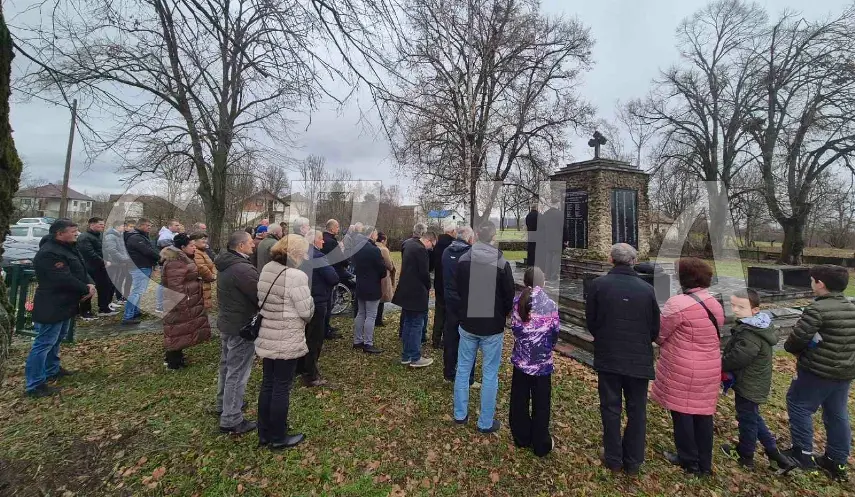
ŠAMAC, DECEMBER 7 /SRNA/ – The infamous NDH on December 6 and 7, 1944, brutally extinguished hundreds of Serb lives in Trnjak and Donja Dubica in the municipality of Odžak /FBiH/, showing no mercy even to infants in their cradles, it was emphasized today on the occasion of the 81st anniversary of the Ustasha crime committed in these villages during the Second World War.
A memorial service was held today in Trnjak and Donja Dubica marking 81 years since the Ustasha massacre in World War II, when 751 people were killed in a barbaric manner, including 143 children - 15 of whom were under 15, and 15 infants in cradles.
In Trnjak, 601 people were killed and more than 150 in Donja Dubica, where only about 50 Serbs live today.
History professor Dimitrije Živanović from Modriča, whose family originates from Donja Dubica, told SRNA that the Serb people suffered simply because they honorably defended their name, their homes, and their Orthodox faith.
“The notorious NDH on December 6 and 7, 1944, cruelly took hundreds of Serb lives. Serbs from Donja Dubica were mercilessly arrested, tortured, and sent to the Jasenovac and Gospić camps, many also to Nazi Germany’s camps, and some even to camps in northern Europe,” Živanović said.
He added that the persecution began in 1941, when Odić’s Ustashas, the Croatian Peasant Guard of Odžak, and Ustashas relocated from Herzegovina launched operations to exterminate the Serbs in this area.
Živanović noted that at an Ustaša rally in Vlaška Mahala, Pavelić’s minister Mile Budak openly called for genocide against Serbs in these regions, and that on December 6 a number of residents of Dubica were slaughtered on the routes toward Brod, Svilaj, and Balegovac. On December 7, Serbs were being killed in Dragić’s shop and a warehouse, and Serbs from the hamlet of Trnjak were also killed the same day.
He stressed that even Orthodox churches were not spared Ustasha terror; icons were desecrated and saints’ eyes were gouged out in the frescoes.
“From December 1944 to May 1945, Ustashas killed more than 800 Serbs in Donja Dubica, Trnjak, and Centar. The village suffered a similar fate in the First World War and again during the most recent Defensive–Patriotic War,” Živanović said.
He emphasized that the goal of some was to ensure that the Serb ear would not survive in this region so that the Serb word and Serb name would disappear.
Savo Vujičić, author of the book Trnjak and descendant of victims of the Trnjak tragedy of December 6 and 7, 1944, told SRNA that during World War II, 693 Serbs lived in Trnjak, of whom only 92 survived because the Ustashas did not find them in their homes.
Vujičić explained that the monument in Donja Dubica lists 751 names, 601 of which belong to residents of Trnjak, and added that not all of them are buried there - 74 are known to have been thrown into the Bosna River on December 6, 1944.
“These were people whom Ustasha authorities deceitfully summoned to defend the area from rising waters of the Bosna River, and that is how they perished,” Vujičić said.
According to him, in the house where he was born, the Ustašas killed 144 people, including all of his paternal ancestors - his grandfather, grandmother, and their six children. His father survived only because he hid in the forest.