EXODUS OF SARAJEVO SERBS AMONG GREATEST SERB TRAGEDIES
Republika Srpska - culture of remembrance - Pejić
03/15/2026
09:40
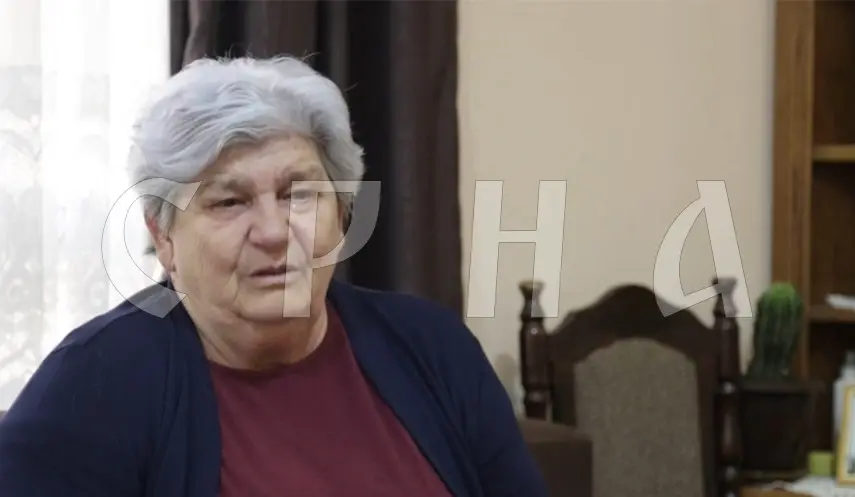
Pejić stressed she would never forget the words of her son, which he often repeated: "What is it, mother? You want Republika Srpska and all your children to stay alive? That’s not possible!"
ISTOČNA ILIDŽA, MARCH 15 /SRNA/ – Jovanka Pejić, who lost her son Bojan during the war, told SRNA that the exodus of Sarajevo Serbs was one of the greatest tragedies that befell the Serb people in the last war and that many in Republika Srpska are not aware of the sacrifice made by Serbs from Sarajevo.
Pejić said that she, her husband, and their two sons were in Sarajevo when the war began and that at first they believed the conflict would last only a few days, which is why they remained in their apartment.
"We could have left, but we wanted to stay with our neighbors. We thought it would last four or five days. When we saw that the fighting was not stopping, we decided to move to Ilidža, where our parents were and where we felt we belonged," Pejić stated.
GUNFIRE ON ILIDŽA DAY AND NIGHT
She said that a Bosniak neighbor took them to the Energoinvest building, from where they continued to Ilidža, where they soon faced the reality of war.
"In Ilidža the war lasted 24 hours a day. Day and night there was shooting from all sides - from Butmir, Hrasnica, Sokolović Kolonija, Igman, Sarajevo and Otes. People were dying, becoming disabled, families were devastated. You could only hear screams and cries," Pejić remembers.
She stressed that the residents of Ilidža defended their homes for four years and that despite fierce attacks the enemy never managed to enter the town.
"Our soldiers fought with heart and soul. There were refugees from other areas too, but the people of Ilidža, who had lived there for generations, defended their town as their home," Pejić said.
WITH MY SON’S DEATH, SORROW ENTERED OUR HOME
According to Pejić, the most difficult moment for her family was May 26, 1994, when her 23-year-old son Bojan was killed in combat.
"When we were told that Battalion Commander Obrad Popadić had been killed, I knew my Bojan had also died because he was with him. I told my husband that our son had been killed, but he could not believe it. Fifteen minutes later the confirmation arrived. That was when sorrow entered our home and never left," Pejić said.
She said her son had been buried in the family grave at Vrelo Bosne and that the family visited the grave every day.
"Each of us carried the grief in our own way. At night I would go out to the stairway thinking I would hear Bojan coming home. Every day we went to the grave, as if we sensed an even greater tragedy awaited us," she said.
Pejić stressed that she will never forget the words her son often repeated:
"What is it, mother? You want Republika Srpska and for all your children to remain alive? That’s not possible."
DAYTON AND THE DECISION TO TAKE EVEN THE DEAD
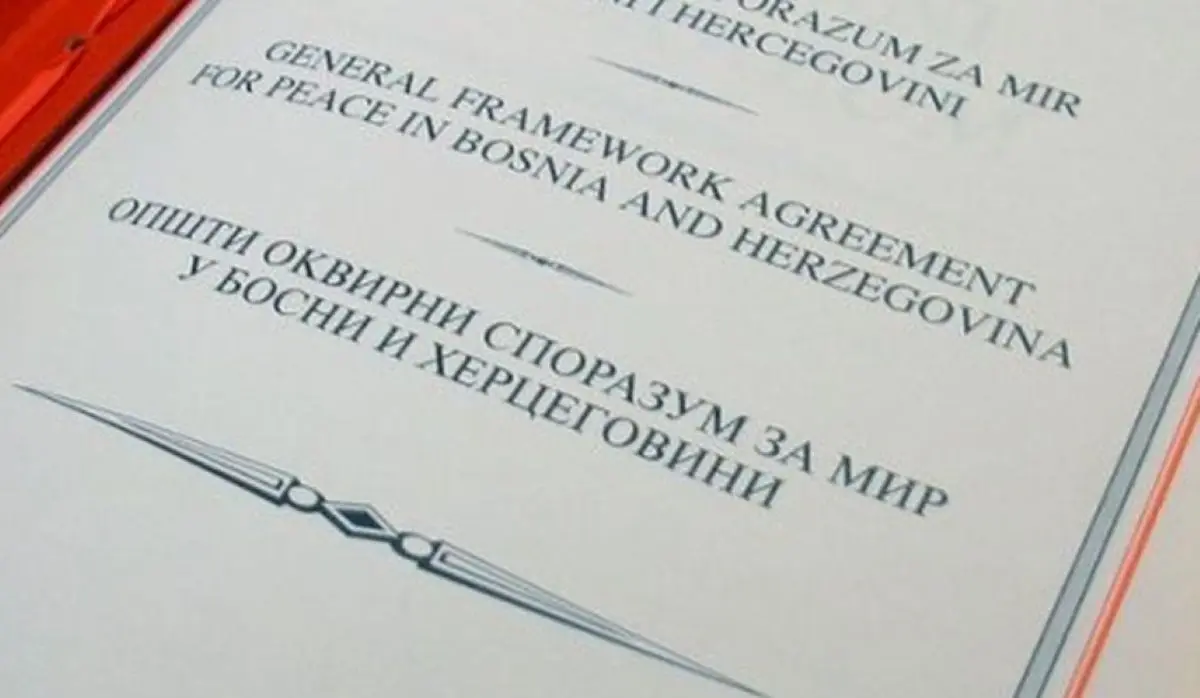
After the Dayton Peace Accords was signed in 1995, Pejić remembered, six Sarajevo municipalities, including Ilidža, were assigned to the Federation of BiH, forcing Serbs to leave their centuries-old homes.
"No one could believe we would have to leave Ilidža, which we had defended for four years. We all wondered what would happen to the graves of our loved ones," she stated.
She said families held a meeting on Jahorina with the Republika Srpska leadership at the time, led by National Assembly Speaker Momčilo Krajišnik.
"At that meeting we discussed what to do with the graves of our children. It was decided that a military memorial cemetery would be established in Sokolac where the remains of fallen soldiers would be transferred," Pejić stated.
She said families were promised trucks, coffins and everything necessary to transfer the remains.
"Although the sorrow was immense, after that meeting we at least knew where our children would rest," Pejić remembers.
EXHUMATION AND SECOND BURIAL IN SOKOLAC
Pejić said that exhuming and transferring the remains was one of the hardest moments for the families of fallen soldiers.
"At Vrelo Bosne 22 young men were buried. When we came to dig up the coffins there was only wailing, screaming and crying. My son had been buried for a year and ten months. The first time I buried him I could hug and kiss him, but then I could not even see him," Pejić said.
She described the convoy of people, trucks, cars and tractors heading toward Sokolac as endless, with the journey lasting more than 24 hours.
"It was a cold February, but our hearts were even colder because we carried the coffins of our children with us. Children and the elderly walked beside the trucks, livestock was being led along. We felt neither hunger nor thirst, only the desire to reach Sokolac and bury our loved ones again," Pejić said.
She remains grateful to the residents of Sokolac who, as she stated, came with shovels and tools to help the families bury their loved ones.
"It is as if I can still see them coming across the meadow to help. I will never forget that," Pejić stressed.
GRANDCHILDREN GAVE HER STRENGTH TO CONTINUE
Today Pejić lives in Istočna Ilidža with her younger son, who after the war had two children named after their uncle - Bojan and Bojana - who gave her the strength to continue living.
She reiterated that few people in Republika Srpska understand what Sarajevo Serbs went through and the sacrifice they made for Republika Srpska to exist today.
"In many places after Dayton people sang and celebrated, which is understandable because the war ended. But here people cried. That is why it is important that our sacrifice is respected and that Republika Srpska is preserved," Pejić said.