MAZALICA: SERBS FACED MAJORIZATION LONG BEFORE MARCH 1
Republika Srpska - FBiH
02/26/2026
10:54

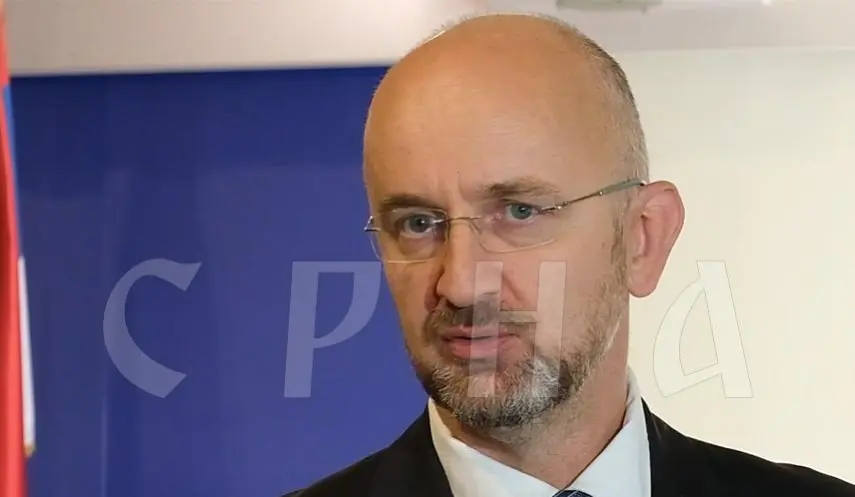
BANJA LUKA, FEBRUARY 26 /SRNA/ - For Serbs in BiH, March 1 represents the beginning of the conflict, and all previous Serb legal and institutional mechanisms, such as the founding of the Assembly of the Serb People and Republika Srpska, and the adoption of its first Constitution, were a response to attempts to remove Serbs from the constitutional and legal system and to force their majorization, head of the SNSD Caucus in the National Assembly of Republika Srpska Srđan Mazalica told SRNA.
"That is why we must constantly remind ourselves that Republika Srpska is justified, because it represents a response to legal violence, and that such legal violence also provoked conflict and war, making our armed response forced," Mazalica emphasized.
He recalled that Serbs had been exposed to outvoting, majorization, and attacks on their constitutional rights in BiH long before March 1, 1992.
"It is worth recalling the statement made by Alija Izetbegović on February 27, 1991, at a session of the Assembly of BiH: `I would sacrifice peace for a sovereign BiH, and I would not give up sovereignty for peace,`" Mazalica said.
He noted that the trigger was an attempt by MPs from the Party of Democratic Action /SDA/ and the Croatian Democratic Union /HDZ/ to put the issue of sovereignty to a vote, with the outcome known in advance. However, MPs from the Serbian Democratic Party /SDS/ at the time activated the Council for National Equality and removed the issue from the agenda.
"However, constitutional mechanisms for protecting the interests and rights of the constituent peoples were not sufficient a year later to prevent an illegal and illegitimate referendum, held without the consent of Serbian representatives and boycotted by Serbian voters. Despite the lack of a two-thirds majority in support of the referendum, Muslims and Croats embarked on a path of division, conflict, and chaos," Mazalica said.
He added that all of this was accompanied by the killing of a Serbian wedding guest in Sarajevo, symbolically on the same day, March 1, which, he said, shows that outvoting and bypassing the will of the Serbs had a deeper background in the form of the dehumanization of Serbs, who came to be treated as a legitimate target and an obstacle to the independence of BiH that needed to be physically removed.
In the part of the Federation of BiH with a Bosniak majority, March 1 is marked as the so-called Independence Day of BiH, as an illegal referendum on independence and secession of BiH from the Socialist Federal Republic of Yugoslavia was held on that date 32 years ago. Serbs in Republika Srpska remember March 1 for the killing of a Serbian wedding guest in Sarajevo, which served as the trigger for the outbreak of the war.
This tragic date is not observed as a holiday in Republika Srpska; instead, November 21 is commemorated, the day when the General Framework Agreement for Peace in BiH was initialed at the Wright-Patterson Air Force Base near Dayton, marking the end of the civil war in BiH.


DODIK: EUROPEAN PATH POSSIBLE WHEN BRUSSELS ACCEPTS SRPSKA WITHIN ITS CONSTITUTIONAL CAPACITY

DODIK: ANNUL DECISIONS THAT HAVE NOT GONE THROUGH PARLIAMENTARY PROCEDURE

DODIK: REPUBLIKA SRPSKA DELEGATION TO VISIT CHINA BY THE END OF THE YEAR
DODIK: PROCLAIMING NEW CONSTITUTION ON JANUARY 9 PLANNED