KARAN: SRPSKA OPEN TO INVESTMENT; STRONG INSTITUTIONS FOUNDATION OF ECONOMIC GROWTH
Republika Srpska - president
09/28/2026
21:33
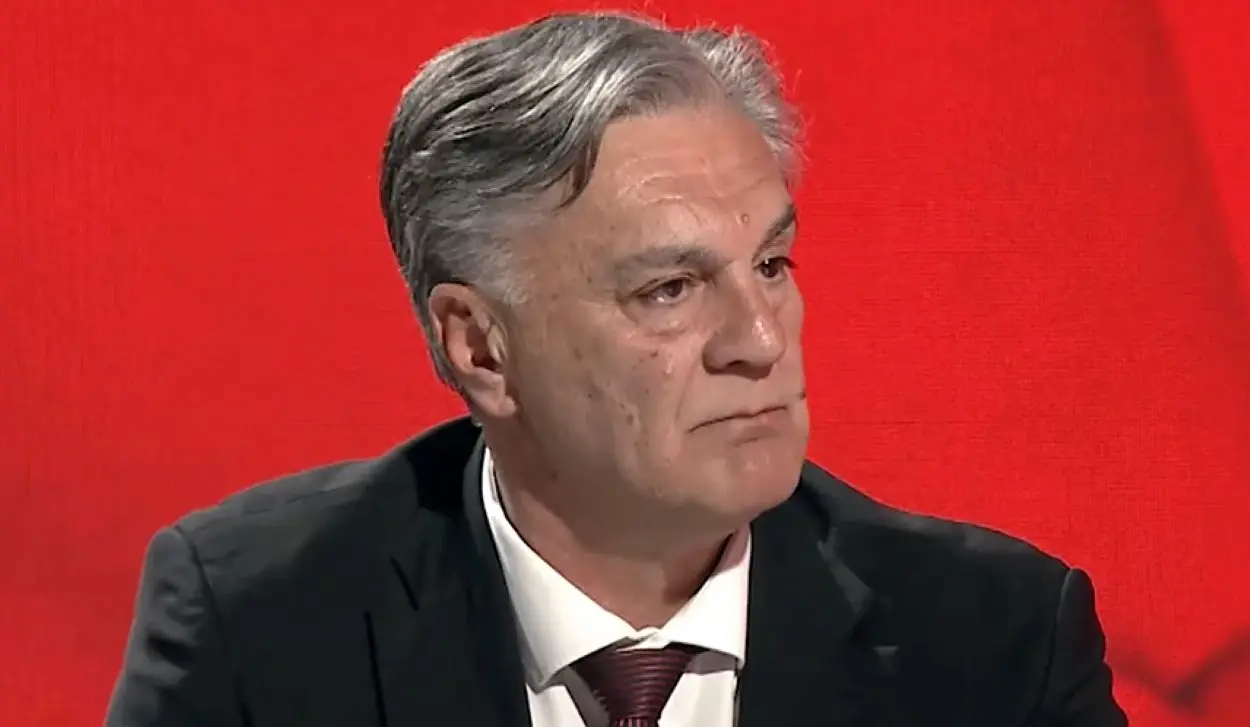
BANJA LUKA, SEPTEMBER 28 /SRNA/ – Republika Srpska President Siniša Karan states that Srpska is open to investments and that political and economic stability, together with strong institutions, are the foundation of its further development.
Karan noted that Srpska has recorded growth in living standards, employment, and other microeconomic and macroeconomic indicators over the past three decades.
“Republika Srpska is an open place for investments. Today, we are focused on major economic projects,” Karan told ATV.
He said that the Republika Srpska Government had adopted the National Development Plan for Srpska through 2030, which envisages major infrastructure projects throughout the Republic.
“There is not a single municipality or city without work being underway or major infrastructure projects being planned,” Karan said, citing the construction of transport infrastructure and connections with Belgrade, as well as major investments in the power industry.
Karan assessed that, without resistance at the level of BiH, Srpska’s economic growth would be even faster.
He also pointed to the development of tourism, saying that some cities and areas are now unrecognizable compared with 20 years ago, while certain tourist destinations receive exceptionally large numbers of visitors during the season.
Karan emphasized that strong institutions are one of Srpska’s key characteristics, stating that there has been no institutional crisis over the past 20 years.
“Today we are talking about a prosperous Srpska that is moving forward and becoming better every day,” Karan said.
He said that investors from various countries recognise Srpska as a place with fewer administrative obstacles, a favourable security situation, and strong institutions.
“No one invests money in an unsafe place. Srpska has become favourable ground in all spheres,” Karan said.
Speaking about international relations, Karan said that he had spoken today with American economist and Columbia University professor Jeffrey Sachs about the changes brought by a multipolar world, as well as major conflicts and challenges the international law has been facing.
Karan said that Srpska representatives had recognised the changes brought by the multipolar world and established contacts with political and economic centres of power that previously would have been difficult to imagine.
“The narrative toward Republika Srpska has completely changed. The truth about Republika Srpska has reached the right centres of power,” Karan said.
He said that the result of these contacts was the arrival of businesspeople from some of the world’s most powerful countries, including Russia, the United States, Israel, and China.
“Losing opponents and having partners instead is an enormous benefit,” Karan said.
As an example, he cited meetings between SNSD Leader Milorad Dodik and Russian President Vladimir Putin, emphasizing that the result of those meetings was well-being and benefit for the Srpska citizens.
Karan also emphasized the importance of the democratic legitimacy of institutions, stating that the legitimacy of government derives from the democratic will of the people and that there can be no economic progress without strong institutions.
Speaking about the work of the Republika Srpska Government, Karan said that it was performing well, which is why there had been no need for him to exercise his constitutional powers with regard to the executive branch.
“When institutions work well, the president is left with protocol-related activities,” Karan said.
Speaking about his presidential term, Karan said that his election was confirmation of people’s will.
“This term has only demonstrated that no one is above the people. This was confirmation that the people are stronger than a thousand Schmidts; the people defended their will, and my election was a defence of that will,” Karan said.
He stressed that national sovereignty is something that remains permanent.

CVIJANOVIĆ: PERIOD OF DEVELOPMENT AND STABILITY AHEAD OF REPUBLIKA SRPSKA
CVIJANOVIĆ: BOSNIAK POLITICAL ISSUES NO LONGER FIND FERTILE GROUND INTERNATIONALLY
IDDO NETANYAHU: BIJELJINA THE MOST EMOTIONAL BOOK PRESENTATION SO FAR
KARAN: SRPSKA OPEN TO INVESTMENT; STRONG INSTITUTIONS FOUNDATION OF ECONOMIC GROWTH