KALINIĆ: ESTABLISHMENT OF ASSEMBLY OF SERB PEOPLE IN BiH WAS HISTORIC MOVE
Republika Srpska - SRNA - Podcast
10/23/2026
10:24

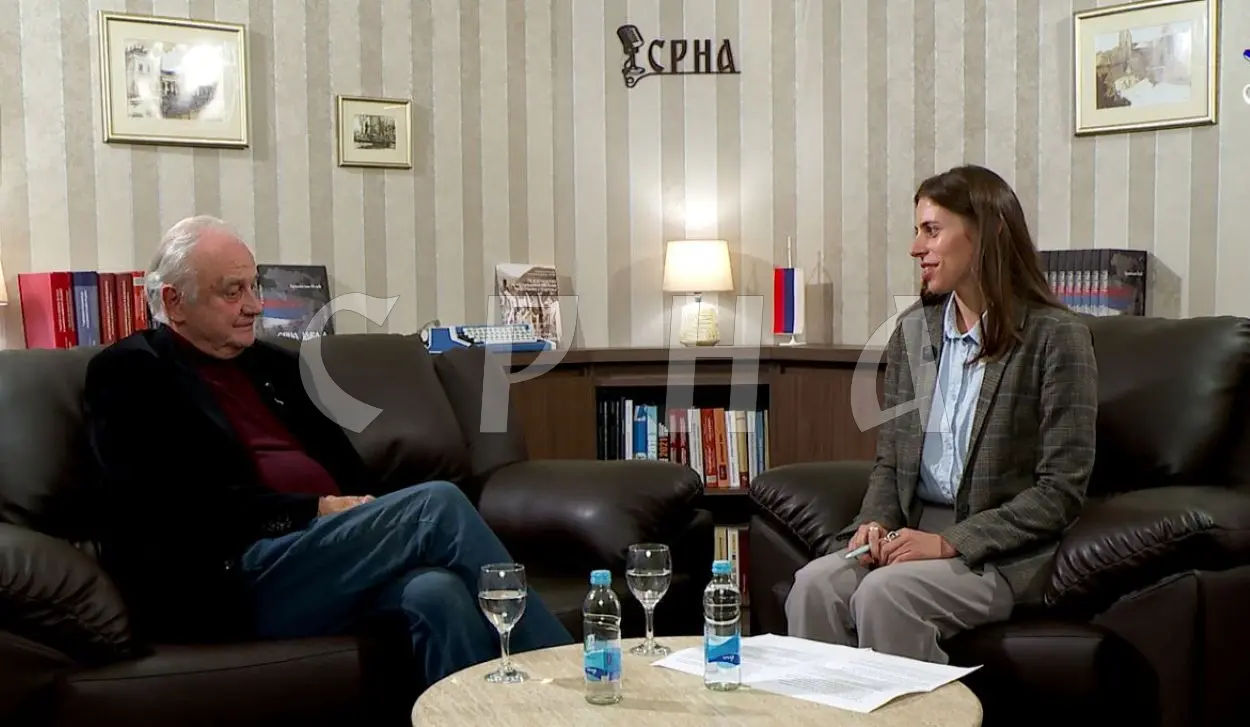
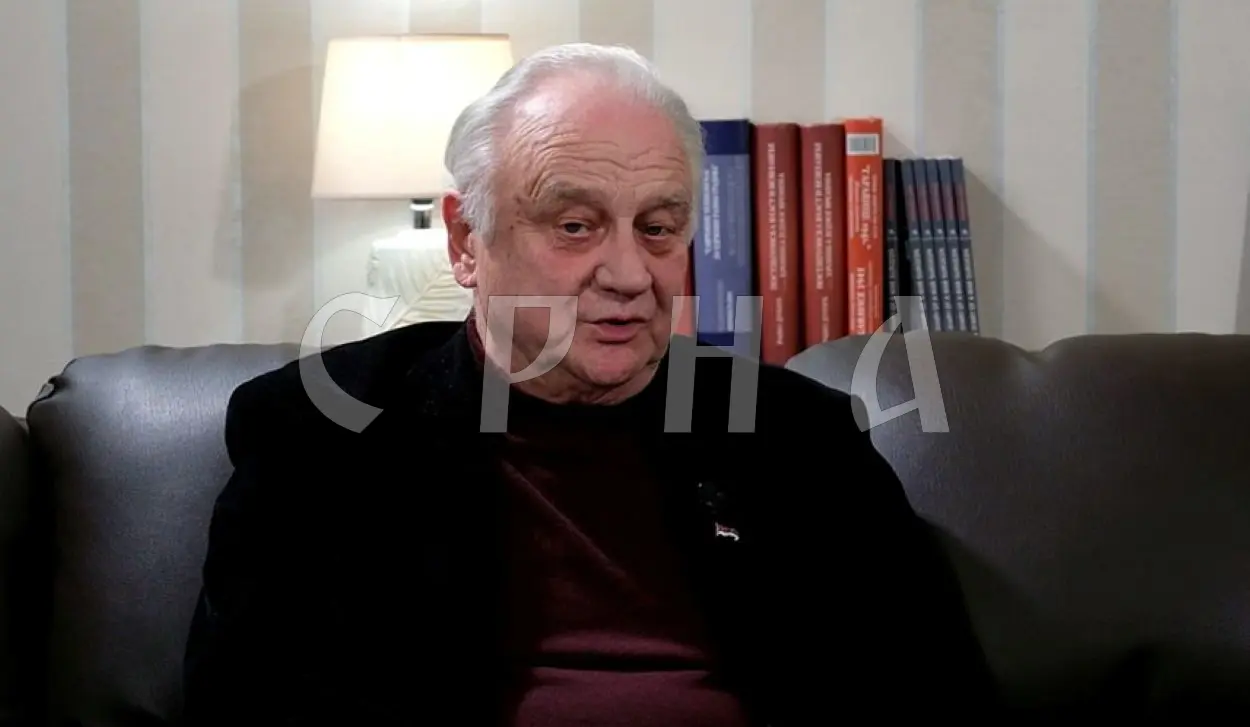
BANJA LUKA, OCTOBER 23 /SRNA/ - Former President of the National Assembly of Republika Srpska Dragan Kalinić told SRNA that the establishment of the Assembly of the Serb People in BiH on October 24, 1991, was a historic move because it prevented the tragic fate that had befallen Serbs in previous wars from being repeated.
Speaking on the podcast of the Republika Srpska Media System - SRNA, Kalinić stressed the importance of emphasizing that the establishment of Republika Srpska and the formation of its institutions began before the outbreak of the armed conflict in BiH, and that the decisions taken at the time were of historic significance for the Serb people, demonstrating their resourcefulness and capabilities.
Speaking about the significance of the decision to establish the National Assembly of Republika Srpska, taken 35 years ago, Kalinić revealed that the Serb deputies at the time may not even have been fully aware of its full historical significance.
OUTVOTING AWAKENED FEARS THAT SERBS COULD SUFFER SAME FATE AS IN TWO WORLD WARS
He recalled that Serbs were then part of the Assembly of the Socialist Republic of BiH, where he himself headed the parliamentary group of the Union of Reform Forces, whose members included Milorad Dodik, Momo Mičić, Nikola Perić and several other Serb deputies from different political parties.
"At the time, a declaration on the independence of BiH was introduced in the Assembly by deputies from the HDZ and SDA, united under the famous flags. In essence, it meant that BiH was seceding from the rump Yugoslavia against the will of the Serb people. Yugoslavia still consisted of Montenegro, Macedonia and Serbia, while Slovenia and Croatia had already seceded," Kalinić noted.
He said that he and his colleagues from the reformist ranks and the Serb Democratic Party /SDS/ opposed the adoption of the document, but were outvoted, which foreshadowed the possibility that the Serbs might once again suffer the tragic fate they had experienced in the past.
"Muslims - Bosniaks and Croats outvoted the Serbs in that joint assembly. Behind this lay our fear that what had happened to the Serbs in these territories during the First and Second World Wars could happen again," Kalinić recalled.
He noted that the Serb deputies subsequently left the session and moved to another hall, where they proceeded to establish the Assembly of the Serb People in BiH.
"We left the session at the time, with only Momo Krajišnik remaining to preside over it for a while, and we moved to the 'Blue Hall'. In addition to SDS deputies, reform-minded deputies of Serb national orientation and representatives of the Serbian Renewal Movement /SPO/ also took part in establishing the Assembly," Kalinić said.
DECISION OPENED EYES OF MANY SERBS
Speaking about the significance of the decision adopted on October 24, 1991, he stressed that the Serb deputies may not have fully realized its importance at the time.
"I believe our decision at that moment was historic. Perhaps we were not even aware of its full weight and significance. I was given the floor and said that I had joined the Assembly of the Serb People because I had broken with my communist and reformist misconceptions, particularly those concerning brotherhood and unity and everything else that fell under the umbrella of the Yugoslavia of that time. I said I was coming not under the SDS umbrella, but under one roof with my own people," Kalinić recalled of his address at the time.
He said the decision served as a signal that opened the eyes of Serbs in Sarajevo and other cities, many of whom had until then believed that the declaration of BiH's independence would pass without conflict.
"Our decision opened their eyes, too. I can cite the examples of my fellow doctors - more than 200 of them from Sarajevo - and nurses who left in order to escape persecution, and some even liquidation," Kalinić stressed.
Speaking about the suffering at the time, he also cited the case of Professor Dr Milutin Najdanović, a prominent SDS member who was most likely killed by the Green Berets.
MOST IMPORTANT DECISION - PROCLAMATION OF SERB REPUBLIC OF BiH WAS MADE IN SARAJEVO
Kalinić singled out the proclamation of the Serb Republic of BiH as the most important decision made by the Assembly of the Serb People. It was preceded by a plebiscite of the Serb people in November 1991.
"The first, principal and most important decision was the proclamation of the Serb Republic of BiH. This took place on October 10, 1991, and following the plebiscite held in November of that year, when the majority of us Serbs opted to remain within Yugoslavia, the key decision was the establishment of Republika Srpska on January 9," Kalinić said.
He noted that the decision to proclaim Republika Srpska was made at Sarajevo's Holiday Inn hotel, after which the formation of other bodies and institutions of the new, modern state of Republika Srpska began.
Kalinić noted that the first Constitution of Republika Srpska was subsequently adopted, followed by the formation of the Army of Republika Srpska and other institutions.
"Then, on February 28, we adopted the first Constitution of Republika Srpska. The Army of Republika Srpska was established on May 12, the police were already firmly established, and the formation of other bodies and institutions got under way," Kalinić said.
ESTABLISHMENT OF INSTITUTIONS DEMONSTRATED SERB PEOPLE'S CAPABILITIES AND RESOURCEFULNESS
According to him, the establishment of institutions demonstrated the Serb people's ability to organize the functioning of government and provide the population with basic living conditions under extremely difficult circumstances.
"I always cite this as an example of our resourcefulness and ability to build a modern, democratic and free state, which is essentially what Republika Srpska was at the time of its establishment," Kalinić stressed.
As one example, he cited the establishment of the Pension and Disability Insurance Fund, for which Jovo Kosmajac, an expert in pension and disability insurance in the former Yugoslavia, was largely responsible.
He added that more than 130,000 people received their first pensions despite the difficult financial situation.
Kalinić also recounted an anecdote about a pension payment made to an elderly Muslim woman in Grbavica who, after receiving the money, thanked "Allah and Alija /Izetbegović/".
"They were paying a pension to an elderly Muslim woman in Grbavica. She looked at the list and the money she had received and said, 'Well, thank Allah and my Alija for giving me a pension.' They told her, 'Madam, it was not Alija who gave you that pension, but Radovan,'" Kalinić said.
REPUBLIKA SRPSKA HAD ITS OWN FOREIGN MINISTRY
Speaking about the establishment of the first governing bodies, he said that the government was formed in Pale shortly after the establishment of the Assembly of the Serb People.
"The government was formed in Pale immediately after the establishment of the Assembly of the Serb People. The first prime minister was Branko Đerić, an economics professor from Sarajevo, and the first ministers were also appointed," Kalinić said.
He stressed that Republika Srpska had a Ministry of Foreign Affairs throughout the war and that all the institutions required for the functioning of government were gradually established.
"Throughout the war, we had our own Ministry of Foreign Affairs, and that was how our state gradually became operational. The establishment of Republika Srpska took place before the outbreak of the armed conflict in BiH. It is very important to emphasize this," he said.
Kalinić pointed out that the decisions taken during that period laid the foundations for the functioning of Republika Srpska's institutions.
He said that difficult years of war followed, and then the signing of the Dayton Peace Agreement. He stressed that the BiH established under the Dayton Agreement had nothing in common with the former Socialist Republic of BiH.
"Dayton BiH became a confederal-type state union comprising Republika Srpska, the Federation of BiH and three constituent peoples. It does not even have any prefix, but is simply called 'BiH'. Over the past 30 years, the powers stipulated in its Constitution have been completely usurped by high representatives and Western globalists, who have changed the very essence of BiH, turning Dayton BiH into the opposite of what it was intended to be," Kalinić said.