DODIK: STRONGER THAN ALL BORDERS - FLAG THAT UNITES SERBIA AND SRPSKA
Republika Srpska - Day of Serbian Unity- article
09/14/2026
08:26
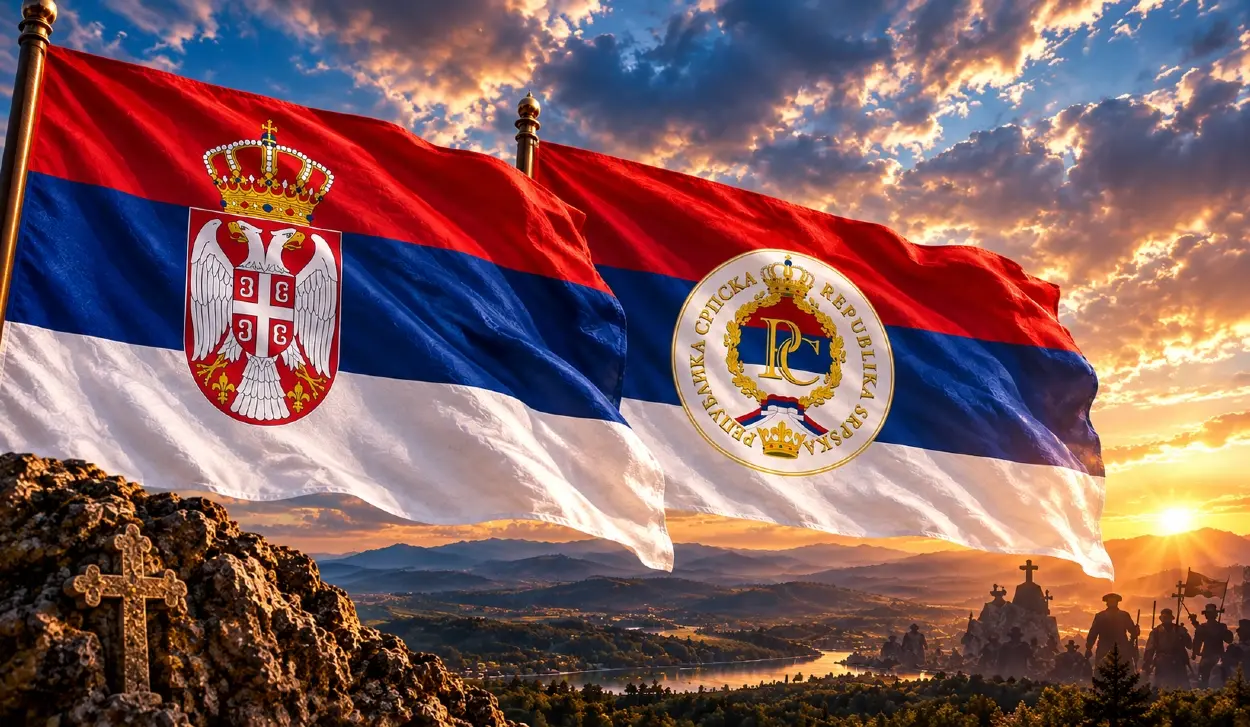
BANJA LUKA, SEPTEMBER 14 /SRNA/ - The Day of Serbian Unity, Freedom and the National Flag is a holiday celebrating love for what is our own and awareness of the price paid by generations before us so that today we can have the right to our own name, our faith, our script, our land and our flag, President Milorad Dodik said.
On the occasion of the Day of Serbian Unity, Freedom and the National Flag, which is being marked today in Banja Luka, organised by the Governments of Republika Srpska and Serbia, Dodik stressed in an article he wrote for the Republika Srpska Media System – SRNA that on September 15, the flag should be raised high, not against anyone, not to threaten anyone, and not to ask anyone's permission to be who we are, but for our own sake.
“For those who carried it across Kajmakčalan. For those who preserved it when it was dangerous to display it. For those who created Republika Srpska. Serbia is now strong and capable of supporting its people, regardless of where they live. And for the generations to come, to whom we must leave both Serbia and Republika Srpska stronger than we inherited them,” Dodik said in the article, which SRNA is publishing in full:
There are days we mark because the calendar tells us to, and there are days that remind us why we survived. September 15 belongs to the latter.
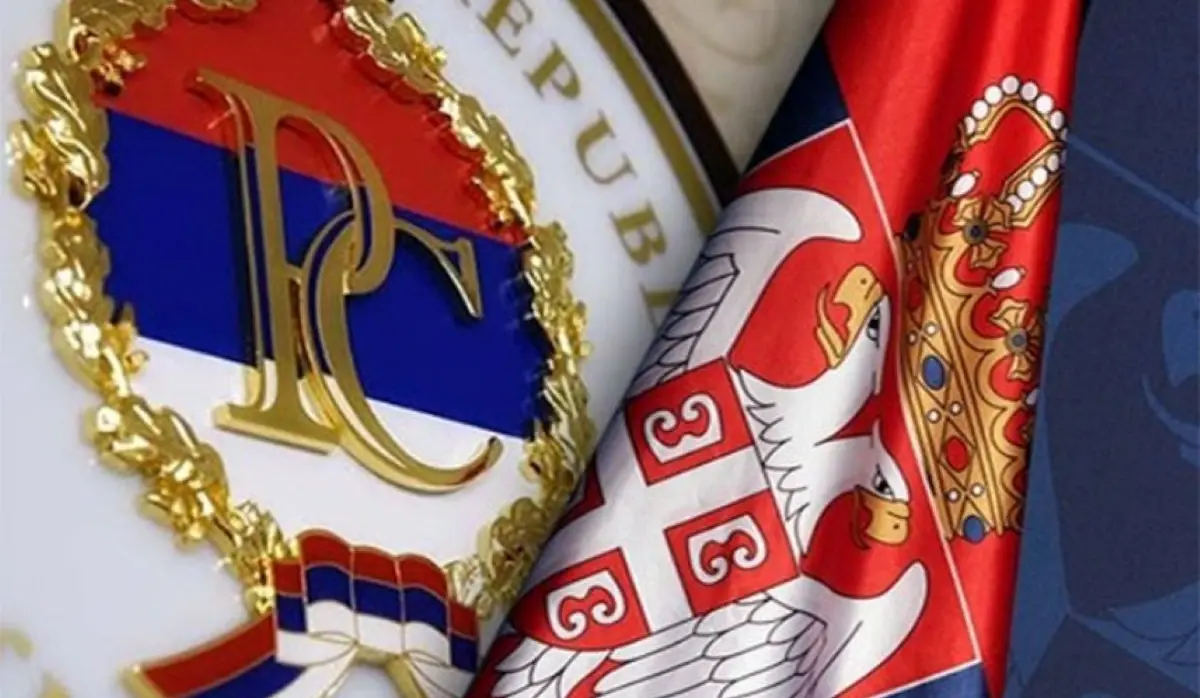
The Day of Serbian Unity, Freedom and the National Flag is not a holiday confined to a single date. It is a celebration of everything we as a people have had to endure so that today we can freely raise our tricolour without anyone taking it down. Because the Serbian flag has never been just a piece of cloth. It carries our defeats and victories, our graves and baptisms, our churches and hearths, those who died under it and the children who will carry it when we are no longer here.
When I look at the red, blue and white, I do not see three colours. I see centuries. I see Kosovo. I see the Salonika Front. I see suffering and uprisings. I see the Corridor. I see Republika Srpska. I see a people who have been left with nothing many times throughout history, but have never agreed to be left without themselves. That is precisely the greatness of September 15.
On that day in 1918, the Serbian soldier did not ask which of the great powers would give him permission to be free. After Albania, Corfu, hunger, disease and death, he headed home. He had a worn-out uniform, a rifle, the memory of fallen comrades, and one idea that proved stronger than many far more powerful empires — that Serbia must be free.
And he returned home.
That is why this holiday is not a celebration of hatred towards others. We do not need the hatred of others to know who we are. It is a celebration of love for what is our own and awareness of the price paid by generations before us so that today we can have the right to our own name, our faith, our script, our land and our flag.
Empires changed. States changed. Borders were redrawn. Ideologies emerged and disappeared. The Serbian people remained. So did the awareness of who we are, the language we speak, the tradition to which we belong, and what freedom means to us. That is why the Drina may be the best illustration of how powerless administrative borders can be in the face of the life of a people.
The Drina is indeed an administrative border. But it has never managed to become a border between brother and brother, between people who share the same patron saint’s day, the same language, the same songs, the same church, the same family memories, and the same sense of belonging. It is not a dividing line through the Serbian national fabric. It is its backbone.
That is precisely why Serbia and Republika Srpska jointly mark September 15. The decision to jointly mark the Day of Serbian Unity, Freedom and the National Flag was made in 2020, and Aleksandar Vučić has since described the holiday as a celebration of the identity and unity of Serbia and Republika Srpska. And we should be fair and grateful for that.
Much has connected Serbia and the Serbs west of the Drina throughout history, but there have been few periods in recent history when relations between Serbia and Republika Srpska were more substantive, direct and natural than they are today. Much of the credit for this goes to Serbian President Aleksandar Vučić.
Vučić understood something that could not always be taken for granted in Belgrade: Republika Srpska is not a burden to Serbia, not an uncomfortable subject and not a relative we remember only on a holiday. Republika Srpska is part of the life of the Serbian people. He also understood that administrative borders should be respected, but that they do not have to be walls.
There are roads. There are bridges. There are schools, hospitals, universities, cultural institutions, joint projects, economic cooperation, assistance to local communities, shared holidays and, above all, an awareness that the same people live on both sides of the Drina.
That is how a border is transcended rather than dismantled. Not through irresponsibility, but through cooperation. Not through conflict, but through forging closer ties. Not by denying political reality, but by building ties stronger than any administrative line.
That is why Serbia and Republika Srpska today, more than ever, can breathe as one.
When Republika Srpska faces difficulties, Serbia feels it. When Serbia grows stronger, Republika Srpska is safer. When Belgrade understands Banja Luka and Banja Luka rejoices at Serbia’s success, relations are no longer merely relations between two governments. They become what they truly are — one people’s relationship with itself.
Vučić had the political breadth to understand that national unity does not mean abolishing borders, but overcoming estrangement. That is an enormous difference. Because throughout our history, borders have often been drawn by others. Some were drawn after wars, some after major conferences, and some in offices far removed from the Serbian people. But there is something much older and much stronger than all the barriers that have been erected between Serbs over the centuries.
There is a sense of belonging. There is memory. There is language. There is faith. There is family. And there is the flag.
That is why the tricolour is perhaps the simplest, yet also the most powerful symbol of that bond. It is the same when held by a child in Banja Luka, Belgrade, Trebinje, Novi Sad, Istočno Sarajevo, Niš, or anywhere else in the world where Serbs live. It does not ask which side of the Drina you come from. It says who you are.
In 2023, Aleksandar Vučić said at the very celebration of this holiday that the Serbian people may live in many countries, but have one flag. Perhaps nothing better captures the essence of a policy that does not call for anyone to tear down borders, but insists that borders cannot erase identity.
But patriotism must not end with raising the flag. If we leave our children only the tricolour, but fail to leave them a country in which they want to live, then we have not finished the job.
Our generation no longer has the task our great-grandfathers had of breaking through the Salonika Front. Our front is the schools that produce educated people, jobs that enable families to make a living, villages where the sound of children playing can be heard again, roads that connect us, and a society from which people do not leave because they have to, but to which they return because they want to.
The loudest anthem is not always the one we sing. Sometimes it is a house in which the lights are switched on again. The greatest victory is not always a military one. Sometimes it is a young person who says: “I am staying here.” Our ancestors fought so that we could survive. It is up to us to fight so that there will be more of us.
That is why on September 15, the flag should be raised high. Not against anyone. Not to threaten anyone. Not to ask anyone's permission to be who we are. But for our own sake.
For those who carried it across Kajmakčalan. For those who preserved it when it was dangerous to display it. For those who created Republika Srpska. For Serbia, which is today strong and capable of supporting its people wherever they may live. And for the generations to come, to whom we must leave both Serbia and Republika Srpska stronger than we inherited them.
Because the flag is not merely a symbol of territory. It is a symbol of continuity. Borders have been drawn and erased throughout history. Empires have risen and fallen. The powerful have come and gone. But the tricolour has remained.
And as long as we recognise ourselves in it, as long as Serbia and Republika Srpska understand each other, and as long as we know that the freedom of one part of our people gives strength to the other, no administrative border will ever be stronger than what binds us together.
Long live Serbia! Long live Republika Srpska!