ČVORO: OVERLOADING PUBLIC SPACES WITH VISUAL FEATURES IN THE CITY
Republika Srpska - Banja Luka - urban design
09/29/2026
10:36
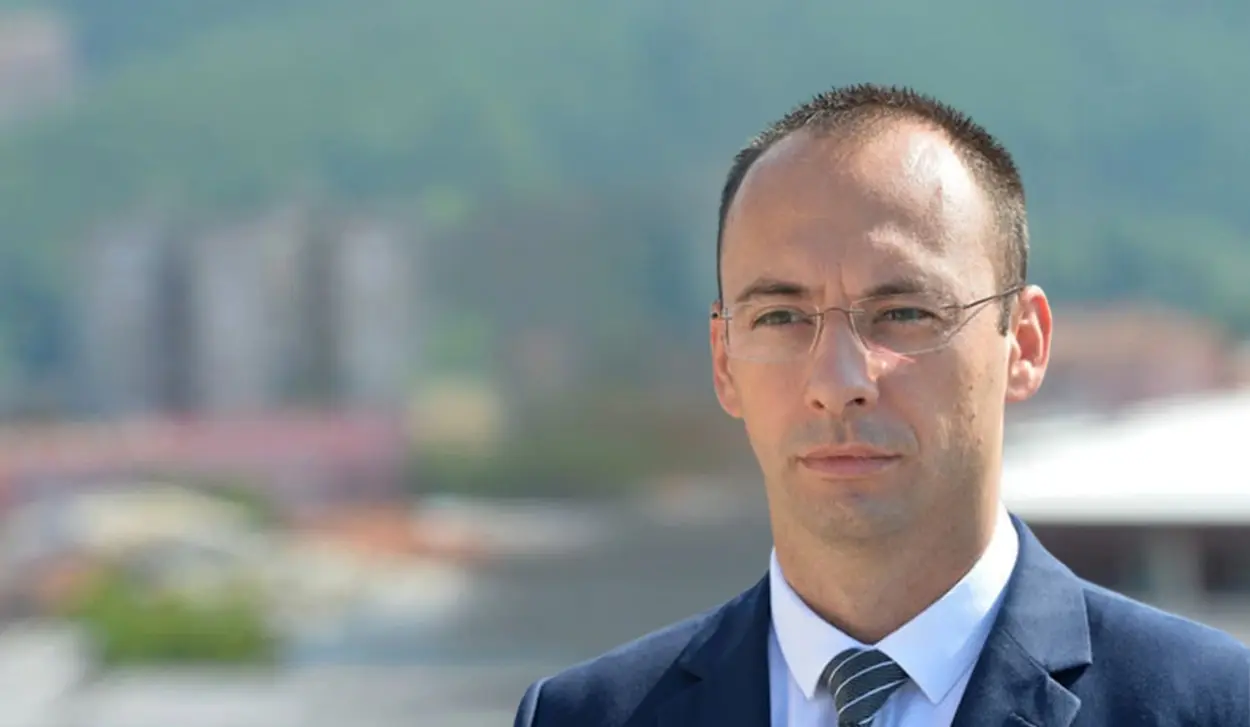
BANJA LUKA, SEPTEMBER 29 /SRNA/ - There is a risk of visual clutter in Banja Luka's public spaces if every roundabout or intersection becomes a site for some form of visual attraction, warned Saša Čvoro, dean of the University of Banja Luka Faculty of Architecture, Civil Engineering and Geodesy.
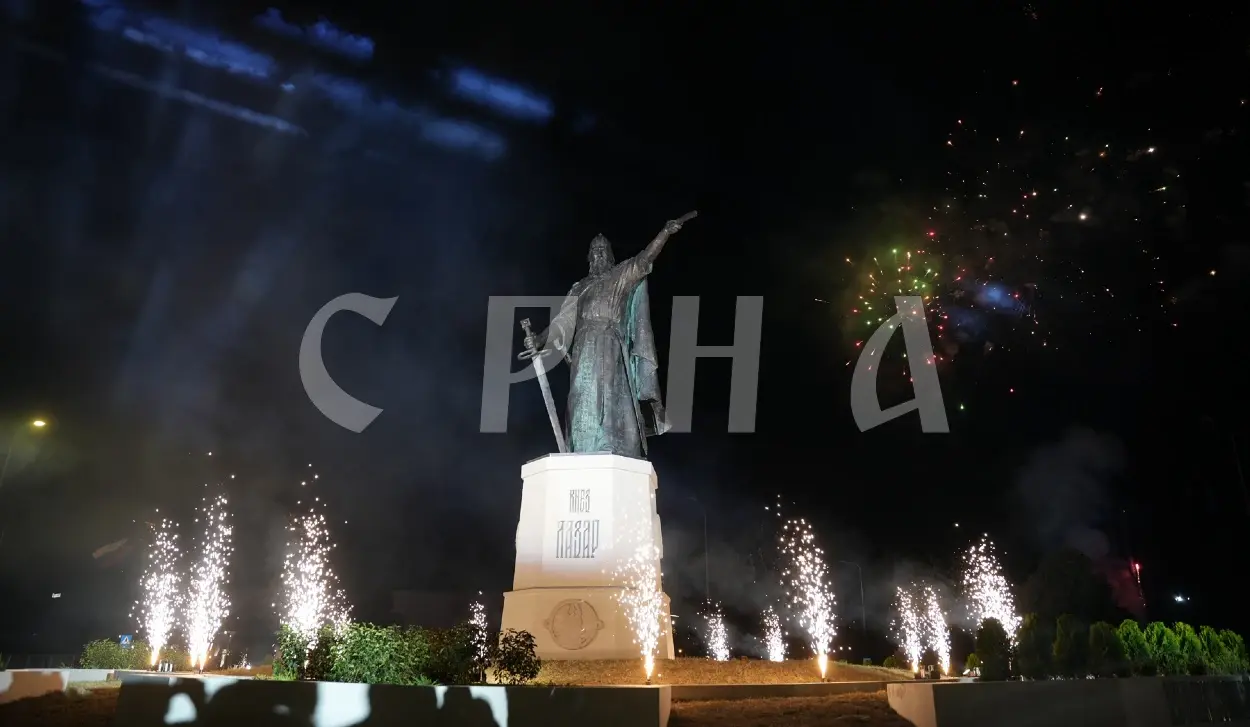
Commenting on plans to install an approximately eight-meter-high monument to Prince Lazar in Banja Luka's Budžak neighborhood, Čvoro told SRNA that architecture should not begin with the question of whether a particular monument is appealing, but with the spatial context in which it is to be placed.
"Roundabouts are, first and foremost, traffic infrastructure spaces with a clearly defined purpose, horizontal and vertical geometry, and necessary visibility requirements", Čvoro said.
According to him, architectural elements placed within roundabouts, particularly monuments, must take into account traffic safety, the relationship between new spatial elements and the surrounding built environment, and the possibility of pedestrian access.
He stressed that the primary criterion should be the quality of the space, not merely the visibility of new features, because not every highly visible location is necessarily a good location.
"Every intervention in public space should be preceded by an architectural and urban design competition in order to obtain several conceptual solutions addressing how memorial elements can be integrated into the city's urban fabric", Čvoro said.
EVERY ELEMENT SHOULD HAVE ITS PLACE, PURPOSE AND SPATIAL CONTEXT
"Each individual element may be interesting, but when there are too many, they stop communicating with the city and begin competing with one another", Čvoro said.
He stressed that Banja Luka does not need to turn every roundabout or open space into an "object", adding that some locations can instead be defined by well-designed greenery, tree-lined avenues, landscaping, subtle sculpture or effective lighting.
Čvoro noted that contemporary approaches to public space increasingly emphasize landscape, greenery, biodiversity and the quality of people's experience rather than visual impact alone.
"A city should not be without sculptures and monuments. Quite the opposite. But every such element should have its own place, purpose and spatial context," Čvoro said.
Speaking about Banja Luka's urban identity, he said the city has strong potential, but that its identity should not be reduced to a single style, material or symbol.
"Our distinctiveness lies precisely in the recognizable connection between the natural environment, the Vrbas River, tree-lined avenues, parks, different historical layers and a relatively calm urban setting. We have the potential to be recognized as a green city with high-quality, connected public spaces designed on a human scale," Čvoro said.
He therefore stressed the need for a clear public-space policy defining principles for urban design, greenery, lighting and the treatment of monuments and other interventions.
Čvoro particularly highlighted the importance of architectural competitions, saying spaces that are more significant to the integrity of the city should be more open to professional architectural input and public opinion.
A GOOD PUBLIC SPACE IS NOT ONE THAT ONLY LOOKS GOOD IN PHOTOS
Speaking about the design of urban spaces, Čvoro said their functionality is the essential issue.
"A good public space is not one that is merely well publicized or, as younger people would say, photographed and posted, but one where people actually want to spend time and stay," Čvoro said.
When it comes to roundabouts and roads, he said safety and traffic flow must come first.
Where spatial and traffic conditions allow, priority should be given to trees and other vegetation, particularly tall greenery that provides shade, followed by appropriate pedestrian areas, quality lighting and landscaping.
Čvoro said architectural competitions can also play an extremely important role in this regard and should be viewed as an institutional mechanism for obtaining different solutions from several professional teams to a complex urban problem.
"For example, we could launch a competition for a single roundabout and ask the designers to address traffic, landscape, greenery, visual identity, maintenance and any potential artistic or memorial element at the same time. Only then do we get a comprehensive architectural and urban design solution," Čvoro said.
He argued that this would be a good approach not only for Banja Luka but also for other urban areas in Republika Srpska - gradually moving away from the question "What should we put at this location?" toward the principle "What kind of public space do we want to create here?"
"And perhaps that is the most important change in the way we think about the city," Čvoro said.