VUK STEFANOVIĆ KARADŽIĆ - SERBIAN LANGUAGE REFORMER
Region - language - anniversary
11/05/2026
11:24

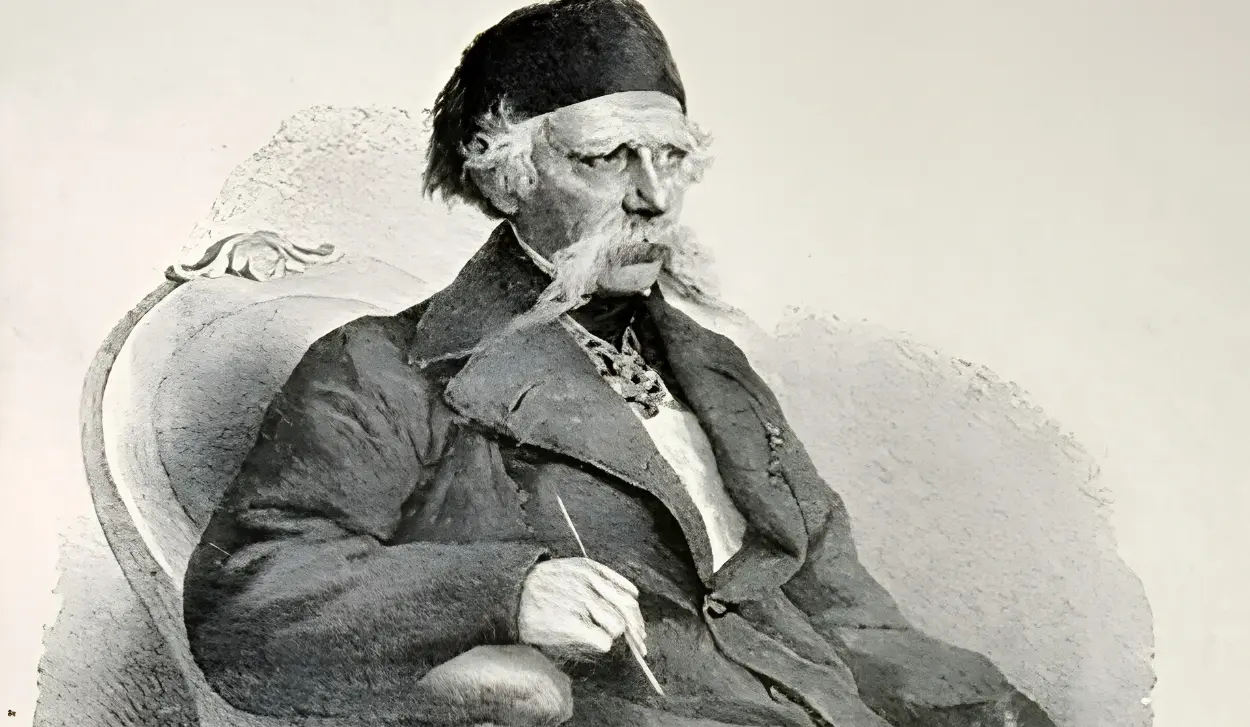
BIJELJINA, NOVEMBER 5 /SRNA/ – Vuk Stefanović Karadžić /1787–1864/, reformer of the Serbian language and orthography and one of the most prominent figures in Serbian culture, was born on November 6, 1787.
Vuk acquired his basic education in a village school near his merchant relative's home, followed by schooling in Loznica and at Tronoša Monastery. During the First Serbian Uprising, he served as a clerk to Duke Ćurčija, later working as a teacher in Belgrade and a customs officer on the Danube near Kladovo.
After the collapse of the uprising in 1813 and his departure for Vienna, Vuk began collecting folk songs and oral literature, while working on the Serbian language and orthography. He soon published his first collection of folk songs and his Pismenica /Grammar/, followed by the Serbian Dictionary in 1818.
He also wrote historical testemonies, conducted ethnographic research, organised research activities throughout the territories that would later become Yugoslavia, and maintained an extensive correspondence.
RADIČEVIĆ'S POEMS CONTRIBUTED TO THE VICTORY OF VUK'S REFORM
Vuk Karadžić fought against the autocratic rule of Prince Miloš Obrenović and the strong opposition to language reform. He edited the almanac Danica and sought to introduce Europe to Serbian folk heritage and history.
Through his monumental work /his collected works comprise 39 volumes/, Vuk gained many supporters, but also fierce opponents.
Vuk found friends among Europe's most distinguished intellectuals and helped make Serbian folk songs, culture and history known throughout the continent. The prestigious University of Jena awarded him an honorary doctorate.
His reformist ideas achieved a decisive victory in 1847, when Branko Radičević's Poems were published, demonstrating that literary works could also be written in Vuk's language. Đura Daničić further proved that Vuk's linguistic principles are justified through his work The Struggle for the Serbian Language and Orthography.
The entire period of mature Serbian Romanticism developed under Vuk's influence.
CROATS ADOPTED VUK'S MODEL OF LITERARY LANGUAGE
The significance of Vuk's work, which extends beyond Serbian borders, is also reflected in the fact that the Zagreb City Council awarded him an honorary citizenship charter in 1861, granting him "all the rights, liberties and privileges that, by law and ancient custom, belong to every citizen of Zagreb".
The extent of Vuk's influence on the Croatian language was best explained by Ivan Broz, a renowned literary historian and linguist of the second half of the 19th century.
The Croatian Parliament decided to adopt Vuk's model of the literary language in all its elements, including its accentuation system.
Several linguists were commissioned to develop the language's reference materials and textbooks.
In 1892, Ivan Broz published Croatian Orthography, whose preface states that "all of this could also be called Serbian orthography".
In 1899, Croatian lexicographer Tomo Maretić published Grammar and Stylistics of the Croatian or Serbian Language.
"What Cicero is to the Latins, Vuk is to us," Maretić wrote.
For more than a century, Vuk had a street named after him in Zagreb. It was renamed in 1992, during a period when Croatia was severing its historical ties with Serbia and the Serbs.
Vuk Stefanović Karadžić died in 1864. After 33 years abroad, his remains were transferred from Vienna to his homeland in 1897. He now rests alongside Dositej Obradović in the grounds of the Cathedral Church in Belgrade.

VASKRSIJA JANKOVIĆ, ONE OF THE LAST SURVIVING WITNESSES OF OPERATION HALYARD, DIES

TWO FINNAIR AIRCRAFT RECEIVE BOMB THREATS

FAILURE TO PUNISH ATTACKS ON ORTHODOX CEMETERIES AND SERB PROPERTY ENCOURAGES PERPETRATORS

THREE PLANES MAKE EMERGENCY LANDINGS IN BULGARIA FOLLOWING BOMB THREATS