ŠTRBAC: ŽELJKO TRAVICA SENTENCED TO 20 YEARS IN PRISON
Croatia - Osijek - judiciary
05/08/2026
16:01
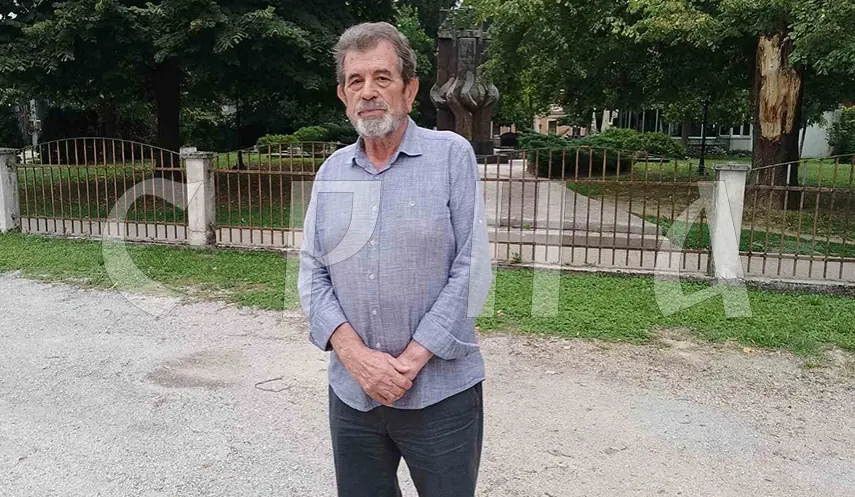
BELGRADE, MAY 8 /SRNA/ - Serb Željko Travica was today sentenced in the first-instance proceedings at the court in Osijek to 20 years in prison for a war crime against prisoners of war in Cerić and Mirkovci in 1991, which is the harshest sentence for this type of crime in Croatia, Savo Štrbac, the director of the Veritas Documentation-Information Centre, told SRNA.
"When someone in Croatia is sentenced to 20 years, it is a death sentence, but since the death penalty no longer exists, this is its substitute. This is the harshest punishment," Štrbac said, explaining that Travica is being tried under the law from the former Yugoslavia period.
He stressed that Travica's family and defence team were probably in shock because no one expected even a guilty ruling, let alone the maximum 20-year sentence, which had previously been handed down in Croatia in trials in absentia, in some cases in the presence of the accused 30 years ago or even during the war itself, but also now.
Štrbac said he did not follow Travica's trial directly, but remained in contact with his son and followed the case through the media. He emphasized that Travica is a seriously ill man who barely endured the trial.
"Until about ten days ago, Travica was undergoing chemotherapy. Since the New Year, his closing statement had been postponed because he was unable to present his defence. Then they kept pressuring him to do so. Expert witnesses came to several hearings to give their opinions on whether he was capable of speaking while receiving chemotherapy," Štrbac said.
According to him, Travica eventually grew tired of everything and decided to write his closing statement, which was then read by his lawyer.
"He managed to say once again a few sentences - `I did not do this, this is a staged trial,` and he stands by that," Štrbac stressed.
He noted that this is a first-instance, non-final ruling against which the parties have the right to appeal.
"The prosecutor received the maximum sentence, therefore has no reason to appeal, while the defensc certainly will. The appeal will be decided by the High Criminal Court. Very few rulings involving 20-year sentences have so far been upheld immediately by the second-instance court," Štrbac said.
He explained that procedural violations are usually found, after which the case is sent back for retrial, making it a lengthy process.
"It's not a matter of months, but one, two, or three years, depending on the case. Since he received a first-instance sentence longer than five years, by law he is immediately kept in detention, or investigative custody as the Croats call it. I know the defence team requested that, due to his serious illness, he be allowed to go home for treatment, but the court has so far not accepted such arguments. I do not believe they will do so in the future either," Štrbac said.
Željko Travica was arrested in October 2024 in the French border city of Calais while traveling from England on the basis of a Croatian warrant, at which point he learned that an indictment had been filed against him for war crimes in Cerić, namely the killing of eight members of the Croatian police and HOS forces, as well as the torture of three prisoners.
Travica remained in Croatia after the war; during and after the "peaceful reintegration" period he served as mayor of the municipality of Mirkovci within the Croatian system.
He later worked in Germany and also lived in Serbia, where as a member of the Democratic Party of Serbia he served as a councilor in the Novi Sad City Assembly, and from 2016 onward he lived in England, holding a Croatian passport.
During all that time, no one mentioned him in the context of war crimes until an investigation was launched against him in 2022.
A year later, Croatia issued an arrest warrant, and by the end of 2024 an indictment was filed over events that had taken place 33 years earlier.

KARAN: DODIK AND PUTIN CREATED CONDITIONS FOR COOPERATION BETWEEN TWO COUNTRIES IN ALL AREAS
FULL NORMALIZATION OF MOSCOW - WASHINGTON RELATIONS ALSO OPPORTUNITY FOR SERBS
DODIK: I EXPECT SECURITY COUNCIL TO DECLARE ALL OF SCHMIDT'S DECISIONS NULL AND VOID
KARAN: HISTORICAL MEMORY PRESERVATION IS SERB AND RUSSIAN PEOPLES' SHARED OBLIGATION