STEFAN THE FIRST-CROWNED SECURED ECCLESIASTICAL AND STATE INDEPENDENCE
Serbia - king - anniversary
09/23/2026
10:00
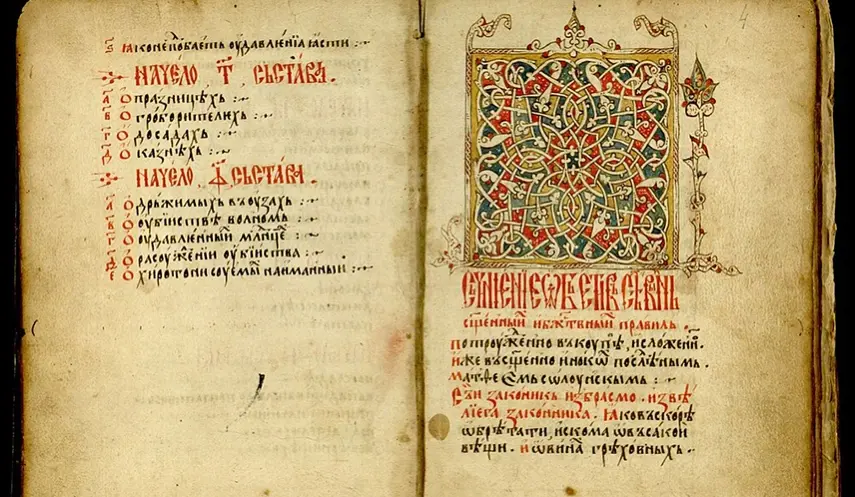
BIJELJINA, SEPTEMBER 23 /SRNA/ – The first Serbian king, Stefan Nemanjić the First-Crowned /1166–1228/, the second son of Grand Prince Stefan Nemanja, during whose reign Serbia gained both state and ecclesiastical independence, died on September 24, 1228.
Before Stefan Nemanja became a monk in 1196, he handed the throne to Stefan rather than his eldest son Vukan, whose abilities as a statesman he valued less, and also because Stefan was the son-in-law of Byzantine Emperor Alexios III Angelos.
The brothers subsequently became involved in a bitter conflict, but their youngest brother, Rastko – Saint Sava reconciled them.
During his reign, Stefan developed strong trade ties with the people of Dubrovnik and the Venetians, and toward the end of his life he wrote the Life of Saint Simeon.
His father was Stefan Nemanja, Grand Župan of Raška, who is considered the founder of the Serbian state and progenitor of the Nemanjić dynasty. Together with his youngest son Sava, he laid the foundations of the Serbian Orthodox Church and, before his death, became a monk under the name Simeon.
Stefan the First-Crowned was Grand Župan and then king between 1217 and 1228.
His younger brother Sava was the founder of the autonomous Serbian Archbishopric, during whose reign the Žiča Monastery was built.
Following the defeat by the Byzantines in the Battle of the Morava in 1190, a peace agreement was signed under which Stefan, Nemanja’s middle son, rather than his firstborn Vukan, would succeed Grand Župan Nemanja. Stefan was granted the title of sebastokrator and married the Byzantine princess Eudokia.
At the same time, Byzantium recognised the independence of Raška in 1190.
In 1196, Stefan Nemanja abdicated in favour of his middle son Stefan at a state assembly held near the Church of St. Peter in Ras, so Stefan became Grand Župan of Raška.
Stefan Nemanja entrusted his eldest son Vukan with the administration of Duklja, Travunija, Hvosno, and Toplica. Shortly afterward, Vukan proclaimed himself King of Duklja.
In 1198, Stefan Nemanjić entered negotiations with Pope Innocent III, seeking a crown so that he could become King of Raška, probably in an effort to counter Vukan, who already possessed a papal crown.
Vukan influenced Pope Innocent III through the Hungarian King Emeric to prevent Stefan from receiving the crown.
Following Stefan Nemanja’s death in 1199, the struggle for power in Raška between Vukan and Stefan became increasingly open.
On the eve of the Crusader attacks on Constantinople, around 1201, Stefan expelled the Byzantine princess Eudokia, allegedly because of marital infidelity.
Armed conflicts soon broke out between Vukan, who was supported by Hungarian King Emeric, and Stefan, whose ally was Bulgarian Emperor Kaloyan.
Hungary and Bulgaria were at war at the time. The brothers’ struggle over the throne inflicted enormous damage on Raška, and the destruction caused by the civil war was severe.
With Hungarian assistance, Vukan seized power in Raška in early 1202, while Stefan fled to Bulgaria. Vukan was soon proclaimed Grand Župan.
With the assistance of Bulgarian Emperor Kaloyan, Stefan regained control of Raška around 1205.
Stefan then wrote to Sava, asking him to come to Raška and bring Nemanja’s remains. In his letter, he reminded Sava of their father’s wishes, claiming that Vukan’s disobedience had caused the civil war.
He reported that he had temporarily won the war but that Vukan had not yet been defeated, and that he needed symbolic support.
Sava responded to Stefan’s appeal and hurried to Raška with a group of monks and Nemanja’s remains. He arrived in early 1207 to support Stefan, whom he called “chosen by God,” while referring to Vukan as the “great prince”.
According to the church, Stefan and Vukan were finally reconciled over the remains of their deceased father, after which Stefan became the ruler of Raška.
By 1216, Stefan Nemanjić had taken control of Zeta.
By taking control of Zeta and the coastal regions, Stefan established closer contacts with the Catholic Church and also developed closer relations with Venice.
Around 1216 or 1217, he married Ana Dandolo, granddaughter of Venetian Doge Enrico Dandolo. From that time onward, Venetian and Catholic influence in Serbia increased.
Stefan Nemanjić reached an agreement with Pope Honorius III to recognse him as King of Raška. After expressing his willingness to submit to Rome, he was granted a royal crown by the pope.
The papal crown represented international legal recognition of Raška as an independent state. Stefan Nemanjić, known as the First-Crowned, became a crowned king, and Raška became a kingdom.
Stefan Nemanjić died on September 24, 1228. Shortly before his death, he became a monk and took the name Simon.

MAZALICA: BEĆIROVIĆ REMAINS TRAPPED IN SARAJEVO'S POLITICAL NARRATIVE OF THE 1990s
ZELL: TIME TO PROTECT CHRISTIANS IN BiH FROM BOSNIAK OPPRESSION
SELAK: BEĆIROVIĆ SHOULD DEAL WITH FBiH; SRPSKA IS STABILITY FACTOR
REPUBLIKA SRPSKA WILL NOT ACCEPT SOMEONE ELSE'S HISTORY AS ITS OWN