SERBIAN CHILDREN WERE IMPRISONED IN CAMPS IN THE 20TH CENTURY IN AN ATTEMPT TO DESTROY AN ENTIRE PEOPLE
Region - crimes - Ković
10/03/2026
13:52
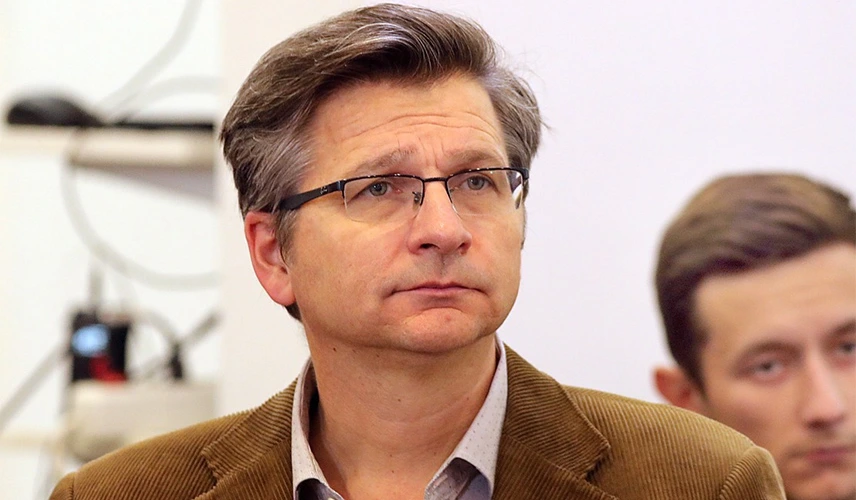
BELGRADE, OCTOBER 3 /SRNA/ - Historian Miloš Ković told SRNA that the Serbs were among the first victims of concentration camps in Europe and that the history of the Serbian people in the 20th century is a history of camps.
Ković said that it is particularly horrific that Serbian children died in large numbers in those camps during the First World War, while during the Second World War, the Independent State of Croatia /NDH/ operated special camps for children, which, he said, points to an intent to destroy an entire people.
"Such a case has not been recorded in the history of modern humanity, as concentration camps are a phenomenon of modern history. Children were imprisoned in camps on a mass scale; there were camps specifically for children, where they were tortured, killed, or died from disease, hunger and exhaustion," Ković said.
He pointed out that Serbian children also died in large numbers in camps during the First World War, particularly in Doboj and Nezsider near Vienna, stressing that more is being learned about these children as historiographical research expands.
Ković said that Serbian scholars are aware of the existence of camps specifically for Serbian children in the NDH, but that the rest of the world knows nothing about them.
"Above all, there were Stara Gradiška, Jastrebarsko and Sisak. Children were killed on their own doorsteps and at killing sites throughout the NDH, from Stari Brod to Garavice and further across Kordun, Lika and Banija. Children also suffered and were killed in concentration camps," Ković said.
He pointed out that the identities of children who survived the camps were changed, that they were converted to Roman Catholicism and Croatized, describing these as horrific facts that have yet to be fully explained.
Ković said it could even be argued that, during the Second World War, children were among the largest groups of victims of crimes committed on their own doorsteps, because families were larger.
"Thus, in the crimes committed in the villages, children accounted for the largest proportion of the victims. The suffering of children is an issue that we are only now beginning to fully acknowledge and study," Ković said, adding that Lordan Zafranović’s film "The Golden Cut 42: Children of Kozara," which deals with this subject, is extremely valuable in that regard.
He said that both boys and girls were killed in the camps and that this was a clear indication of an intention to destroy the Serbian people.
"We are already talking about genocide here. Genocide is what defines the treatment of Serbs in the two world wars and in the Defensive-Patriotic War, with the people of Republika Srpska managing to defend themselves in that war. Wherever the Army of Republika Srpska did not reach, mass atrocities followed," Ković said.
He particularly stressed that Serbian children could not count on anyone’s mercy even in the most recent war.
"Crimes against children were widespread and went unpunished. It is enough to recall the crimes against children in the Srebrenica and Bratunac areas and in Vlasenica. The crimes were widespread. The boy Slobodan Stojanović is a symbol of the suffering of Serbian children. The same pattern of crimes was repeated in that area. Earlier in the 20th century as well, the focus of efforts to destroy the Serbian people was on Serbs in BiH," Ković said.


FIRST JOINT RUSSIAN-CHINESE ROCK FESTIVAL OPENS IN BEIJING
SERBIAN CHILDREN WERE IMPRISONED IN CAMPS IN THE 20TH CENTURY IN AN ATTEMPT TO DESTROY AN ENTIRE PEOPLE
DODIK: WE WILL PRESERVE MEMORY OF HEROIC HALYARD OPERATION
MINIĆ: SERBIAN TRICOLOR HAS NEVER BEEN ON THE WRONG SIDE OF HISTORY