ON SIMILARITIES BETWEEN CASES AGAINST KLA LEADERS AND CROATIAN GENERALS
Region - Veritas - Štrbac
09/18/2026
15:01
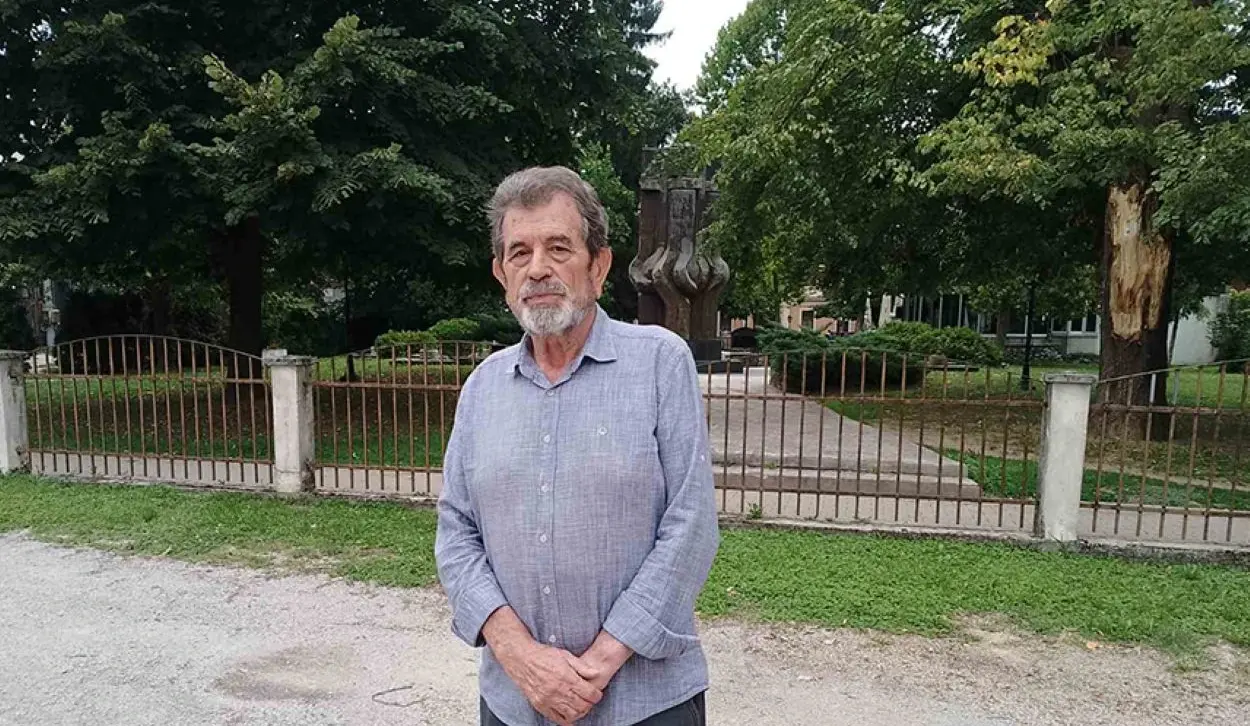
BELGRADE, SEPTEMBER 18 /SRNA/ - Savo Štrbac, director of the Veritas Documentation and Information Centre, told SRNA that there are many similarities between the cases at The Hague against former KLA leaders and those previously brought against Croatian generals, and that Serbs have legitimate grounds to assume that the four defendants, who were sentenced to more than 80 years in the first-instance proceedings, could be acquitted on appeal.
Štrbac noted that, following the first-instance verdict against former KLA leaders, events in Pristina are unfolding in much the same way as they did in Croatia 15 years ago, when generals Ante Gotovina and Mladen Markač were convicted, and that the outcome of this trial could also be the same, meaning that Hashim Thaçi and the others could be acquitted on appeal.
He stressed that Croats are now boasting that Operation Storm, for which Gotovina, Markač and Ivan Čermak stood trial, was "as clean as a whistle," and pointed out that the terrorist KLA has now effectively been exonerated by the first-instance verdict handed down to its leaders in The Hague.
"If Thaçi, Kadri Veseli, Jakup Krasniqi and Rexhep Selimi, who held senior positions in the KLA hierarchy, had been found guilty of crimes against humanity as well, that would have meant that the entire KLA was terrorist and criminal," Štrbac said.
He stressed that when Gotovina was sentenced to 24 years in the first-instance verdict, it was considered an appropriate sentence, and that the 81-year total sentence handed down to the KLA leaders might also appear to be comparable, but the details make the two cases different.
"They were convicted of war crimes, not crimes against humanity. It boils down to the fact that there was no systematic, planned killing ordered by the leadership of the KLA as a whole, which effectively exonerates them," Štrbac explained.
Štrbac stressed that one of the similarities, and not a coincidence, in the two cases is that Gotovina was defended by American lawyer of Croatian origin Luka Mišetić, who is now defending Thaçi, and that this should be borne in mind.
"Croats, namely Mišetić and his team, take credit for having succeeded in the appeals process in convincing the court to deliver an acquittal. That is what Serbs fear could happen in the second-instance proceedings," Štrbac said.
He said that the verdict is now being perceived and portrayed in Pristina as a "shock and tragedy," just as it was previously in Croatia.
"For days, there were tears and protests, and the then Croatian Prime Minister Jadranka Kosor commented on the verdict using the same words that Albin Kurti is using now. What was seen in Croatia is now being replicated in full," Štrbac said.
Štrbac also pointed out that Croats and Albanians have referred to each other as "brothers in arms" since the wars of the 1990s, that the Croats exported to them the model of prosecution that they are successfully applying against Serbs in Kosovo, and that they are now also part of the same military alliance as Tirana.
"They have a great deal in common, so Serbs are justified in assuming, remembering that the Croatian generals were acquitted, that the same could happen this time," Štrbac concluded.
On Wednesday, the Kosovo Specialist Chambers in The Hague handed down first-instance verdicts against four former KLA leaders: Hashim Thaçi, Kadri Veseli, Jakup Krasniqi and Rexhep Selimi. Thaçi was sentenced to 25 years in prison, Veseli to 18 years, Krasniqi to 25 years, and Selimi to 13 years.

SECTION FROM LAPIŠNICA TO ROGATICA NAMED "ROAD OF THE SERB VICTIMS OF STARI BROD ON DRINA"
POLICE USE FORCE TO DISPERSE GROUP OF MIGRANTS
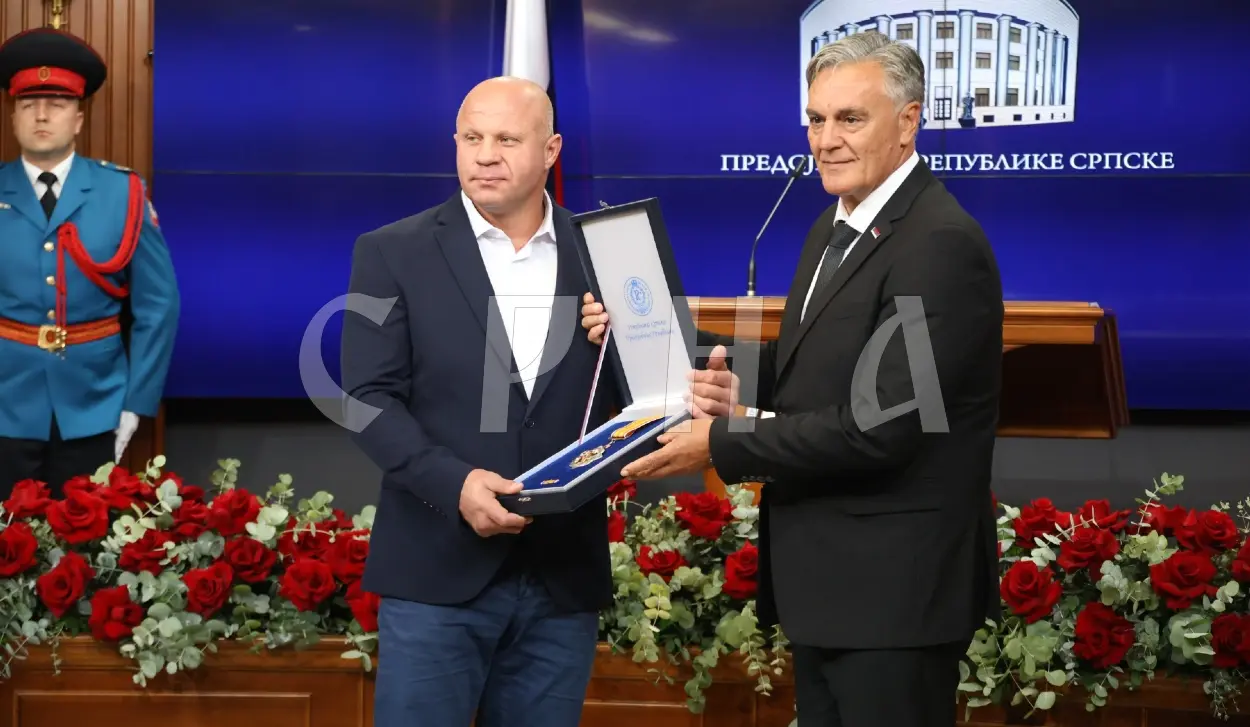
EMELIANENKO: SERB AND RUSSIAN PEOPLES WILL ALWAYS BE TOGETHER
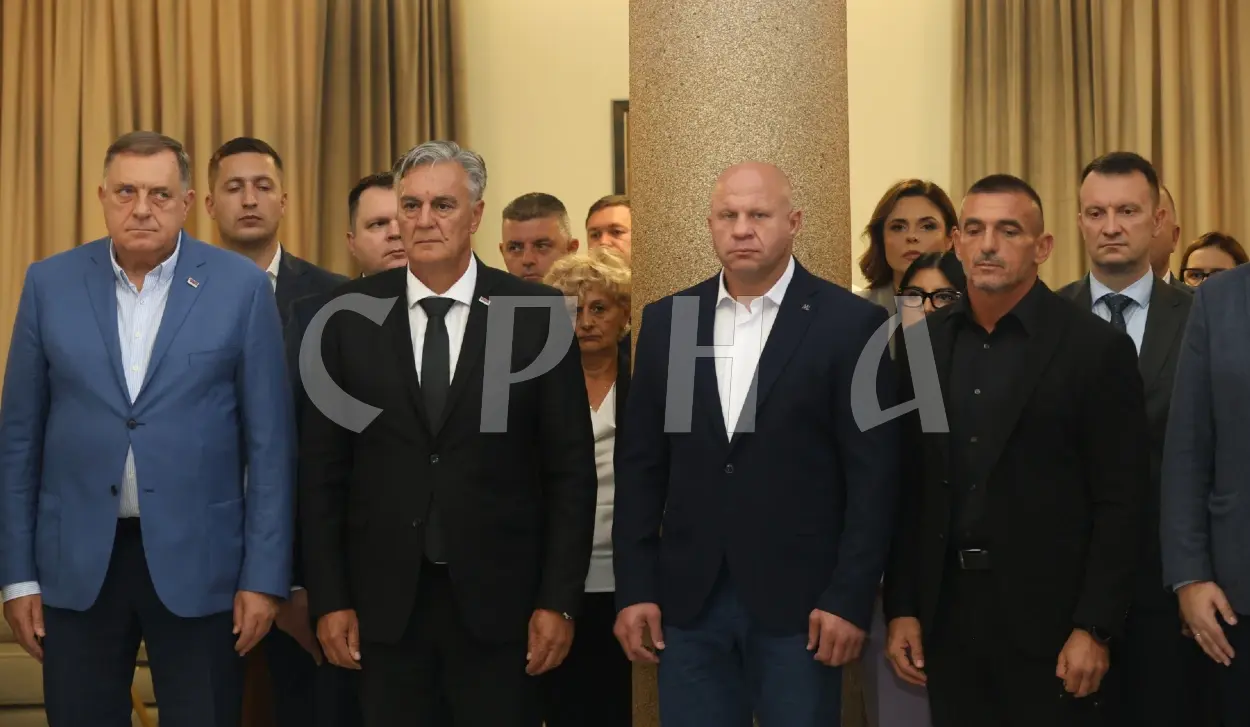
DODIK: ORDER OF HONOR FOR EMELIANENKO – RECOGNITION OF HIS ACHIEVEMENTS