MEMORIAL SERVICE HELD IN BELGRADE FOR SERBS KILLED IN CRIMINAL OPERATION FLASH
Serbia - Croatia - remembrance
05/01/2026
14:13
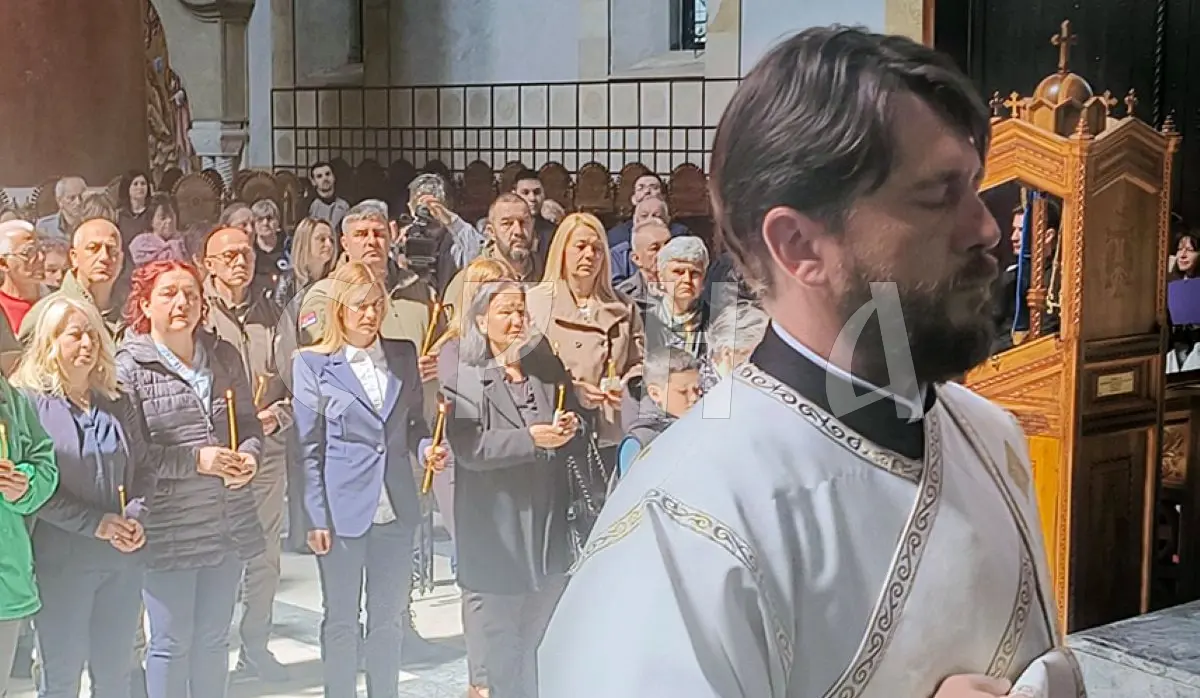
BELGRADE, MAY 1 /SRNA/ – A memorial service was held today in Belgrade for 283 Serbs killed in the Croatian military operation Flash, during which more than 15,000 people were expelled from western Slavonia on May 1, 1995.
The service was held at the St. Mark's Church, and wreaths were laid at the memorial to victims of the 1990s wars in Tašmajdan Park.
In addition to family members of the killed and missing, relatives and friends, the service was attended by Serbia’s Minister for Labour, Employment, Veteran and Social Affairs Milica Đurđević Stamenkovski, as well as representatives of the Commissariat for Refugees, the City of Belgrade, associations of families of the killed, missing, and displaced Serbs from Krajina.
Stamenkovski said that today is not Labour Day for Krajina Serbs, as it is for most citizens, because May 1 represents a painful memory and an unpunished crime for them.
She recalled that today 31 years ago, Serbs from western Slavonia were expelled from their ancestral homes, despite being under the protection of UN “blue helmets,” which did not serve as a shield for the Krajina Serbs, who suffered greatly and experienced an exodus.
Stamenkovski pointed out that among those killed in the Croatian operation Flash were eight children and 56 women, as well as elderly and vulnerable persons, adding that for Serbs in western Slavonia, the spring of 1995 was a time of darkness.
“For the first time, Serbia and its institutions have included this suffering of our people in the calendar of state ceremonies, because we want to give an institutional mark to the culture of remembrance and to what happened in the operation code named ‘Flash’,” Stamenkovski said ahead of the memorial service.
She emphasized that the suffering of the Vuković family is the most striking example of the crimes committed by Croatian forces from May 1 to 3, 1995, noting that the family lost eight members, including three children.
“Today we pay tribute to all of them, and send a message that such a crime must never happen again, and that we must never again allow pogroms and persecution of Serbs or the destruction of our centuries-old homes,” Stamenkovski said.
The head of the Suza Association of Families of the Missing and Killed, Dragana Đukić, pointed out that even 31 years after Operation Flash, around 80 people are still listed as missing, with no information on when identification might take place.
“The search for the missing is deeply entangled in politics, and when it comes to Serb victims, it depends on political will in Croatia. It is known where each person was killed after this criminal operation, and there are registered gravesites. This could be resolved overnight, but there is no goodwill when it comes to Serb victims,” Đukić said.
She stressed that the families of the missing suffer the most, as even after three decades they cannot bury the remains of their loved ones and continue to live in painful uncertainty.
The head of the Veritas Documentation - Information Centre Savo Štrbac stated that 114 civilians, including women and children, were killed in the Croatian offensive in western Slavonia, which shows that the crime remains unpunished even after 31 years.
Štrbac recalled that criminal charges were filed in Serbia, Republika Srpska, and Croatia itself, but that the cases have not progressed beyond the preliminary investigation stage.
“Croatian soldiers themselves once filed a criminal complaint against one of their brigade commanders. He ordered a sniper to shoot a civilian crossing the road and killed him like a rabbit. Those soldiers testified, but their prosecutor’s office rejected the request, explaining that such actions are typical in wartime situations,” Štrbac explained.
He added that authorities in Republika Srpska collected the most documentation and filed criminal charges against 14 Croatian commanders, submitting them to Croatian authorities in 2021 to continue proceedings.
“This did not happen, as Croatia quickly returned the documentation, stating that it did not indicate that any crimes had been committed,” Štrbac said.