MATICA SRPSKA HAS PRESERVED SERBIAN IDENTITY AND SPACE FOR TWO CENTURIES
Serbia - Republika Srpska - Matica srpska - Stanić
10/13/2026
09:49

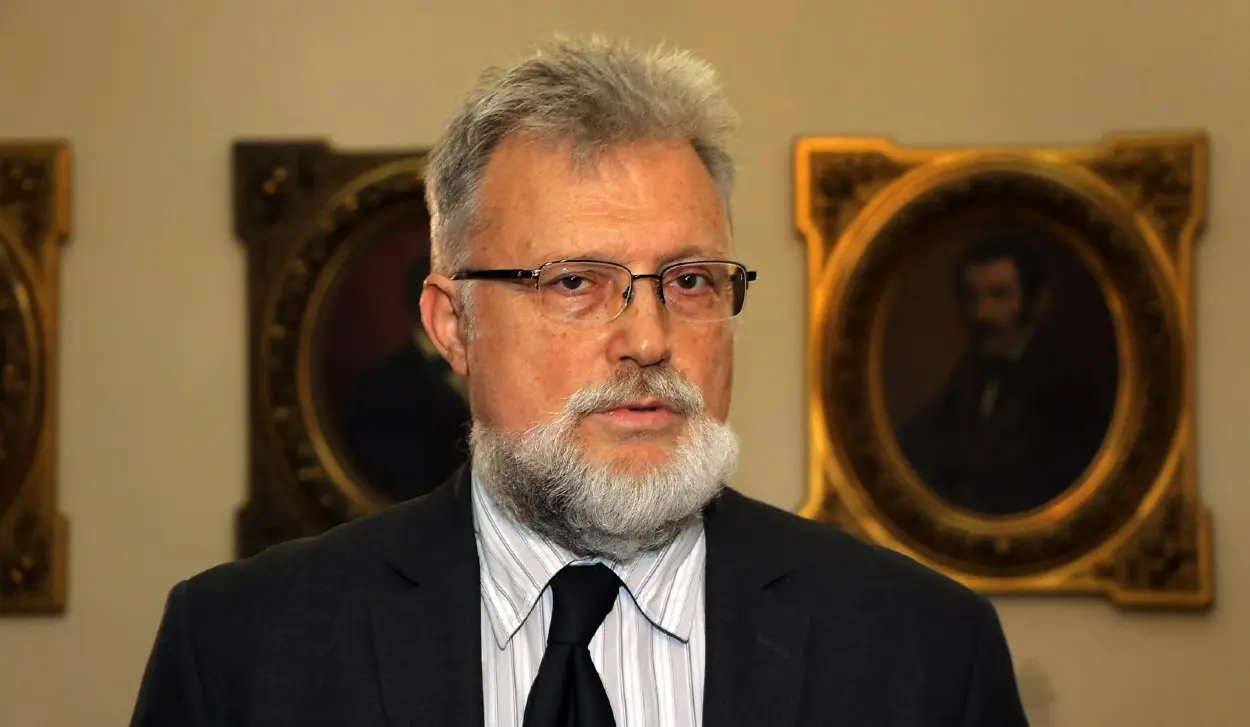
BELGRADE, OCTOBER 13 /SRNA/ - Matica Srpska President Dragan Stanić told SRNA that over its two centuries of existence the institution had used culture to strengthen Serbian identity and, with it, the Serbian ethnic space, adding that there were various joint projects with Republika Srpska and a good level of mutual understanding.
"Republika Srpska is not a diaspora. These are traditional Serb homelands and we regard BiH, that is Republika Srpska, as Serbian land. The same applies to Montenegro. How things develop further in the political and state sense is not something that concerns us as much," Stanić said.
He said Matica Srpska was primarily interested in the sphere of culture and in places where there was a clear cultural self-awareness, which formed the basis for its activities and cooperation with everyone committed to Serbian culture.
"The fundamental achievement of Matica Srpska is that through culture it strengthens our identity, and therefore our ethnic space. In that way, we also strengthen the survival, and dignified survival, of the entire Serbian people, wherever they may live," Stanić said.
Regarding cooperation between Republika Srpska and Serbia, Stanić said there were no obstacles and expressed hope that this would remain the case and provide a basis for prudent action over a long period.
BOTH EKAVIAN AND IJEKAVIAN ARE SERBIAN IN ORIGIN
He said there were various projects with Republika Srpska and noted that Matica Srpska's main reference works on the standardization of the Serbian language had been published in forms that make them easier for Serbian Ijekavian speakers to use.
Stanić said that when he proposed the idea, he had in mind the need to preserve both Ekavian and Ijekavian as the two literary pronunciations of Serbian.
"We published those books /reference works/ because we must preserve both Ekavian and Ijekavian as two Serbian pronunciations. They are Serbian in origin above all. They may possibly belong to others as well, but they are primarily Serbian in origin," Stanić said.
He stressed that this had to be kept in mind and clearly explained to everyone in a sensible way, without provocation or unnecessary concessions.
Stanić also highlighted the contribution of Mlađen Cicović, head of the Republika Srpska Representative Office in Serbia, to the publication of the reference works.
MAJOR PROJECTS ON STANDARDIZING THE SERBIAN LANGUAGE
Among Matica Srpska's most important projects, Stanić cited those related to the standardization of the Serbian language, including the preparation of an orthography, a normative grammar and a one-volume dictionary of the Serbian language, as well as plans for various other Serbian-language dictionaries that have yet to be compiled.
He also emphasized the importance of developing encyclopedic works, where major tasks still lie ahead, noting that Matica Srpska is carrying out projects such as the Serbian Biographical Dictionary, while together with the Serbian Academy of Sciences and Arts and the Institute for Textbooks it is also implementing the important Serbian Encyclopedia project.
Matica Srpska has also published a number of other encyclopedic works, including the Lexicon of Writers of Serbian Literature, whose first volume has been published while work on the second is nearing completion. Stanić said the Serbian Chess Lexicon had also been published and that a Lexicon of the Serbian Diaspora was being prepared, focusing primarily on its creative potential.
He said the Matica Srpska Publishing Center had completed the major project "Ten Centuries of Serbian Literature."
"When we simply list what has been accomplished, it is truly gratifying. There are also many other major works, such as monographs, books and collections of papers, which are very important for developing our culture of remembrance. Matica has been doing this for decades and, thank God, very significant results have been achieved," Stanić said.
Matica Srpska was founded to preserve national and cultural identity, and Stanić said he could be more than satisfied that the institution had risen to those challenges over the past two centuries.
"Much could have been done better, but given how much we as a people have been exposed to various upheavals and covert pressures, I believe what has been done is sound. Some things could have been carried out faster and in a more organized way, but that is a task for us and for the new generations to come," Stanić said.
SPECIAL TIES WITH SERBIAN COMMUNITY IN BUDAPEST
Stanić said the bicentenary of Matica Srpska was being marked throughout the year and that celebrations were held over the weekend in Budapest, which holds special significance because the institution was founded in Pest and therefore maintains a special relationship with the Serbian community there.
He noted that the anniversary had already been marked in several cities in Republika Srpska, including Banja Luka, and that events would also be organized in Montenegro, Romania and elsewhere across the Serbian cultural space.