MARINKOVIĆ: RAČAK WAS HEADQUARTERS OF ALBANIAN TERRORISTS, I HAVE PRESERVED EVIDENCE FOR EVERYTHING
Serbia - Račak - anniversary
01/15/2026
07:26

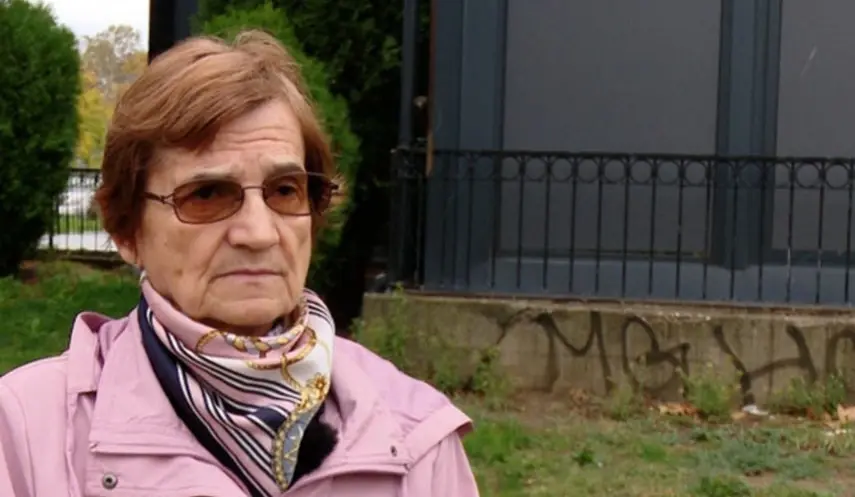
BELGRADE, JANUARY 14 /SRNA/ – Investigative judge in the "Račak" case Danica Marinković stated that the village of Račak was a major stronghold and headquarters of Albanian terrorists and that it was they who were killed there on January 15, 1999, not civilians, for which she has preserved documentary evidence.
"All the facts, supported by evidence, especially since I personally saw everything on the ground, indicate that this was a terrorist nest," Marinković told SRNA.
She emphasized that everyone knew this, but that the truth did not suit foreigners who had already made the decision to bomb the then Federal Republic of Yugoslavia and needed a pretext.
Marinković recalled that the then head of the OSCE Verification Mission William Walker should be held criminally responsible for lies about Račak.
She said that the fact that none of the Serbs indicted at The Hague were convicted for Račak shows how "shamelessly false" his statements were.
She stressed that thanks to her testimony and the evidence she presented there, not a single Serb was convicted for Račak.
"Despite so many fabrications, stagings and scenarios, they failed to keep Račak in the indictment," Marinković said.
She explained that those killed in Račak were not civilians or innocent villagers, as they were portrayed by American spy William Walker, who publicly claimed that Serbian police had allegedly carried out a massacre of Albanian civilians there.
She pointed out that based on operational intelligence and collected data, it was known that Račak was a major stronghold of Albanian terrorists.
"The headquarters was there; they had military formations, dug trenches, records were kept by units, who belonged where, who was on duty where, what weapons they had. I saw and found all of this on site. These are facts supported by evidence indicating that members of an Albanian terrorist gang were present in Račak," Marinković said.
She recalled that on January 15, 1999, Serbian police carried out an anti-terrorist operation in Račak aimed at arresting perpetrators of terrorist acts and dismantling the gang.
Previously, during months of monitoring the Albanian terrorist group in Račak, it had been established that they had fired at police, killed police officers and civilians, and that under threats and coercion they forced Albanians who did not wish to join them to do so, providing them with uniforms and weapons.
Marinković said she first entered Račak on January 15 with members of the investigative team and a group of police officers providing security, when a large quantity of weapons was found, noting that she had never seen so many weapons in her life.
"Automatic and standard rifles, machine guns, sniper rifles, mortars, crates of various types of ammunition, sacks of hand grenades, uniforms with `Kosovo Liberation Army` /KLA/ insignia. All of this was photographed, filmed and catalogued," Marinković said.
They had to leave the village when the weapons were loaded onto a truck for transport to a warehouse at the Uroševac police headquarters, because they came under fire from several directions.
Only on the third day, January 18, did Marinković and her team manage to re-enter the village, when they found the bodies of 40 deceased persons in the mosque. Autopsies were performed, confirming that this was not a massacre of Albanian civilians.
Marinković noted that foreign members of the verification mission tried to prevent her from entering Račak through threats and blackmail, and that they refused to take part in the investigation.
"There was no way they could stop me - I think I would have crawled on all fours, but I would have entered the village because I sensed that something had happened there that they wanted to conceal and to confirm Walker's version," she said.
She added that before her, the bodies in the mosque were supposed to be seen by the then Hague prosecutor Louise Arbour, who set out from Macedonia to come to Račak and confirm Walker’s falsehood. However, they failed because, as Marinković emphasized, she entered the village before them and found the bodies.
In accordance with forensic rules, the bodies were photographed, marked, each placed individually into prepared bags, and transported in a sealed refrigerated truck to the Institute of Forensic Medicine in Priština.
Marinković stressed that all her claims are supported by preserved evidence, explaining that there is no stronger form of evidence in criminal proceedings than the direct observation of an investigative judge at the scene and the conducted on-site investigation.
"That is why my testimony was accepted in The Hague as well," Marinković concluded.
On this day 27 years ago, an armed clash occurred in the village of Račak near Uroševac in Kosovo and Metohija between Serbian police and members of the Albanian terrorist KLA.
The elimination of terrorists, who were later portrayed as civilians, subsequently served as a cause for the bombing of the Federal Republic of Yugoslavia.