LINTA: VERDICT AGAINST GLAVAŠ CONTINUATION OF SERB VICTIMS BELITTLING
Serbia - Croatia - war crimes
06/11/2026
19:04
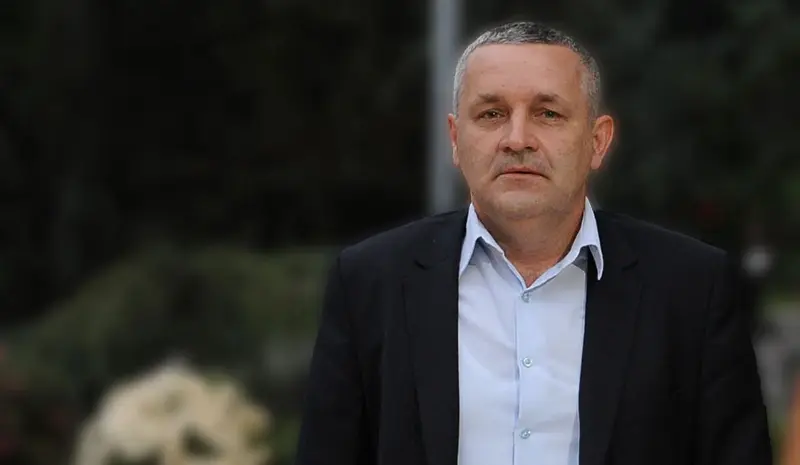
BELGRADE, JUNE 11 /SRNA/ – Head of the Association of Serbs from the Region Miodrag Linta stated that the latest verdict against Croatian war crimes convict Branimir Glavaš in Zagreb is deeply offensive and represents a continuation of humiliating and belittling Serb victims and their families.
Linta said that the ruling sentencing Glavaš to only seven years in prison for mass and planned war crimes against Serb civilians in Osijek was scandalous, whose aim was intimidation and the ethnic cleansing of Serbs through arrests, brutal torture, and killings.
According to Linta, the High Criminal Court Zagreb essentially only confirmed the controversial verdict issued by the County Court in October 2023, the Association of Serbs from the Region cited in a statement.
For the murder of seven Serb civilians, besides Glavaš, Gordana Getoš Magdić was sentenced to only four years in prison, while Dino Kontić and Zdravko Dragić received prison sentences of three years each.
"The verdict against Glavaš is deeply offensive because this is not about delivering justice, but rather about continuing the humiliation and belittling of Serb victims and their families," Linta stated.
He noted that the ruling covered only a small number of the Serb civilians killed in Osijek and only a limited number of those responsible for war crimes.
"Branimir Glavaš, together with his accomplices, was the master of life and death in Osijek. He bears responsibility for the disappearances, arrests, torture, and killings of more than one hundred Serbs in Osijek during 1991 and 1992 and afterward," Linta said.
He stressed that the "Glavaš case" is one of many examples showing that the Croatian judiciary is neither independent nor impartial because it issues acquittals or very light sentences to members of Croatian military and paramilitary forces despite substantial evidence of mass crimes against Serbs.
"The goal of the Croatian judiciary is not justice for Serb victims and their family members, but justification of the false myth of the `Homeland War,`" Linta stated.
He added that, on the other hand, many Serbs before Croatian courts received maximum sentences of 20 years, often in politically motivated proceedings based on false testimony and assumptions.
Croatia's High Criminal Court has issued a final ruling sentencing former wartime commander of Croatian forces in Osijek Branimir Glavaš to seven years in prison in the "Selotejp case" for war crimes committed against Osijek Serbs in 1991.
In addition to Glavaš, Gordana Getoš Magdić was finally sentenced to four years in prison for war crimes against civilians, while Dinko Kontić and Zdravko Dragić each received three-year prison sentences.