LINTA: JOINT ACTION BY BiH AND SERBIA TO SEEK SUSPENSION OF RADIOACTIVE WASTE PROJECT
Serbia - Croatia - Trgovska gora
04/01/2026
22:04
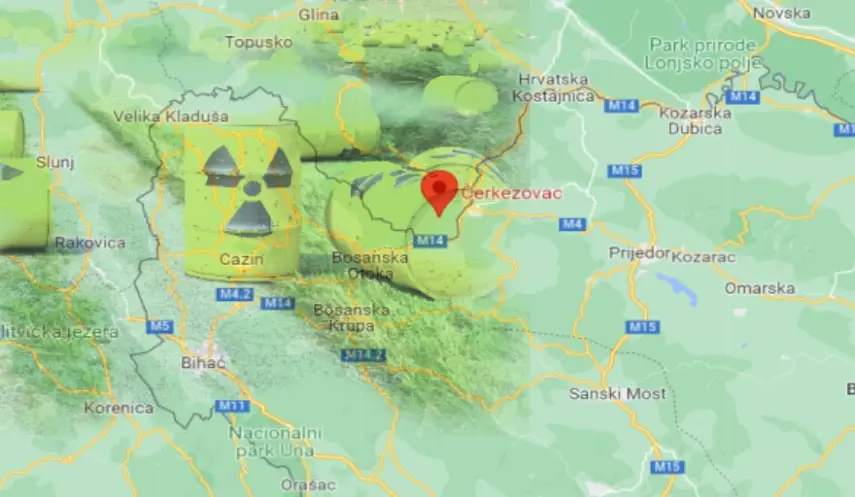
BEOGRAD, APRIL 1 /SRNA/ – BiH and Serbia should jointly demand from European and international institutions to force Croatia to suspend work on the construction of a radioactive waste management center on Trgovska Gora near Dvor na Uni and prevent possible catastrophic consequences for the population of both countries, Miodrag Linta, president of the Association of Serbs from the Region, told SRNA.
Commenting on information that land is being leveled on Trgovska Gora for the construction of a radioactive waste disposal facility and that eight structures have been demolished, Linta said this shows that Croatia is not abandoning its dangerous intention, although it should not undertake any activities before completing an environmental impact assessment.
“The key is for Serbia and BiH to urgently demand a halt to all works. It is necessary to insist that Croatia is thereby violating international conventions related to cross-border environmental impact assessment,” Linta stressed.
He said it is necessary to continuously warn that leakage of waste from that location into the Una River would pose an immediate threat to residents of the municipality of Novi Grad and 250,000 people in the river basin, and potentially also citizens of Serbia.
“That location is about 800 to 1,000 meters in a straight line from the water source that supplies around 15,000 residents of the municipality of Novi Grad. The population in the Una basin across 13 municipalities would also be at risk. And if the waste from the Una were to flow into the Sava River, the disaster could affect people in Serbia as well,” Linta explained.
He believes it is therefore very important for the Government of Serbia and the Ministry of Environmental Protection to be involved in resolving this issue.
Linta reminded that he recently sent a letter to the line minister, Sara Pavkov, pointing to the results of analyses conducted in BiH and the potentially enormous consequences of a disaster that could occur in the event of a waste leak.
“Croatia had an obligation three years ago to conduct an environmental impact assessment, but it has not done so. BiH has been quite active in this regard. According to these analyses, if a disaster were to occur, waste entering the Sava via the Una could reach Belgrade, which is why the Government of Serbia should also react,” Linta stressed.
In his view, it is necessary for the expert public in both BiH and Serbia to assess all consequences and risks of waste leakage from the Čerkezovac site, and then for these countries to jointly present this to the EU and appeal to it and its institutions to require Croatia to suspend the project until it completes the environmental impact assessment.
“Croatia would have to submit that study not only to the municipality of Dvor as part of the Croatian state, but also to the competent institutions in BiH, as well as in Serbia, which is potentially at risk,” Linta pointed out.
Croatia plans to store radioactive waste from the Krško Nuclear Power Plant, as well as existing institutional waste, on Trgovska Gora in the municipality of Dvor, on the very border with BiH.