KOVAČ: EXTREMISM IS POLITICALLY FUELED
Serbia - region - extremism
10/28/2026
14:08

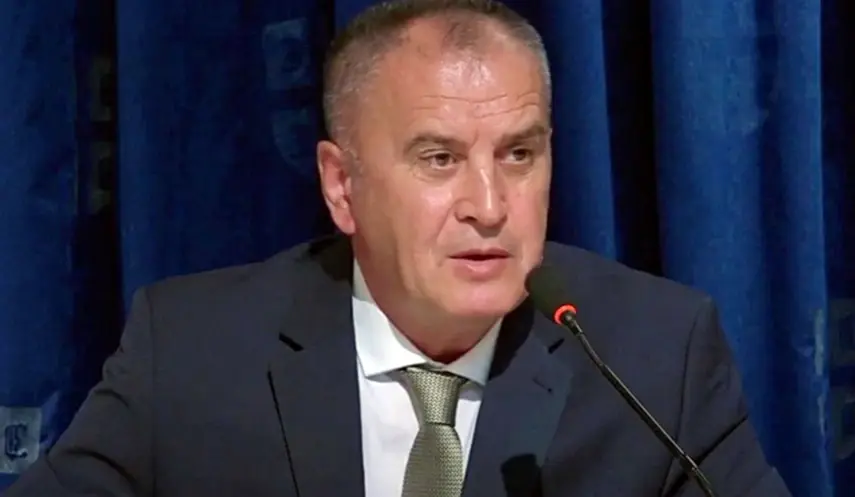
BELGRADE, OCTOBER 28 /SRNA/ - There are extremists throughout the region, and an added problem is that this extremism is also fueled politically, Mitar Kovač, director of the Eurasian Security Forum, warned after the terrorist attack in Belgrade.
Kovač told SRNA that a large number of extremists have been awakened and want some kind of action, backed by political parties in Sarajevo, Priština and the Raška region, and that it was only a matter of the pretext, the occasion and the moment before an attack like this happened.
He said the extremists are spread across smaller towns and places, but that this does not mean they will act where they live, but rather wherever they have a target.
"In that sense, they are mobile and that is how they operate. The problem is that this extremism is also fueled politically, in Priština, Sarajevo, some other towns in the Raška region, in Albania and North Macedonia," Kovač said.
He said Serbia's caretaker Interior Minister Ivica Dačić had good reason to declare the highest terrorism threat level in the country, because there is probably intelligence suggesting that the perpetrator of last night's terrorist attack in Belgrade was not the only one.
"When you have extremists like that in the city center who have been dormant for a long time, there is probably information that he was not the only one, that there are many such sleepers, and that it’s only a question of where they will strike," Kovač said.
He pointed out that, in addition to previously registered extremists and supporters, there are also many who came to the Balkans as political migrants and, due to the shortage of domestic labor, have become integrated into society.
"Unfortunately, this problem is not monitored enough in the Balkans, and certainly not everyone from those circles has been registered. They appeared in this area as migrants, in a political sense and in the sense of extremist activity. I believe they have connected with those centers of power and that, unfortunately, if an instruction is issued, they will act," Kovač said.
That, Kovač stressed, depends on the political leadership.
"When information comes down to them from higher decision-making centers, then they are there, in the region or anywhere else, to do their job. The question is their assessment of whether now is the time to intensify terrorist activity in the service of resolving the 'Palestinian question' or in solidarity with the goals of the Islamist struggle in Europe in general," Kovač said.
He said the attacker at the Israeli Embassy in Belgrade wanted to pay tribute to, and show agreement with and support for, the goals of the Islamist struggle anywhere in the world, especially in the Middle East, and that there is a risk of revenge for his death.
Kovač said Serbia is currently in a post-election period, and that it would be extremely dangerous, under the banner of transition and change, to "annul" many state institutions and their staffing structure, especially those dealing with security.
"I don’t think that will be allowed. State institutions should not be approached that way. Anyone who is responsible in any way should be held accountable through regular procedures. Institutions cannot be annulled, nor can there be calls to dissolve state and security institutions," Kovač said.
A minor, believed to be from Šabac, attacked a Gendarmerie officer guarding the Israeli Embassy in Belgrade with two knives, shouting "Allahu Akbar".
The officer killed the attacker in self-defense and sustained minor injuries. A red level terrorism threat alert has been declared.