DOJČINOVIĆ: I AM STILL HAUNTED BY CRIES OF CHILDREN BEING TORN FROM THEIR MOTHERS
Region - children held in camps - remembrance
10/03/2026
11:43
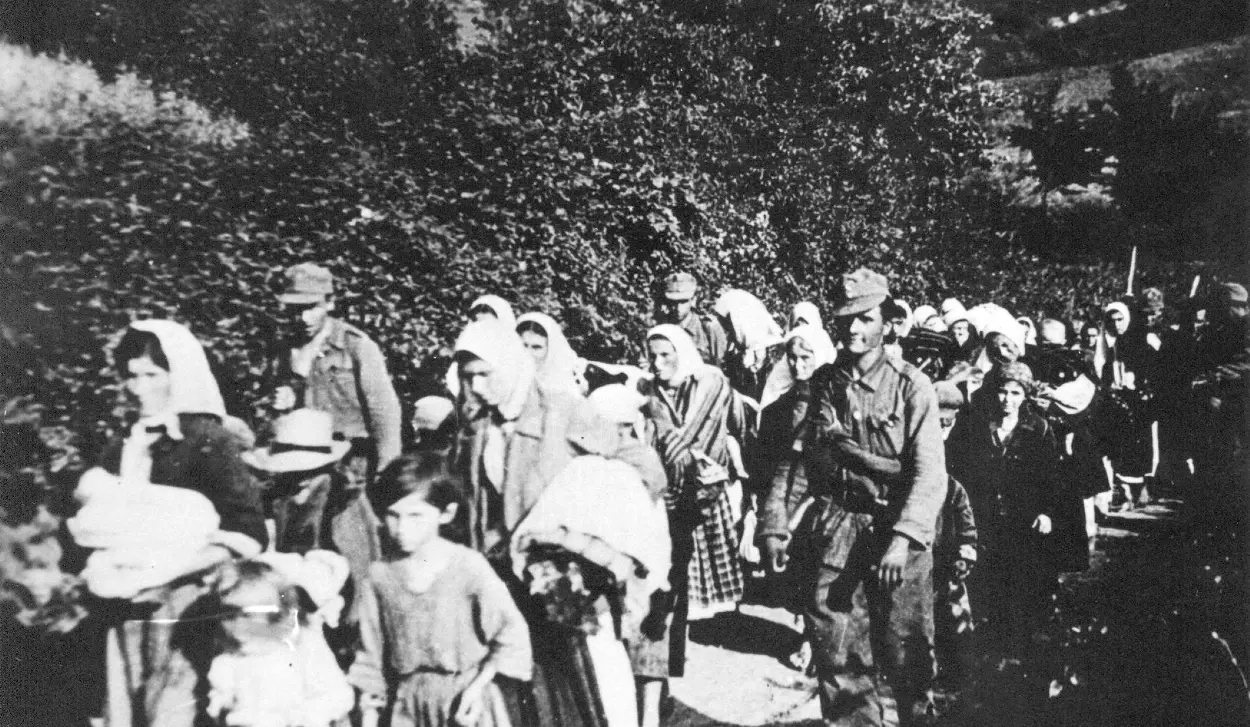
BELGRADE, OCTOBER 3 /SRNA/ - The oldest witness to Ustaše atrocities in the Potkozarje region, 104-year-old Jelka Dojčinović from Podgradci, said she still remembers the cries of children being torn from their mothers by the Ustaše on the way from Stara Gradiška, where they had first been taken, to Jasenovac.
"They ruthlessly began snatching children from their mothers’ arms. They attacked young women and girls and raped them. ‘Mama, don’t let them take me,’ they screamed. It was unbearable to listen to. Those cries, which still haunt my dreams, have left me unable to find peace. It feels as though it happened only recently. It was agonizing and horrifying," Dojčinović told Politika. She managed to escape from that death march and join the Partisans.
Historian Simo Brdar, who directed the multiple award-winning documentary Sun and Wire about Milja Kaurin from the village of Murati near Kozarska Dubica, who was blinded by the Ustaše at Jasenovac after being forced to stare at the sun for days, said that the Serbs would struggle to survive if the memories of the children of Kozara, Gradina and Jasenovac are not preserved in films, stories and books.
"I preserve that story through documentary films, not as a provocation or an expression of bitterness, but as a warning to humanity, because what happened during the Second World War, particularly at the Jasenovac camp, is the greatest warning to the world," Brdar said.
Ninety-three-year-old Stanka Trivić from Dragalj, a survivor of Jasenovac, testified that all the boys were taken away at the camp and thrown alive into the Sava River in front of their mothers.
"No one, absolutely no one who did not see or experience it, can understand the pain of those mothers. Their lives afterwards were a greater punishment than death," she said.
Trivić said that the hunger was unbearable and that her daily meal consisted of grains of corn, which her mother pulled from the floorboards, from a gap between the planks, and gave her to eat.
Vasilije Karan, now 93, originally from Knešpolje, remembers how the Ustaše at Jasenovac, where his younger sister perished, forced camp inmates to dig wide trenches and jump over them.
"Those who failed to make it across and fell into the trench were immediately killed. In this way, the trench became an ever-larger mass grave," he said.


DODIK: WE WILL PRESERVE MEMORY OF HEROIC HALYARD OPERATION
MINIĆ: SERBIAN TRICOLOR HAS NEVER BEEN ON THE WRONG SIDE OF HISTORY

CVIJANOVIĆ: SRPSKA MUST BE AWARE OF ITSELF AND SERBIAN PEOPLE MUST BE AWARE OF THEIR VALUES
KOVAČEVIĆ: DODIK, CVIJANOVIĆ AND MINIĆ AT HIGHEST LEVEL IN WASHINGTON, JERUSALEM AND MOSCOW, WHILE KONAKOVIĆ AND BEĆIROVIĆ ARE MAKING NOISE FROM GORAŽDE