DODIK: JASENOVAC WAS AUSCHWITZ OF THE BALKANS
Serbia - WWII - Commemorative Gathering on Jasenovac
04/17/2026
15:56
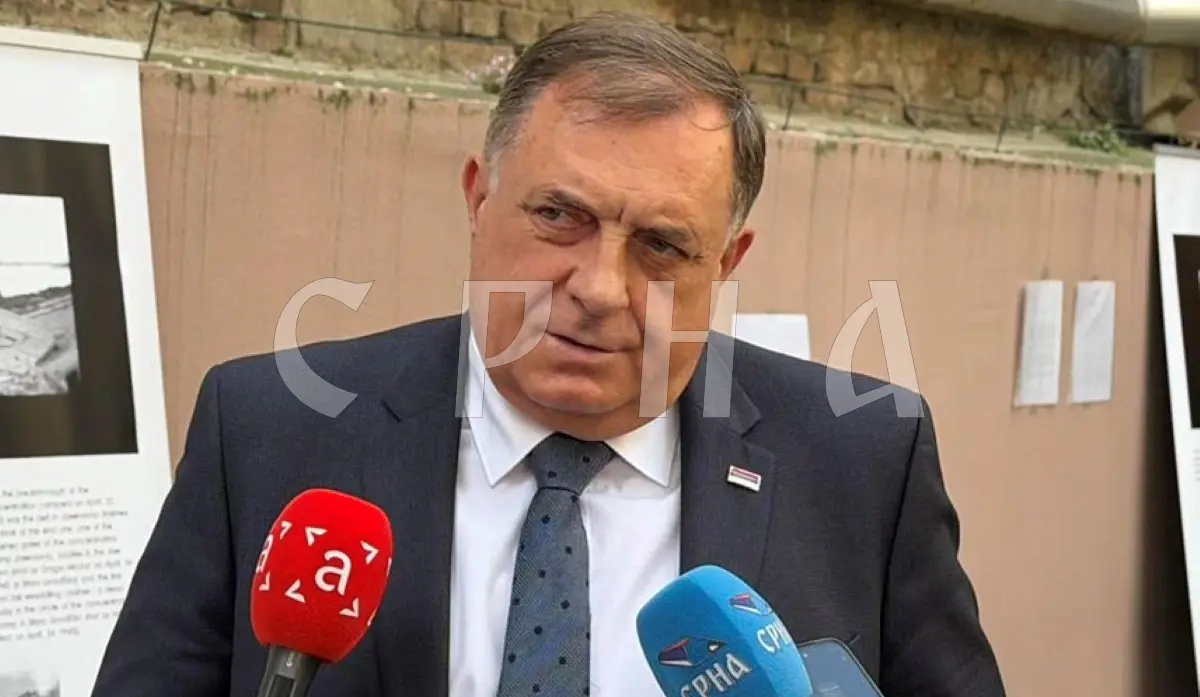
BELGRADE, APRIL 17 /SRNA/ – SNSD Leader Milorad Dodik has stated today in Belgrade that the Ustasha concentration camp Jasenovac in the NDH, a trauma for both the Serb and Jewish peoples, was the Auschwitz of the Balkans.
Speaking at the commemorative - educational gathering on Jasenovac, Dodik emphasized that this camp was a place of systematic inhumane and uncivilized treatment of people, where genocide was committed, which still lacks global recognition.
“I now see a light in which the Serb and Jewish peoples, together with the Roma, are bringing this issue back and presenting facts to the public so that the scale of these crimes can be properly understood,” Dodik said.
He pointed out that the killing of a total of 700,000 Serbs, Jews, and Roma in Jasenovac received neither legal nor moral condemnation in former Yugoslavia, as communism, promoting the ideology of brotherhood and unity, avoided portraying Croats, or the NDH, as those who systematically carried out these crimes.
Dodik stressed that the state policy of the NDH was to kill daily a child, a woman, anyone, but that communism concealed this and thus killed them again.
“Jasenovac was spoken about in whispers. Now we know that, in a global sense, it was the Auschwitz of the Balkans, as dozens of killing methods were devised there every day, from wooden hammers to the Serb-cutter. Only a small number of our people survived,” Dodik said.
He added that the question has always been raised as to how it was possible that partisans operating in that area never attempted to liberate or seize Jasenovac and prevent the crimes.
“That will never be explained. Belgrade was liberated in October 1944, while Jasenovac existed until April 1945,” Dodik said.
According to him, the suffering in Jasenovac has no politics, but everything that followed was political.
“The policy of former communist Yugoslavia was - do not touch Sajmište, do not touch Jasenovac, do not touch Jadovno, do not mention Prebilovci, a Serb village near Čapljina in Herzegovina, where 880 out of 1,100 residents were killed in a single day,” Dodik said.
There are people, he says, from other nations who believe that not enough evil was inflicted upon Serbs, Jews, and Roma, which was also demonstrated during the breakup of former Yugoslavia.
He pointed to a policy of forgetting Jasenovac, which contributed to it never being properly named as a place of genocide.
“Today, some Croats say it was a labour camp, not a place of Holocaust and genocide. Even today, there is no global recognition that it was a place of genocide, yet what else could it be?” Dodik said.
He also noted that his native region of Kozara was once densely populated, but after Jasenovac it did not produce a single military recruit for more than 20 years after the crime.
“That means people were systematically destroyed and killed, and the crime was planned. The Ustasha competed in committing crimes to please their main masters - the Germans,” Dodik said.
The commemorative and educational gathering “The Truth about Jasenovac in the NDH /1941–1945/: Historical Perspectives, Remembrance and Documentation” is attended by representatives of the Jewish community from Serbia and the United States.