DANILO KIŠ - SERBIAN LITERARY CLASSIC
Serbia - literature - anniversary
10/14/2026
10:06

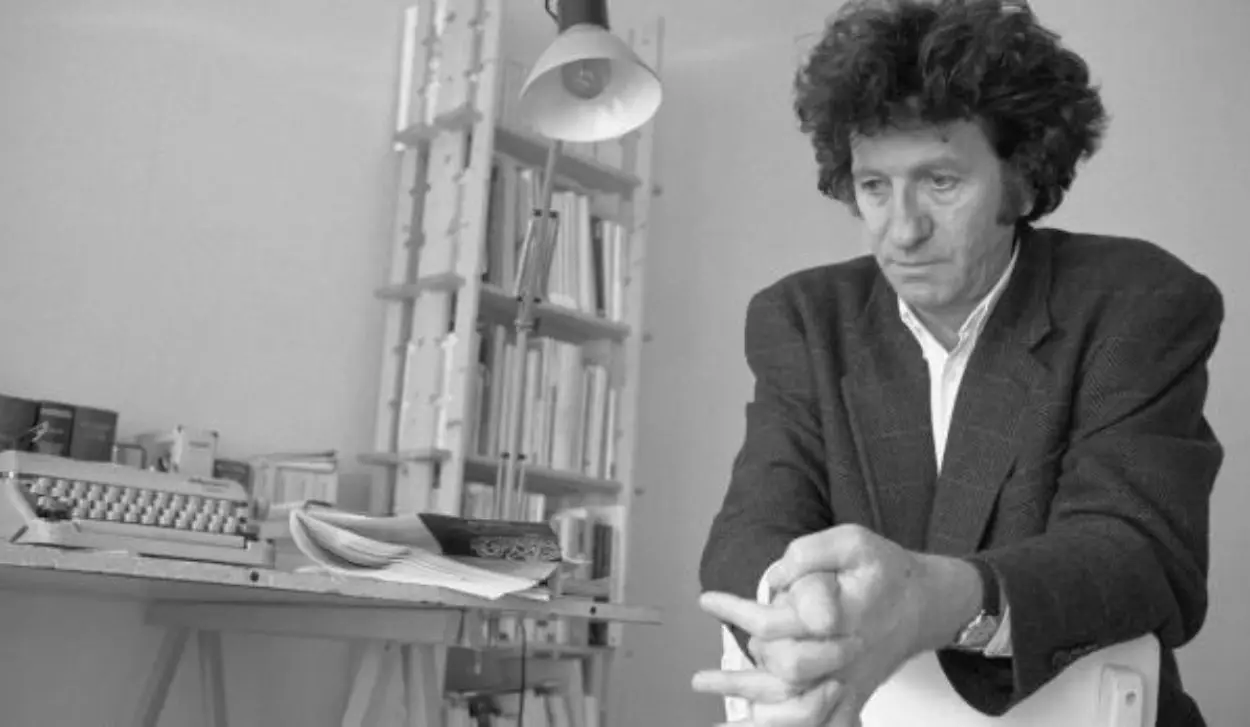
BIJELJINA, OCTOBER 14 /SRNA/ - Danilo Kiš, one of the greatest writers in Serbian literature, whose works captured much of the bitterness and brutality of the 20th century, died on October 15, 1989.
Kiš wrote in a refined style, with a modern approach to narrative.
He graduated in world literature from the University of Belgrade, worked as a dramaturge at Belgrade's Atelje 212 theater and later as a lecturer in Strasbourg, Bordeaux and Lille.
His works include the novels "Psalm 44," "The Attic," "Garden, Ashes," "Hourglass" and "A Tomb for Boris Davidovich"; the short-story collections "Early Sorrows" and "The Encyclopedia of the Dead"; the play "Electra 70"; and the polemical work "The Anatomy Lesson."
While working at the University of Bordeaux, Kiš wrote "A Tomb for Boris Davidovich," which stirred literary criticism and divided readers between those who praised him and those who accused him of plagiarism.
Kiš sought to explain the essence of the book in his polemical work "The Anatomy Lesson," after which, disillusioned, he chose voluntary exile.
"A Tomb for Boris Davidovich" is today regarded as one of the major works of Serbian literature.
He returned to France, where he wrote works including "Night and Fog," "Homo Poeticus" and "The Encyclopedia of the Dead."
Drawing on memory, he wrote about the Sam family, creating a family chronicle that follows the lives of several generations.
Kiš was deeply preoccupied with his childhood experiences, the horrors of the Holocaust, the disappearance of his Jewish father and memories of a difficult wartime childhood.
He received the "Skender Kulenović" Award and was made a Knight of the French Order of Arts and Letters. He was also a corresponding member of the Serbian Academy of Sciences and Arts.
Danilo Kiš introduced a documentary-poetic approach into Serbian literature, developing a distinctive style that blended historical and biographical facts with imagination.
Many Serbian writers, as well as authors across the former Yugoslavia, continue to write under the influence of Kiš`s style and his understanding of literature.
Kiš died in Paris, where he had also undergone treatment for a period, and was buried according to Orthodox rites in the Alley of Distinguished Citizens at Belgrade`s New Cemetery.