BOSNIĆ: OPERATION STORM - POGROM THAT NEVER ENDS
Region - culture of remembrance
08/03/2026
10:37
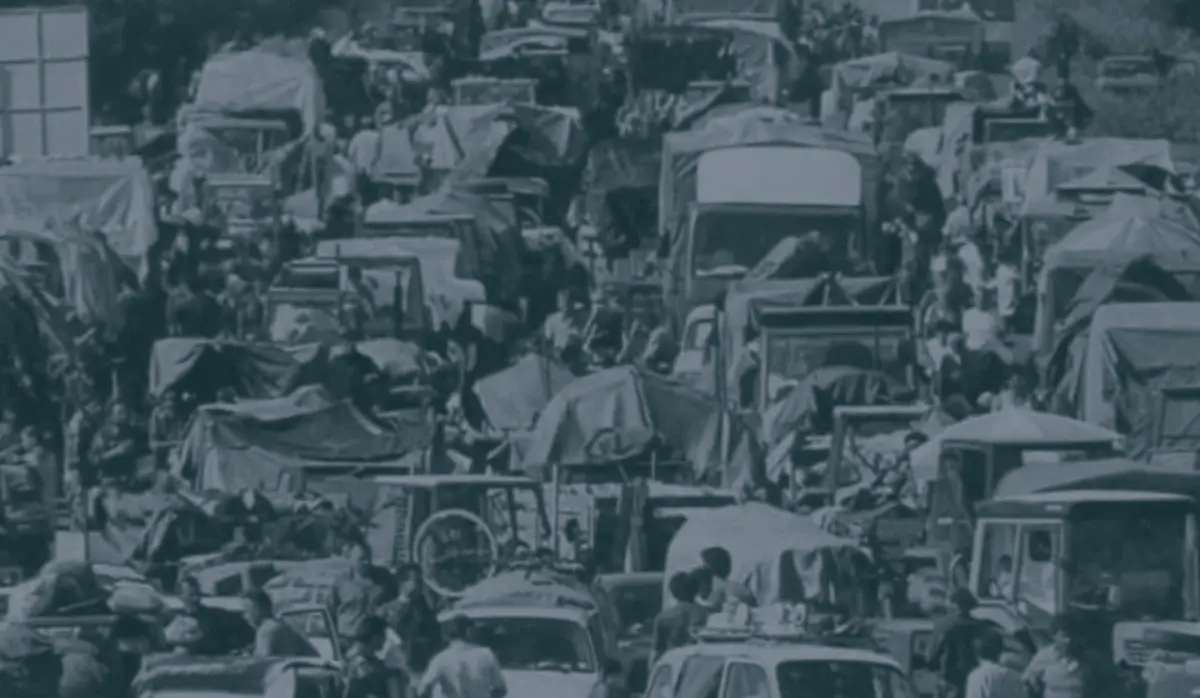
BELGRADE, AUGUST 3 /SRNA/ - The president of the Krajina Serbs Movement, Mile Bosnić, told SRNA that Operation Storm is a pogrom that has yet to end, as Croats are doing everything they can to drive out the remaining two to three percent of Serbs living in Croatia, stressing that it is only a matter of time before attempts begin to seize Serbian-owned land, which, he said, must be preserved.
He pointed out that the crimes committed in August 1995, which have gone unpunished, culminated in the largest ethnic cleansing in post-war Europe, giving Croats free rein to continue persecuting Krajina Serbs.
Bosnić said that such persecution continues to this day, noting that it has reached the point where Croatian state authorities spy on the social media profiles of Krajina Serbs and detain and prosecute even those who post songs about their homeland.
"It is obvious that the Croats believe they have not yet finished the job of ethnically cleansing Croatia of Serbs. They have special war crimes departments in all major cities that are dedicated to persecuting Serbs, whether by fabricating indictments for alleged war crimes, issuing bogus wanted notices, or spying on social media," Bosnić said.
He pointed out that one-third of the land in Croatia is registered in the land registry and cadastral records as belonging to Serbs, who, he said, must defend their ownership through institutional means because it is only a matter of time before attempts are made to seize it.
"The final stage of genocide, known as ethnic cleansing, has not been completed because two to three percent of Serbs still live there. But they will not tolerate even that, and they are doing everything they can to drive them out to erase every trace of the Serbs' existence in Croatia. It is unbelievable that no one responds to our cry for help or does anything to put an end to this once and for all, because it has become unbearable," Bosnić stressed.
CROATIA IS CARRYING OUT A MONUMENTAL INJUSTICE
He believes that what Croatia did in 1995, and what it is now doing to Krajina Serbs, amounts to a monumental injustice.
"Our people in Croatia run away whenever they see a Croat who appears to be in a bad mood or has got out of bed on the wrong side. They do not dare go to their own homes for fear of ending up in court or in prison over fabricated allegations, such as claims of rapes in villages where there were no young people at all," Bosnić said.
He argued that, judging by the current situation, the Croats are preparing to begin seizing land from Serbs, having already taken away their cultural heritage and even their cemeteries, where they dictate how the graves are to be maintained and what the headstones must look like.
"If they take our land, then we are finished. One-third of the land in Croatia is registered in the land registry and cadastral records as belonging to Serbs. We must fight for it through institutional means and respond decisively to prevent them from carrying out their intentions," Bosnić stressed.
ETHNIC CLEANSING THAT NO ONE LIFTED A FINGER TO STOP
He stressed that he will never forget, nor can he ever forget, Operation Storm itself, because, as the then minister of trade and tourism of the Republic of Serbian Krajina, he ultimately found himself in the refugee convoy. He joined it in Banja Luka after taking part in negotiations in Belgrade on the Z-4 Plan immediately before the Croatian forces launched their full-scale offensive against the RSK.
Bosnić said that, as a result, the RSK delegation was only able to reach Drvar, from where it travelled to Banja Luka and, after many hardships, eventually to Serbia, like most of those who had been expelled.
"When it comes to Operation Storm, three things immediately come to mind. The first is the refugee convoy. The second is that it was the largest ethnic cleansing in Europe since the Second World War, and no one lifted a finger to stop it. The third is the current situation faced by both those who were expelled and those who remained in Croatia," Bosnić said.
He believes that, in essence, no one is doing anything for the Serbs expelled during Operation Storm, while the Croatian authorities are placing people on wanted lists, banning Krajina Serbs from singing songs about their homeland, and spying on Facebook profiles at the state level to keep track of what they post and where they go.
"It is unbelievable that this is happening, even though Serbia and Croatia, under the auspices of the EU, signed a Succession Agreement that regulates all our rights and provides for a return to the situation as it was before the outbreak of the civil war. Yet no one invokes that agreement, nor is anything being done, while we remain scattered around the world and, on top of that, are being blamed, even though it is clear to everyone that we are the victims," Bosnić said.
PERPETRATORS LAUGH AT AND MOCK VICTIMS
He stressed that the worst thing of all is that no one has been held accountable for the numerous crimes committed during Operation Storm, and that, instead, Croats laugh at and mock the expelled Serbs, organising pro-Ustasha concerts by Marko Perković Thompson and blaming the displaced people for alleged aggression and occupation.
"When everything is taken into account, it is clear how our unfortunate people feel, and how the remaining remnants of Serbs in Croatia must feel, having to walk with their heads bowed and not daring to utter a word," Bosnić pointed out.
He said that Krajina Serbs were delighted when the commemoration of the anniversary of Operation Storm began, adding that they are now somewhat disappointed because it is clear that this is not enough, especially as Croats are increasing pressure and continuing to harass and disenfranchise Serbs.
"Apart from this one day, we essentially do not deal throughout the year with the consequences of Operation Storm and the problems we face, while those problems confront us every day, from fabricated wanted lists and indictments to the seizure of property, culture and spiritual heritage, to a kind of restriction of movement, because you cannot be free when someone is monitoring your Facebook profile. You cannot go anywhere, because they will put you in prison and pin on you whatever they feel like," Bosnić said.
He stressed that commemorating the anniversaries of Operation Storm represents a major step forward compared with the earlier period, when there was virtually no discussion of that operation and its consequences, adding that, when all is said and done, it has nevertheless been reduced to a single day of remembrance for the unprecedented suffering of the people in August 1995.
"We are disappointed because we have the impression that, somehow, it turns out that we belong to no one. The question arises as to whether the time has come for the population of expelled Krajina Serbs to organise politically in order to draw attention to all the problems they face, problems that show no end in sight. It does not have to be a political party, but something along those lines needs to be done, because I fear that this is the beginning of the end of the agony in which our displaced people find themselves," Bosnić said.
SERBS IN CROATIA WORSE OFF THAN IN 1991
In his assessment, the situation is unbearable, as perpetrators continue to walk free, victims are being portrayed as criminals, and Serbs in Croatia, as well as those who go there to visit their ancestral land, are not allowed to raise their heads.
"If you sing a song that contains nothing provocative or anything similar, but which for some reason they do not like, you go to prison. It is enough just to look at the barrage of comments in which people threaten to kill us, wondering how we, as they put it, are even allowed to sing in their Croatia," Bosnić pointed out.
He believes that the situation is now worse than in 1991, because in Croatia it is young people who are the most consumed by hatred, people who were not even born when the war took place, to the extent that they constantly threaten to "finish off" the Serbs and come to Serbia as well.
"Meanwhile, we are constantly defending ourselves and apologising, even though we are the victims. It is unbelievable. On top of all that, a few days ago the Russian state and its President Vladimir Putin reacted seriously to a report on the human rights situation in Croatia. And where are we? It is as if we are angry that someone else is taking the issue seriously, while we merely express surprise and pretend not to see how Croats continue to humiliate and persecute us even today," Bosnić said.
SOUND THE ALARM TO THE WORLD AND EXPOSE WHAT IS HAPPENING!
While commending the authorities for the decision to establish a Day of Remembrance for Operation Storm, Bosnić believes that everyone needs to become far more engaged than that, and that every day efforts must be made to speak out, respond, and take all necessary steps to expose and punish those responsible for the largest pogrom in post-war Europe.
"We must constantly draw attention both to what happened and raise the alarm with the world about what is still happening to the suffering people of Krajina, because this is something unprecedented in history. Where else does it happen that those who suffered and were expelled are labelled aggressors and occupiers, while those who organised and committed crimes are hailed as heroes?" Bosnić asked.
He believes that, apart from the conduct of Croats, who celebrate Operation Storm as a liberation operation, the failure to punish those responsible has also been contributed to by the actions of Serbian courts.
"Our courts are very diligent in acting on Croatian wanted notices and indictments, and, in addition, they have prosecuted and convicted some Serbs for Vukovar and other matters. If they were able to do that, why did they not at least open investigations and put some 1,500 Croats on wanted lists?" Bosnić said.
He stressed that pressure must be exerted through the international community, the EU and other channels to ensure that Croats do the same, because there are witnesses and everything else necessary to prosecute those responsible for crimes against Serbs.
"But as a people, we are powerless because we do not have the institutional capacity to present our problems in the right way, and one of the most horrific things is that the perpetrators have not been brought to justice," Bosnić said.
VILLAINS ON MURALS, SERBS ON INDICTMENTS
He added that Croats who committed crimes end up on murals as heroes instead of in prisons, and that they never miss an opportunity to provoke Serbs.
"Apart from Operation Storm, no one has been held accountable for the crimes in Pakračka Poljana either, nor for the crimes in Sisak, where 600 civilians were killed outside the area of combat operations. The same story applies in Zadar and Karlovac. In Zagreb, there is only the case of the Zec family; everything else is ignored, as if it never happened.
Are these their European values? They are still accusing us of committing crimes, demanding that we pay war reparations and that we go there to serve prison sentences," Bosnić said.
According to him, all of this shows that Operation Storm is a crime that has not ended, because Croats are, without any justification, sending people to court or prison, nitpicking over every little detail.
"There are people who have gone there a hundred times. And when Croats see that someone intends to return, an indictment is brought after 25 years since the end of the war. Especially if one of them imagines or invents that someone gave them a hostile look or did something else, I don't know what," Bosnić said.


TRUCKS CARRYING VIDEO BILLBOARDS DRIVE THROUGH NEW YORK SHOWING LIVES OF SERBS IN KOSOVO AND METOHIJA
CHILDREN - THE GREATEST VICTIMS OF ADVANCES IN MILITARY TECHNOLOGY
NEW GREENLAND AGREEMENT TO BE SIGNED TOMORROW
BROTHERLY CONGRATULATIONS TO UNITED RUSSIA, MEDVEDEV AND PUTIN ON ELECTION RESULT