53RD ANNIVERSARY OF THE DEATH OF SERBIAN WAR HEROINE MILUNKA SAVIĆ
Serbia - remembrance
10/05/2026
14:27
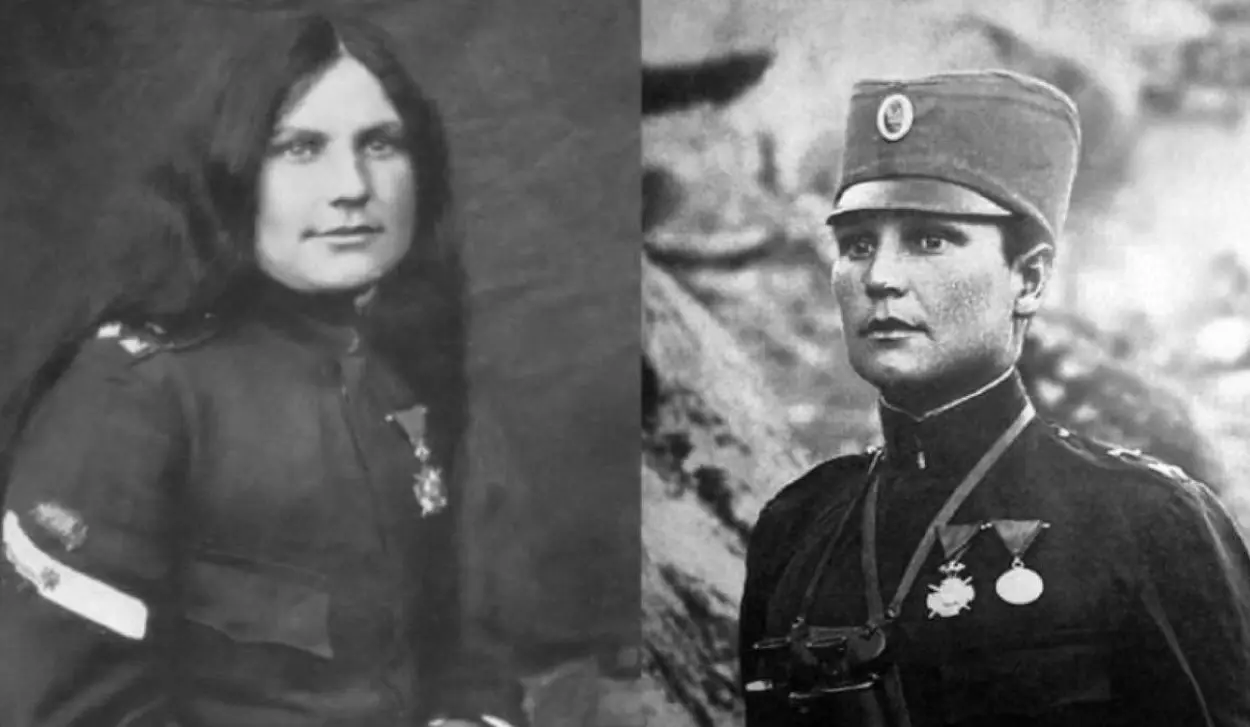
BELGRADE, OCTOBER 5 /SRNA/ - Today marks 53 years since the death of Milunka Savić, a Serbian heroine of the Balkan Wars and World War I, one of the most decorated women in the history of warfare and a symbol of courage and devotion to her homeland.
Savić was born on June 24, 1890, in the village of Koprivnica near Jošanička Banja, at the foot of Mount Kopaonik. She spent her childhood in poverty, doing hard daily work in the fields and around the house.
The turning point that changed her life completely came with the outbreak of the First Balkan War, when she cut her hair, bound her breasts with a scarf, and enlisted as a volunteer under the name Milun Savić.
She served as a soldier in the Drina Division and took part in the Battle of Scutari.
During the Second Balkan War, she distinguished herself in the Battle of Bregalnica in 1913, where she was wounded. At a field dressing station, doctors discovered that the wounded soldier was a woman.
Word spread through the Serbian army that the brave bomber was named Milunka.
During World War I, Milunka Savić fought in the Second Infantry Regiment Prince Mihailo, also known as the Iron Regiment.
She took part in the Battles of the Drina and Kolubara in 1914, and in the fall of 1915, she fought in fierce battles against the regular Bulgarian army and komitadjis in Macedonia.
She retreated with the Serbian army through Albania and was seriously wounded in early January 1916.
In the battles of Kajmakčalan, Dobro Polje and Grunište, she distinguished herself as a bomber and also captured several Bulgarian soldiers.
During seven years of continuous warfare, she was wounded a total of nine times and received 12 decorations.
She was a recipient of the Karađorđe Star with Swords, the Medal for Bravery, the Commemorative Medal of the Wars of Liberation 1912–1918, and the Albanian Commemorative Medal for the Liberation and Unification 1914–1918.
She was also awarded France's highest honors — the Legion of Honour, 4th and 5th class, and the Croix de Guerre with a Gold Palm.
After the war, Savić worked in a military tailor shop and as a cleaner at the Mortgage Bank in Belgrade, but she remained a hero in peacetime as well.
In addition to her biological daughter, she adopted and raised three other girls and put more than 30 boys and girls from her native Jošanička Banja through school.
She died in Belgrade on October 5, 1973. She was buried in a private grave without state honors.
The remains of the most decorated woman of the Great War were moved to the Alley of the Greats at Belgrade's New Cemetery in 2013.