33 YEARS ON, NO ACCOUNTABILITY FOR CRIMES AGAINST SERBS IN OPERATION MASLENICA
Croatia - culture of remembrance
01/21/2026
11:41
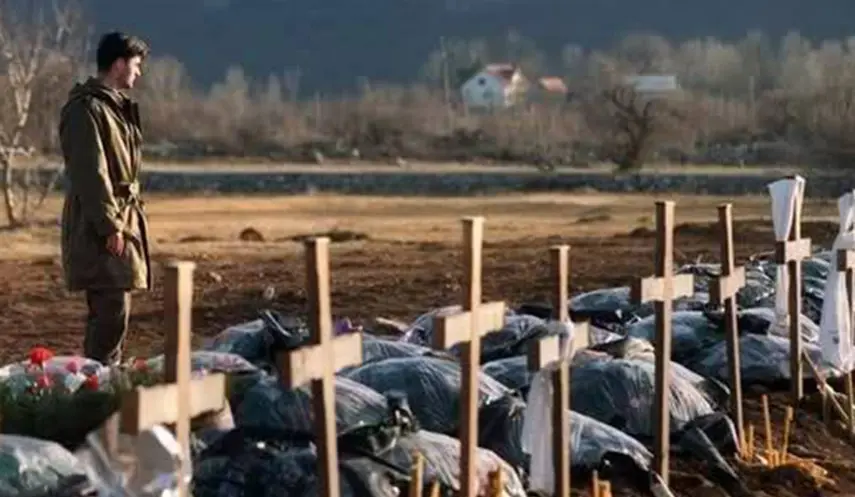
BELGRADE, JANUARY 21 /SRNA/ – Thirty-three years have passed since the aggression carried out by Croatian forces against the southern parts of the Republic of Srpska Krajina /RSK/, a UN-protected area, during which 346 Serbs were killed, including 34 women. To this day, no one has been held accountable for these crimes, even though the atrocities and the persecution of the Serb population were committed in full view of international forces.
The Information and Documentation Center Veritas reminds that the operation began on January 22, 1993, and was carried out during the implementation of the Vance Plan, under which the RSK was placed under UNPROFOR protection in 1992. This marked Croatia's third aggression against a UN-protected area, despite having been admitted to UN membership two years earlier.
Within a few days, Croatian forces seized dozens of square kilometers in the Ravni Kotari area, including Zemunik Airport and several positions on Mount Velebit. They also took control of the Peruća Dam and hydroelectric power plant.
During Operation Maslenica, Serb villages such as Islam Grčki, Kašić, and Smoković were devastated, as well as ethnically mixed villages including Murvica, Crno, Zemunik Gornji, Poljica, and Islam Latinski.
Serbs were killed, expelled, or taken to prisons and camps, while their extensive properties were looted and destroyed. Cultural monuments, cemeteries, and churches were desecrated or demolished.
Among the destroyed sites were the Janković Court of Stojan in Islam Grčki, along with the 17th-century Church of St. George, where renowned writer Vladan Desnica is buried, as well as the 16th-century Church of St. George in Smoković and the 19th-century Church of St. Elijah in Kašić.
According to Veritas records, 346 Serbs were killed or went missing during the aggression in Ravni Kotari, including 55 civilians with an average age of 60.
The victims included 34 women, with an average age of 57, and three children under the age of 12.
Among those killed were 65 volunteers from Serbia and BiH who came to Ravni Kotari to defend their ancestral homes together with local Serbs.
So far, the fate of 335 persons has been clarified, while 11 remain listed as missing, including six civilians - three of them women.
An additional 165 people died while fleeing in refugee convoys.
More than 10,000 Serbs were expelled from villages in Ravni Kotari and dispersed across the world.
One of the most serious crimes occurred on the very first day of the aggression at the Mali Alan mountain pass on Mount Velebit, in the immediate vicinity of a UNPROFOR observation post, when members of the Croatian special police ambushed, killed, and mutilated 22 members of the Serbian Army of Krajina /SVK/ from the Gračac area.
The massacre was committed by members of the Fifth Platoon of the Alfa Unit, commanded by Milijan Brkić, known as Vaso, who later became a high-ranking official of the HDZ and served as Deputy Speaker of the Croatian Parliament from 2016 to 2020.
With the approval of then Croatian President and Supreme Commander of the Armed Forces Franjo Tuđman, Operation Maslenica was planned and carried out by Janko Bobetko, Ante Gotovina, Ante Roso, Mirko Norac, and Mladen Markač, all of whom were either holding or later promoted to the rank of general.
The head of artillery in the Velebit Sector was Kosovo Albanian Agim Çeku, a former Yugoslav People's Army /JNA/ officer until 1991, whose shells caused the greatest number of civilian casualties due to indiscriminate shelling deep into the territory of the municipalities of Benkovac and Obrovac.
From 1999 to 2006, Çeku served in Kosovo as commander of the terrorist KLA and the so-called Kosovo Protection Corps, and from 2006 to 2008 as prime minister in Priština.
Although the aggression was carried out against a UN-protected zone and in the presence of numerous UNPROFOR members, no one has been prosecuted to date, either before international or domestic courts, for crimes committed against Serbs.
According to Croatia's 1991 census, Kašić had 765 residents, 99 percent of whom were Serbs; Smoković had 1,029 residents, 96 percent Serbs; and Islam Grčki had 1,139 residents, 87 percent Serbs.
According to the 2021 census, Kašić had 69 residents, Smoković 162, and Islam Grčki 150 residents, with no indication of national identity.