BRIGHT ORTHODOX GRAVES IN SARAJEVO
FBiH - Sarajevo - property of Serbs and SOC /1/
07/11/2026
10:21

SARAJEVO, JULY 11 /SRNA/ - Publicist Dragan Mijović reveals for SRNA that in 1729, hundreds of stone crosses and marbles from the oldest Sarajevo Orthodox cemetery in Carina, which is today's Marijin Dvor, were built into the ramparts on Vratnik by the Turks, so few of them remain from before that time, and that the oldest monuments in the cemetery from the 16th century all bore inscriptions exclusively in Cyrillic.
BY: Željka DOMAZET
Mijović says that before the story about the exhumation of this oldest Sarajevo cemetery and the plans for the construction of a seminary at that location, a few interesting facts should be presented about the cemetery itself and its great cultural and historical significance, as a testimony of an era, but also to the Serbian inhabitants of the city of Sarajevo at that time.
"The cemetery was surrounded by a stone fence with a large gate that was locked with a heavy lock. Guarding, maintenance, as well as all costs in the Ottoman period were the responsibility of the Serbian Orthodox Church Municipality of Sarajevo, which for centuries paid guards - always Serbs - who lived in the church house right next to the cemetery," says Mijović, who is familiar with everything that represented the property of Serbs and the Serbian Orthodox Church /SOC/.
Mijović notes that they repaired the chapel, fence and paths, mowed grass, cleared bushes and did all other necessary work, and adds that the house was rented out after the cemetery was closed.
"When it comes to various payments to the authorities, the Church Municipality archives have preserved many notes, such as the one that on March 25, 1678, 17,310 akçes was paid to the Pasha's Divan `for the cemetery,` then three years later another 12,580 akçes and so on," Mijović specifies.
HUNDREDS OF STONE CROSSINGS BUILT INTO THE RAMPS OF VRATNIK
Mijović states that in 1729, the Turks built hundreds of stone crosses and marbles from this cemetery into the ramparts of Vratnik, so that only a few of them remain from before that time.
"In the lapidary of the National Museum in Sarajevo, two sarcophagi with a lid from the 15th century were transferred from the cemetery in Carina. One of them contained a famous glass cup, which is today one of the most valuable exhibits of the medieval collection," Mijović points out.
Mijović emphasizes that the oldest remaining monuments in the cemetery are from the 16th century and that they all bear inscriptions exclusively in Cyrillic.
"One of the oldest crosses belonged to a certain Damjan who died in 1652, a similar old monument was transferred by Jeftan Despić to the churchyard of the Old Church in Čaršija. During the research of the site of the old cemetery in Carina, Dr. Vladislav Skarić and Darinka Despić collected many artifacts and stored them in the Old Church Museum," he says.
Mijović notes that the Old Church Museum will later finish a fragment of a gravestone inscribed in Cyrillic from 1743.
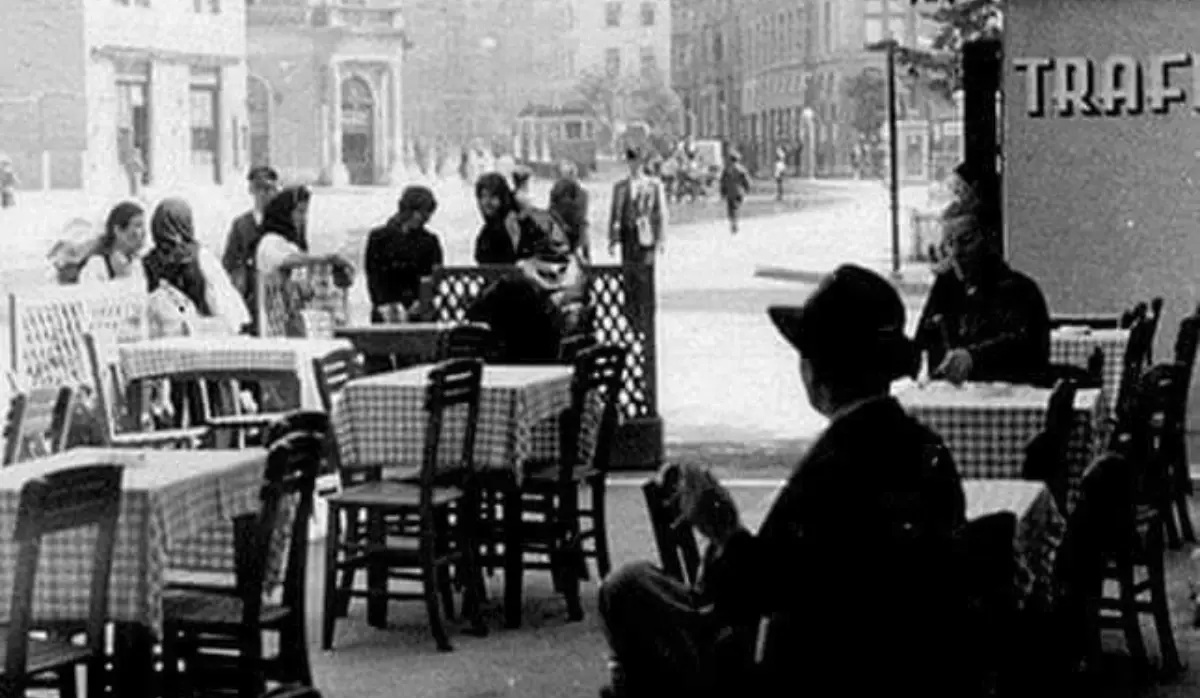
"That gravestone was built into the plinth of the `Tilava` tavern, which was located in Marijin Dvor on the corner of Vojvode Putnika and Branimir Ćosića streets, where the northeastern corner of the Carina cemetery used to be," he said.
Mijović says he had the opportunity to see that plaque while he was a high school student, sometimes drinking coffee there, waiting for the bus at a nearby stop.
When the tavern was demolished, Mijović specifies, the plaque was transferred to the Old Church Museum.
"During the time of the Kingdom of Yugoslavia, there was also the `Stari Panj` tavern next to the cemetery," he said.