OSCE TO ORGANISE CONFERENCE ON NEW ELECTION TECHNOLOGIES ON SEPTEMBER 3
BiH - elections - Schultz
08/25/2026
11:03
SARAJEVO, AUGUST 25 /SRNA/ - The OSCE Mission in Sarajevo will organise a conference on September 3, one day before the beginning of the general elections campaign, with the introduction of new technologies into the electoral process as one of the topics, OSCE spokeswoman Željka Schultz told SRNA.
She invited media representatives in BiH to attend the event, as well as the press conference that will be held on the occasion.
Asked by SRNA whether the complex voting procedure announced for the October elections would prolong Election Day, and whether the negative aspects of using such technologies that could call the regularity of the elections into question had been taken into account, particularly given that several countries had abandoned their use, Schultz said that these questions fall exclusively under the authority of the Central Election Commission /CEC/ of BiH.
Although the CEC of BiH continues to optimistically claim that the voting process with technological innovations, which cost BAM 86 million, plus millions more for training election administration staff and other related expenses, will be simpler and prevent electoral irregularities, analyses by the media and institutions indicate otherwise.
These concerns relate to additional problems identified by the CEC in a comprehensive report - occasional congestion of the devices during synchronization with the server, blockages of the identification application, congestion of identification tunnels, and incorrect allocation in the final tally of successful and unsuccessful authentications. These issues are compounded by difficulties caused by interruptions in internet connectivity, even in locations where the connection is normally reliable.
The Pod Lupom coalition previously warned that scanning a single ballot, provided everything functions perfectly, takes 40 seconds, while during a pilot project at some polling stations the process took twice as long.
Voters will have to scan four ballots, while time must also be allowed for identification and identity verification, with or without delays and technical difficulties.
The voting process itself is also highly complexed, as instead of a single ballot containing the names of candidates, voters will be faced with numerous sheets of paper and instructions.
Voters will have to read four separate ballots, compare them, memorize or copy numbers, associate them with political parties, and only then attempt to correctly mark their choices, which amounts to an administrative maze in which errors are highly likely.
Voters will insert each ballot individually into a scanner, proportionally increasing the possibility of technical errors and problems, as well as the risk of compromising ballot secrecy if the ballots are inserted incorrectly.
It should also be added that the optical-scanner system for voting in elections, as introduced in BiH, is used only in the Philippines, Kyrgyzstan, Mongolia and Iraq.
One of the key differences is the number of ballots. Voters in Mongolia, the Philippines and Iraq use a single, unified ballot, while voters in Kyrgyzstan receive two separate ballots.
Many European countries, following negative experiences with electronic voting machines, have resumed conventional voting using paper ballots and manual counting of votes.
Thus, in 2009, Germany's Federal Constitutional Court ruled that the use of electronic voting machines was not compatible with the constitutional principle of the public nature of elections, because voters without specialized technical knowledge could not reliably verify the key stages of the voting process.
The Netherlands and Ireland also abandoned the machines and resumed manual vote counting because there was insufficient assurance that the reliability of the system and the secrecy of the vote were guaranteed.
In 2008, France banned the further introduction of electronic voting machines in municipalities that had not previously used them. Today, approximately three percent of the French electorate has the option of voting on such machines, while paper ballots are used for the vast majority of voters.

MINIĆ ATTENDS DISTRIBUTION OF BELARUS TRACTORS TO YOUNG FARMERS IN VRŠANI
KLOKIĆ VISITS FAMILY THAT RETURNED FROM AUSTRIA TO OMARSKA
TRNINIĆ: FIRES UNDER CONTROL, NO ONE INJURED
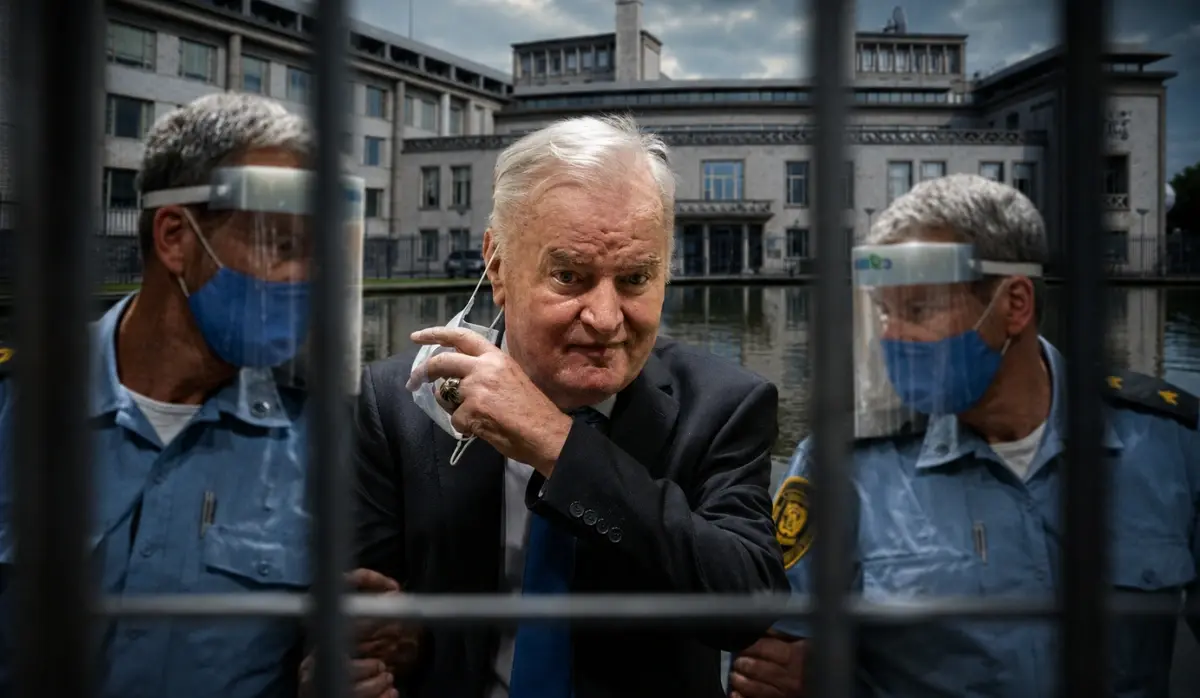
JOVANOVIĆ: HAGUE'S DOMINANT ANTI-SERB ORIENTATION REFLECTED IN ITS INHUMANE TREATMENT OF GENERAL MLADIĆ