LINTA: THE FEDERATION OF BiH IS SEIZING SERB PROPERTY TO CEMENT ETHNIC CLEANSING
BiH - Association of Serbs from the Region
01/21/2026
15:05

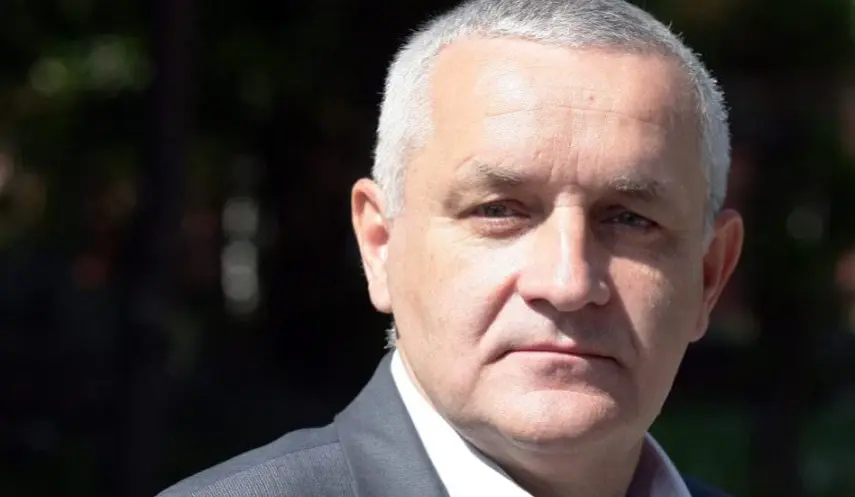
BELGRADE, JANUARY 21 /SRNA/ - President of the Association of Serbs from the Region Miodrag Linta assessed that since the end of the war in the FBiH there has been a deliberate process of seizing Serb property aimed at cementing the ethnic cleansing of Serbs from their centuries-old homelands.
Linta pointed out that one of many examples is the scandalous decision of the Municipal Court in Mostar to register in the land registry that "the state is the owner of the parcel on which the Orthodox cemetery in the Vrapčići settlement is located".
He recalled that the municipal cadastre lists the Serbian Orthodox Church parish as the possessor of the cemetery.
"In addition, the court in Mostar made another scandalous decision to register the state as the owner of another parcel on which there is a second Orthodox cemetery, as well as a chapel of the Serbian Orthodox Church," Linta stated in a press release.
He added that since 2014, a harmonization of land registries has been underway in the Federation of BiH, under the jurisdiction of the judiciary, and of cadastral records controlled by municipal or city administrations.
"This specifically means that existing land registries are being updated or new land registries are being established in areas where they do not exist at all, in order to reflect the actual situation on the ground, that is, the situation recorded in the cadastre," Linta said.
He noted that land registries did not exist in 60 to 70 percent of the territory of the Federation of BiH and that new ones are now being established, adding that many land registries were destroyed or lost during the war.
"Serbs in the Federation of BiH have been mass-registered in the cadastre as possessors based on a census dating back to 1951, on the basis of later aerial photographs or public presentations carried out by certain municipalities," Linta pointed out.
He believes that when establishing new land registries, the actual situation recorded in the cadastre must be taken into account, as well as the situation in existing land registries that contain outdated data.
"In them, land is recorded either as some form of social property or as the property of land communities and municipalities, or deceased family members are listed as owners," Linta said.
He explained that in such situations, if the parties listed as possessors in the cadastre - who are in essence the real owners - do not respond to a public call, an opportunity is created for the state to register ownership of the land or other real estate.
"In addition, there are mass cases of land seizure based on the flawed Law on Real Rights of the Federation of BiH, particularly the discriminatory so-called institute of possession in Article 58. It stipulates that if land is continuously used by another person instead of the real owner for 10 or 20 years, that person acquires the right to the property," Linta said.
He stressed that this means that land owned by Serbs, if possessors or real owners do not respond to notices published in the Official Gazette or the daily newspaper Dnevni avaz, is transferred to the state or to an usurper, which represents one of the ways Serbian land is being seized.
Linta believes that the Government of Serbia should initiate an active political and legal struggle for the respect of an important interstate agreement, namely the Agreement on Succession Issues, signed in Vienna in 2001 and entering into force in 2004 after ratification in the parliaments of the successor states of the former Yugoslavia.
He emphasized that Annex G of the Agreement, entitled "Private Property and Acquired Rights," clearly states that all citizens and legal entities must have recognized, protected and restored the property they possessed as of December 31, 1990, in one of the successor states of the former SFRY.
"Annex G also stipulates that any seizure of property carried out under pressure or threats after the last day of 1990 shall be null and void. Under international law and the constitutions of the successor states, the Vienna Agreement on Succession has greater legal force than domestic legislation," Linta said.

DODIK: OHR REPORT FULL OF WORN-OUT POLITICAL CLICHES; WE EXPECT SECURITY COUNCIL TO ANNUL ALL IMPOSED DECISIONS
PEACEFUL TRANSFER OF POWER ONE OF THE FUNDAMENTAL PRINCIPLES OF DEMOCRATIC ORDER
CVIJANOVIĆ: OHR REPORT TO UN SECURITY COUNCIL BURDENED WITH STEREOTYPICAL LIES
NO CLEAR WINNER IN PARLIAMENTARY ELECTIONS