KOVIĆ: BOSNIAKS SHOULD UNDERSTAND THAT EVERY FOREIGN OCCUPIER HAS LIMITED HISTORICAL LIFESPAN
BiH - OHR
06/13/2026
12:42
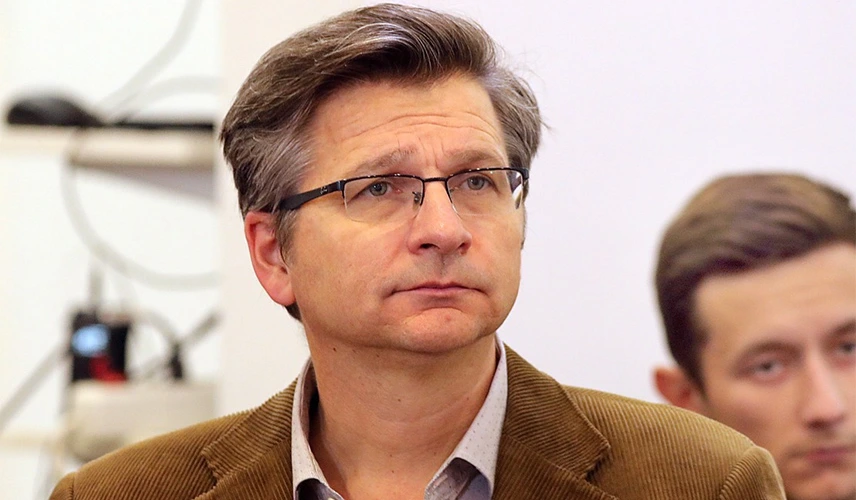
BELGRADE, JUNE 13 /SRNA/ – Historian Miloš Ković, a professor at the Faculty of Philosophy in Belgrade, believes that it is high time for Bosniaks who advocate the continued presence of the OHR in BiH to understand that every foreign occupier in the Balkans has a limited historical lifespan and one must think about the day when today's great powers withdraw from the historical stage.
“In the Balkans, we have seen the Byzantine Empire, the Ottoman Empire, the Habsburg Empire, and the Third Reich. All of those periods have passed, and this one will pass as well. One must always think about the future and about the need for the peoples of BiH and the Balkans to talk to one another instead of drawing internationals into their mutual disputes,” Ković told SRNA.
Ković described as misguided the decision of the Bosniak People caucus in the Republika Srpska Council of Peoples to invoke the protection of a vital national interest following the adoption the of Declaration on OHR’s closure in the Republika Srpska National Assembly.
“The time has finally come for the peoples of BiH to begin talking to each other, which they need no tutor for, regardless of where such a tutor may come from. The law of the future is dialogue and finding the smallest possible common ground in order to live in peace,” Ković said.
He stressed that Christian Schmidt and his predecessors had been highly biased and that their activities were anything but directed toward finding solutions for future coexistence.
“That is why there is no real need for the peoples of BiH to continue enduring the tutelage of a kind of neo-colonial authority coming from Brussels,” Ković said.
However, he noted, it is evident that some in Sarajevo believe their positions will be strengthened through outside involvement and interference from Brussels.
“But, as Schmidt’s experience has shown, the external factor can be very ambiguous. What comes from outside does not necessarily have to work in favour of official Sarajevo,” Ković said.
He emphasized that any form of pressure exerted on the Serbs and Republika Srpska by colonial administrators is not beneficial and can in no way be a solution to BiH’s problems.
Ković recalled that colonizers have always employed the same tactics and have found among local populations those willing to cooperate with them.
“The subjugation of any territory implies finding collaborators within that territory. There have always been social groups, individuals, and communities suggested to a foreign occupier,” Ković stressed.
He emohasized that those suggested believed they would benefit from it.
The Republika Srpska National Assembly adopted the Declaration closing the Office of High Representative in BiH on May 26 at the proposal of the assembly speaker.
The Bosniak People caucus in the Republika Srpska Council of Peoples subsequently initiated a procedure to protect a vital national interest in connection with the Declaration’s adoption.
The Joint Commission of the National Assembly and the Council of Peoples of Republika Srpska, tasked with harmonizing laws, regulations, and other acts, failed today to reach agreement on the Declaration. As a result, the act will be forwarded to the Constitutional Court of Republika Srpska for review and a final ruling.