KOVAČEVIĆ: "OPPOSITION JOKERS" DO NOT MIND SCHMIDT IMPOSING NEW ELECTION TECHNOLOGIES
BiH - elections
08/21/2026
15:27
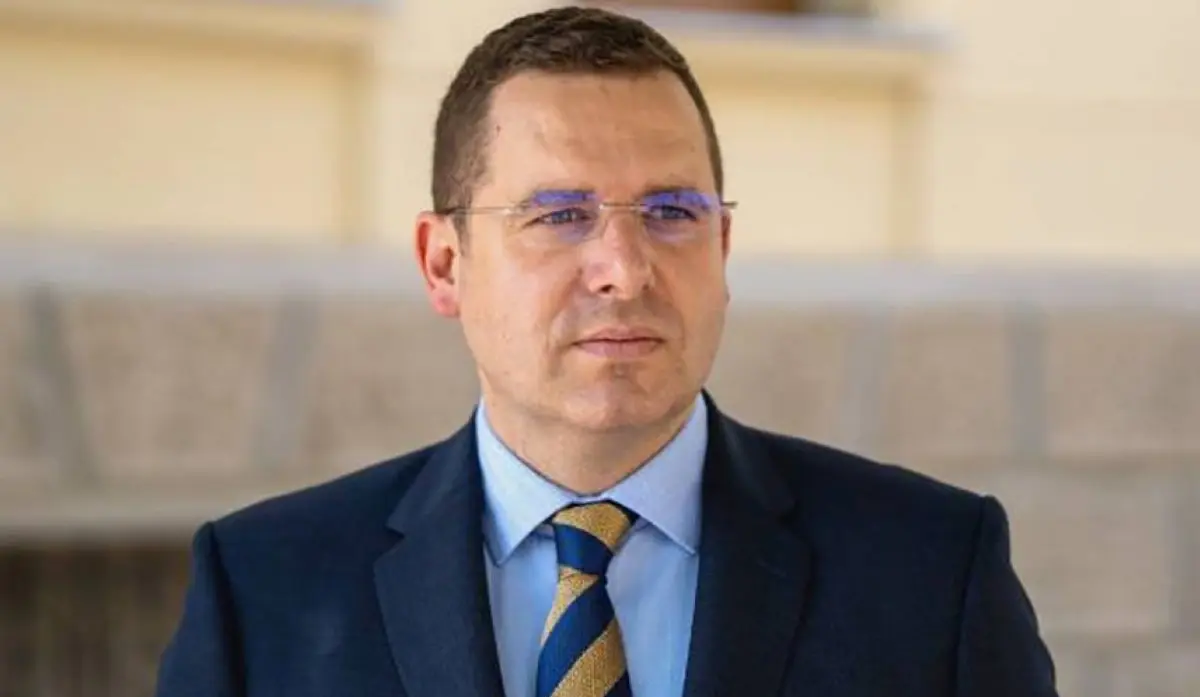
BANJA LUKA, AUGUST 21 /SRNA/ - "Opposition jokers" are trying to falsely portray the SNSD as allegedly being afraid of new election technologies because it supposedly fears fair elections, while forgetting to mention the party’s landslide victory at all polling stations where the new technologies had previously been used experimentally, by even larger margins than usual, SNSD spokesperson Radovan Kovačević said.
"It is interesting how the `opposition jokers` are trying to falsely portray us as supposedly being afraid of new election technologies because we allegedly fear fair elections, while forgetting to say that at all the places where the very same CEC previously experimentally used the new technologies, we won convincingly - in fact, we won by even larger margins than we normally did at those places, while they, logically, lost by wider margins than ever before," Kovačević said.
He believes this clearly demonstrates SNSD's attitude toward fair elections and what its attitude toward new technologies would have been had everything proceeded normally.
Kovačević said that the " opposition jokers" have no problem whatsoever with the fact that this voting method and the new technologies were imposed by Christian Schmidt, someone who had done everything he could against Republika Srpska and the Serb people, whom the opposition representatives had, unfortunately, welcomed and toured around Banja Luka, humiliating the Serb people and Banja Luka by taking him to the monument dedicated to the Banja Luka babies.
"They went to Sarajevo to see him, complained there and criticised Republika Srpska, saying how everything Republika Srpska does is bad," Kovačević, who is also a Serb deputy in the House of Peoples of the Parliamentary Assembly of BiH, told RTRS.
He added that it was also interesting that the " opposition jokers" were not bothered by, and showed no interest in, the concerns raised by the Personal Data Protection Agency regarding the use of these new technologies and the possibility that the confidentiality of citizens' personal data in Republika Srpska and BiH could be compromised.
Kovačević finds it interesting that they were unconcerned about the likelihood of lower voter turnout, as many people are completely confused by the new system.
"It is interesting to me that they have absolutely no concern about the fact that many say the secrecy of voting could be compromised, because you provide a fingerprint, receive some kind of QR or barcode, based on which you receive a ballot paper issued on the basis of your ID card, which corresponds to that barcode. Then, once you vote in front of a camera, you insert it into a scanner, and by combining all that data, it could be possible to know exactly whom anyone voted for at any given time. None of this worries the people in the opposition in the slightest," Kovačević stressed.
He added that it was also interesting that the "great democrats in the opposition" were not insisting that, here as everywhere in the democratic world, the Electoral Law and the voting procedure be established through the broadest possible social consensus between both the government and the opposition.
They are perfectly happy, he says, that a criminal against Republika Srpska and the Serb people, a foreigner who has no authority or mandate whatsoever, can impose such a solution.
"It is interesting to me that the German Government clearly said it regretted that Milorad Dodik had succeeded in making Christian Schmidt leave BiH before the elections, because they wanted Christian Schmidt to conduct the elections himself and control what the outcome would be; they wanted the result to be such that those who welcomed the imposition by Christian Schmidt would also be pleased," Kovačević said.
He stressed that the people of Republika Srpska would make the decision and had already demonstrated that they knew how to make decisions and choose Republika Srpska.


GENERAL MLADIĆ'S TREATMENT IN SERBIA OR RUSSIA SHOULD BE URGENTLY APPROVED

PERSON ARRESTED IN CONNECTION WITH THE ATTEMPTED MURDER OF DAVOR DABIĆ

DEBEVEC RESIGNS FROM COURT OF BiH POSTS BEFORE DISCIPLINARY MEASURE IS HANDED DOWN
KOVAČEVIĆ: "OPPOSITION JOKERS" DO NOT MIND SCHMIDT IMPOSING NEW ELECTION TECHNOLOGIES