KARAN: CERIĆ'S STATEMENTS ARE PART OF SYSTEMATIC POLITICAL PROJECT AGAINST SOC AND SERBIAN PEOPLE
BiH - Cerić - reaction
01/13/2026
14:49
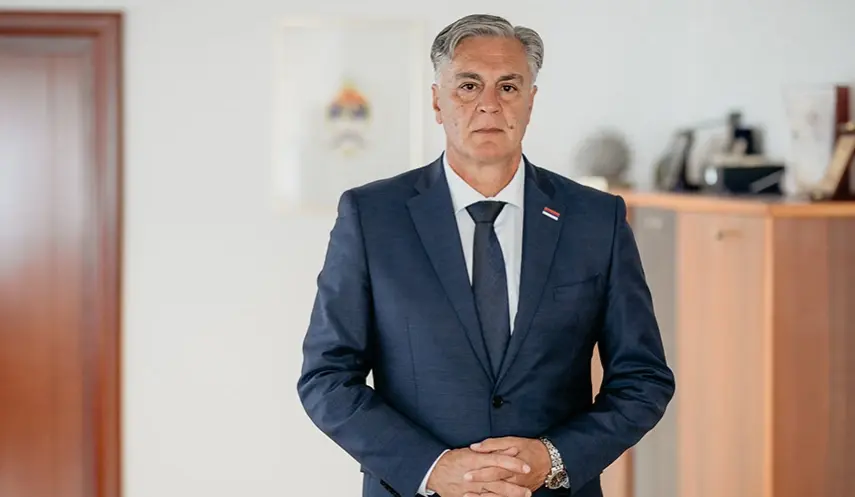
BANJA LUKA, JANUARY 13 /SRNA/ - Mustafa Cerić, as an advocate of the most radical anti-Serb positions, has embarked on a dangerous venture by promoting the revival of a "Bosnian" Orthodox Church, something that many others have also attempted during the darkest periods of European history, emphasized constitutional law professor Siniša Karan.
In a statement to SRNA, Karan recalled that during World War II, with the support of Džafer Kulenović as deputy to Ante Pavelić, there was an intention to create a Ustasha "Croatian Orthodox Church" aimed at completely erasing the Serbs - to erase the Serbian name, Serbian nationality, and Serbian faith, and to turn the Serbian people into a faceless mass suitable for assimilation and persecution.
What Mustafa Cerić is saying today, Professor Karan pointed out, is not any kind of "idea of peace" and does not happen by coincidence at a time when Serbs are celebrating Christmas, the birth of Jesus Christ, patron saint days, and the Orthodox New Year.
"This is a direct attack on the Serbian Orthodox Church, and therefore on the Serbian people. It is an attempt to target identity through religion, because it is clear that without the Serbian Orthodox Church, there is neither historical memory nor spiritual continuity of the Serbian people in this region," Karan emphasized.
He stated that the remarks of the former head of the Islamic Religious Community in BiH, Mustafa Cerić, about the so-called "Bosnian Orthodox Church" are neither an isolated incident nor a personal opinion that should be ignored.
"They are part of a broader, dangerous, and systemic political project that is being increasingly promoted in Sarajevo, and which, a few weeks ago, was most directly defined by the statement that the Bosniaks `need five Serbs` in Sarajevo and one in Banja Luka in order to be able to govern the entire BiH.
That is the essence of a policy that for decades has sought to erase everything that the Serbian people have historically been and remained - a constituent people, a people with their own identity, culture, faith, institutions, and the right to self-determination," Karan explained.
He said that the Serbian people and Republika Srpska, as well as all of its institutions, are fully aware of the context in which these statements are made.
"We are aware of the increasingly open efforts to make decisions about Serbs without Serbs, to relativize their rights, to portray the institutions of Republika Srpska as an obstacle, and to treat the Serbian identity as something that must be `re-educated,` `reshaped,` or banned.
But one thing must be clear: Republika Srpska will not accept humiliation, outvoting, or the erasure of its identity. As in every period of history, such policies will be defeated by what has always been our greatest strength - unity, determination, and loyalty to our institutions, whether those of Republika Srpska or the Serbian Orthodox Church, as proof of our long endurance, resilience, and faith through a thousand years of history," Professor Karan said.


TRUCKS CARRYING VIDEO BILLBOARDS DRIVE THROUGH NEW YORK SHOWING LIVES OF SERBS IN KOSOVO AND METOHIJA
CHILDREN - THE GREATEST VICTIMS OF ADVANCES IN MILITARY TECHNOLOGY
NEW GREENLAND AGREEMENT TO BE SIGNED TOMORROW
BROTHERLY CONGRATULATIONS TO UNITED RUSSIA, MEDVEDEV AND PUTIN ON ELECTION RESULT