ANĐELKOVIĆ: LASTING SOLUTION POSSIBLE ONLY THROUGH RETURN TO ORIGINAL DAYTON ACCORDS
BiH - Dayton Accords - anniversary
11/20/2026
10:33

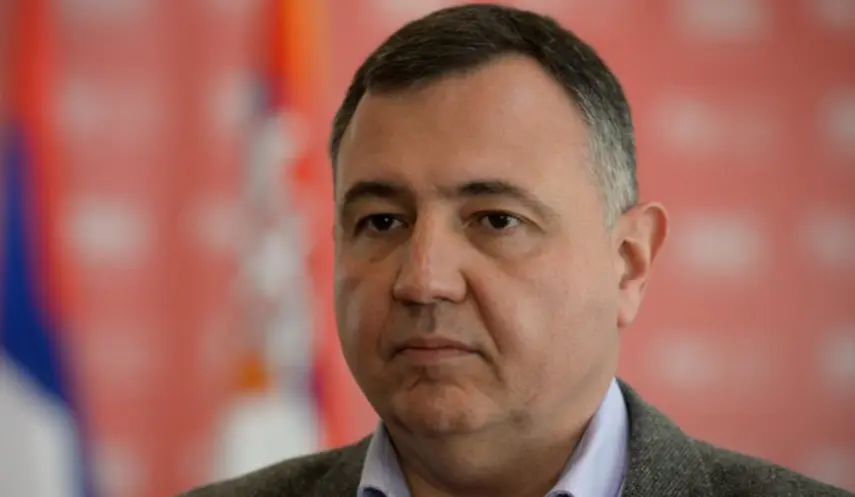
BELGRADE, NOVEMBER 20 /SRNA/ – BiH has become dysfunctional due to attempts to illegally revise the Dayton Peace Agreement, while Republika Srpska remains fully functional, thus lasting solution for BiH is possible only through a return to the original Dayton Peace Agreement and respect for the equality of the three constituent peoples and the two entities, political analyst Dragomir Anđelković has assessed.
If illegal violations of the Dayton Peace Agreement continue to be pursued, Anđelković said, this will inevitably lead to the disappearance of BiH.
"Every anniversary of the Dayton should therefore remind everyone of this question - do you want BiH to survive? If you do, then the only way is to return to the original Dayton Peace Agreement," Anđelković stated ahead of the 31st anniversary of the initialling of the Dayton Peace Agreement.
He noted that the leadership of Republika Srpska consistently advocates the original Dayton Peacr Agreement and has never demonstrated the alleged secessionist intentions it is constantly accused of. Instead, it has insisted on implementing what was agreed.
Anđelković says that Republika Srpska has always extended a hand to everyone and proposed solutions that represent a form of compromise.
"The Serbs wanted to continue their common life with Serbia, while the Bosniaks wanted to centralize Bosnia. A solution was found in a community of three peoples and two entities, an equal partnership. And if anyone wants BiH to survive, that solution must be revitalized," Anđelković emphasized.
Anđelković recalled that, from the very first day after the signing of the Dayton Peace Agreement, Republika Srpska faced attempts to undermine the substance of the document.
He pointed out that, for Western politicians and Sarajevo, the Dayton was not a solution to the conflict but rather a kind of trap for the Serbs: they were offered what appeared to be an acceptable solution so that they would let their guard down, after which everything that had constituted Sarajevo's wartime objectives would gradually be imposed on them.
It is, he says, the centralization of BiH, the hegemony of "Bosnian" Muslims, I.E. everything the Serbs had rejected and against which they had defended themselves during the Patriotic War.
However, Anđelković stresses that, after an initial period of uncertainty, Republika Srpska adopted a firm position in the mid-2000s and blocked any further transfer of powers.
He added that Republika Srpska had prevented centralization and everything that had been the hidden agenda of various Euro-Atlantic centres of power.
"We are now discussing the Dayton t whose substance has largely been undermined in an illegal manner, with the aim of centralizing BiH. However, Republika Srpska prevented this process from being completed and retained its key competencies," Anđelković emphasized.
Tomorrow will mark exactly 31 years since the General Framework Agreement for Peace in BiH and its 12 annexes were initialled at Wright-Patterson Air Force Base in Dayton, the USA, bringing the war in BiH to an end and establishing its constitutional and legal order.
The agreement established BiH as a state comprising two entities, Republika Srpska and the FBiH, both of which are signatories to all the annexes.