SHAMEFUL CRIME BY MUSLIM SPECIAL FORCES AGAINST SERBS IN VELIKI PARK IN SARAJEVO
Republika Srpska - culture of remembrance
04/18/2026
12:09
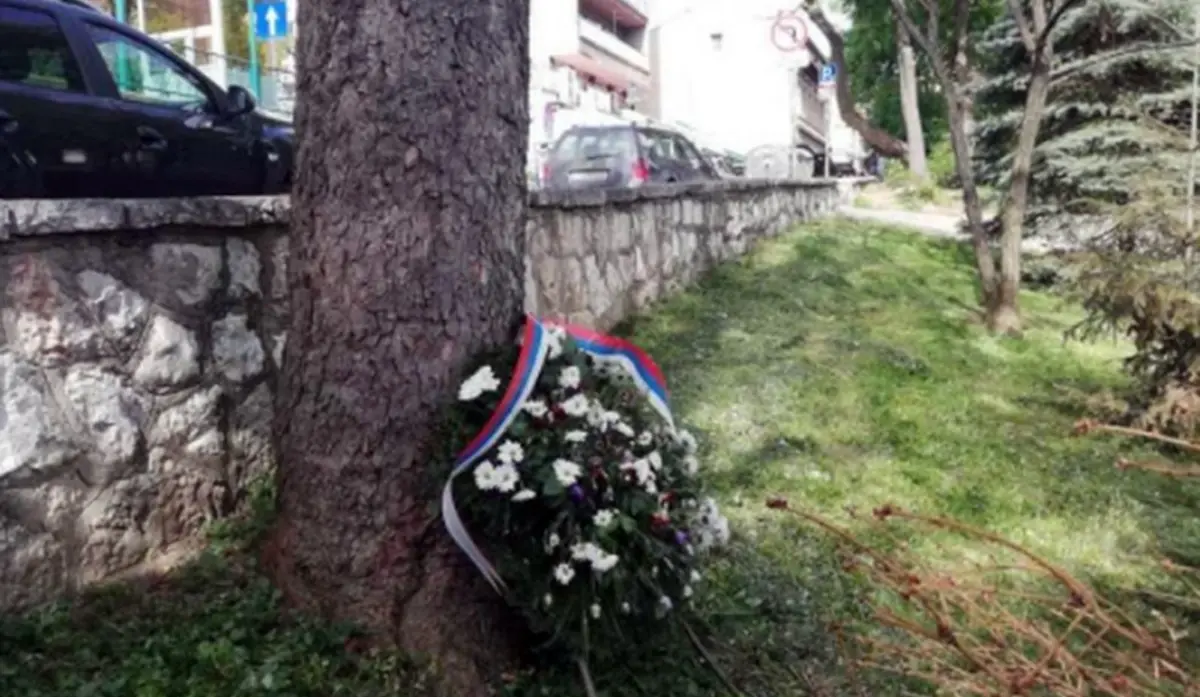
The Organization of Families of Captured and Fallen Soldiers and Missing Civilians of Istočno Sarajevo, which will mark the Day of Missing Serbs of the Sarajevo-Romanija region on Wednesday, April 22, reminds that the killing of eight soldiers of the former Yugoslav People's Army /JNA/ on April 22, 1992, better known as the “Veliki Park” case, or “Transporter," is just one in a series of numerous tragic sufferings of Serbs in Sarajevo. By Ognjen Begović
ISTOČNO SARAJEVO, APRIL 18 /SRNA/ - On April 22, 1992, in front of numerous passers-by, members of the notorious “Ševe” unit of the Muslim special police executed eight members of the former JNA and four Serb civilians in Veliki Park in the centre of Sarajevo.
Honorary General of the Republika Srpska Army and President of the Assembly of the Organization of Officers of Republika Srpska, Colonel Blagoje Kovačević, described this event in the Monograph of the Sarajevo-Romanija Corps of the Republika Srpska Army.
He previously told SRNA that the attack by Muslim military and paramilitary formations on Ilidža that day, 34 years ago, began exactly at 05:00.
“Under the cover of fog and darkness, Muslim units on the primary axis of attack approached the Serb defenders to a distance of only fifty to one hundred meters and opened very heavy infantry fire. At the same time, a group of snipers deployed from the building of the Institute of Physiatry fired at everything moving within their field of vision,” Kovačević said.
According to him, the fighting was fierce. Still, the Serb fighters did not retreat from their positions, and through their determined resistance, they bought the necessary time for the Crisis Staff of the Serb municipality of Ilidža, which commanded the defense, to begin organizing and sending reinforcements to the defenders holding the first line.
He specified that the final toll of this treacherous and criminal attack was 12 killed Serb fighters and 42 wounded, adding that losses on the Muslim side were not made public, but were certainly several times higher.
CRIMINAL SPECIAL UNIT "ŠEVE" RESPONSIBLE FOR THE MASSACRE OF SERBS
Kovačević said that at around 14:00, to prevent further clashes and separate the opposing sides, a tank platoon, previously deployed at the Stup interchange, was sent to the area affected by the morning fighting, along with four armored personnel carriers from the “Čiča” barracks in Lukavica.
While passing through the settlement of Dobrinja, one of the carriers lost a track.
In order to fix the malfunction, and on the suggestion of residents, the crew of the vehicle sought assistance at a nearby mechanical workshop.
There, local members of the notorious so-called Patriotic League captured them and transferred all eight members of the former JNA to the headquarters of the Special Unit of the Ministry of the Interior of the so-called Republic of BiH in Bjelave, where they were brutally beaten and then handed over to the “Ševe” special unit to be executed and have the traces removed.
Members of the notorious “Ševe” unit carried out the execution of the Serb soldiers in Veliki Park, after which the bodies were taken to Dariva, where they were doused with petrol, burned, and buried, bringing the number of Serb victims that day up by eight to a total of twenty killed Serb fighters.
Responding to a question about what would have happened if Muslim-Croat forces had prevailed at the time and taken control of Serb-held Ilidža, Kovačević explained that this would have opened up a wide area for further operations.
“Via Trnovo, there would have been an opportunity to link up with Goražde and Višegrad; via Hadžići with Herzegovina; via Kiseljak and Visoko with Zenica and central Bosnia; and finally via Srednje with Olovo and Tuzla. A large, compact territory would have been created, stretching from Brčko in the north, through Sarajevo, to Neum in the south, and from the Drina in the east to the Serb Krajina in the west,” Kovačević pointed out.
He emphasized that this would have freed up a very large manpower potential, around eighty thousand Muslim military, paramilitary, and police personnel.
REMAINS OF ONLY TWO OF THE EIGHT MEMBERS OF THE "TRANSPORTER" CREW HAVE BEEN FOUND; SIX ARE STILL MISSING
On that tragic day, April 22, 1992, in Veliki Park in Sarajevo, in the very centre of the city, about fifty meters from the building of the Presidency of BiH and in the immediate vicinity of the Police Department, captured reserve JNA soldiers Milivoje Lalović, Đorđe Bjelica, Zoran Marković, Dragomir Đerić, Stevan Đokanović, Vlajko Golubović, Nedeljko Vujičić, and Miladin Vukmanović were killed.
Of the eight, the bodies of Vujičić and Marković have been found, while the remains of the other six are still being searched for.
According to available information and reports on the event, the JNA reservists departed on April 22, 1992, in an armored vehicle from the “Slobodan Princip Seljo” barracks in Lukavica towards Ilidža, with the task of establishing a buffer zone between the conflicting sides following an attack by members of the Muslim Territorial Defense and police forces on the Ilidža municipality.
At that time, the JNA was a regular military force in BiH, tasked with establishing a buffer zone between the three warring sides and preventing bloodshed.
On the way to the buffer zone, the armored vehicle broke down in Aerodromska Street in Dobrinja, and when the soldiers exited it with the intention of reporting to command, they were captured by members of the Territorial Defense and the Ministry of the Interior of the then so-called Republic of BiH.
The captured soldiers were taken over by military police under the command of Davor Matić, known as Žmiro, and Kerim Lučarević, and were taken to a police station where they were beaten, after which they were taken to Veliki Park and executed.
Only when negotiations between the Serb and Muslim sides began at Butmir Airport, and at the insistence of representatives of the Crisis Headquarters in Pale, Ilidža and Vogošća, a document arrived in Pale on May 12, 1992, in which the then Chief of the Territorial Defense Headquarters, Hasan Efendić, and the Minister of Defense of the so-called Republic of BiH, Jerko Doko, stated in writing that “the captured soldiers are alive, have been released, and have returned home.”
The Center of Public Security of Istočno Sarajevo filed a criminal complaint in May 2005 against 13 persons suspected of involvement in the crime.
The Serb police charged the former Minister of Defense of the Republic of BiH Jerko Doko of the crime in Veliki Park, as well as Territorial Defense Commander Hasan Efendić, commander of the Special Unit of the Ministry of the Interior of BiH Dragan Vikić, commander of the Military Police of the Army of BiH Kerim Lučarević, the head of the Public Security Station Novi Grad Malik Krivić, and one of the commanders of a Special Unit of the Army of BiH under the command of Jusuf Juka Prazina, the late Davor Matić, known as Žmira.
In addition to Vikić, Jusuf Pušina, Nermin Uzunović, and Mladen Čovčić were also indicted for the killing of eight Serb heroes, but they were acquitted by the /unconstitutional/ Court of BiH.


DIGITAL IDENTITY MUST BE REGULATED IN LINE WITH CONSTITUTIONAL COMPETENCIES
LINTA URGES GLOBAL RECOGNITION OF GENOCIDE AGAINST SERBS

DODIK: IZETBEGOVIĆ OFFERED EXCUSES BUT NO CLARIFICATION OF HIS STATEMENT DURING PHONE CALL

SAVIĆ: IZETBEGOVIĆ'S RHETORIC IS UNDERMINING AND DANGEROUS